


Authorities will use the purchase cost of your asset and the current market value of your asset to determine how much of an unrealized gain exists.
Depending on the nature of individual holdings, they might have to liquidate some portion of those holdings or seek outside funding. However, these are mere possibilities since the proposals are still pending approval by parliament.
How exit taxes could reshape crypto relocation
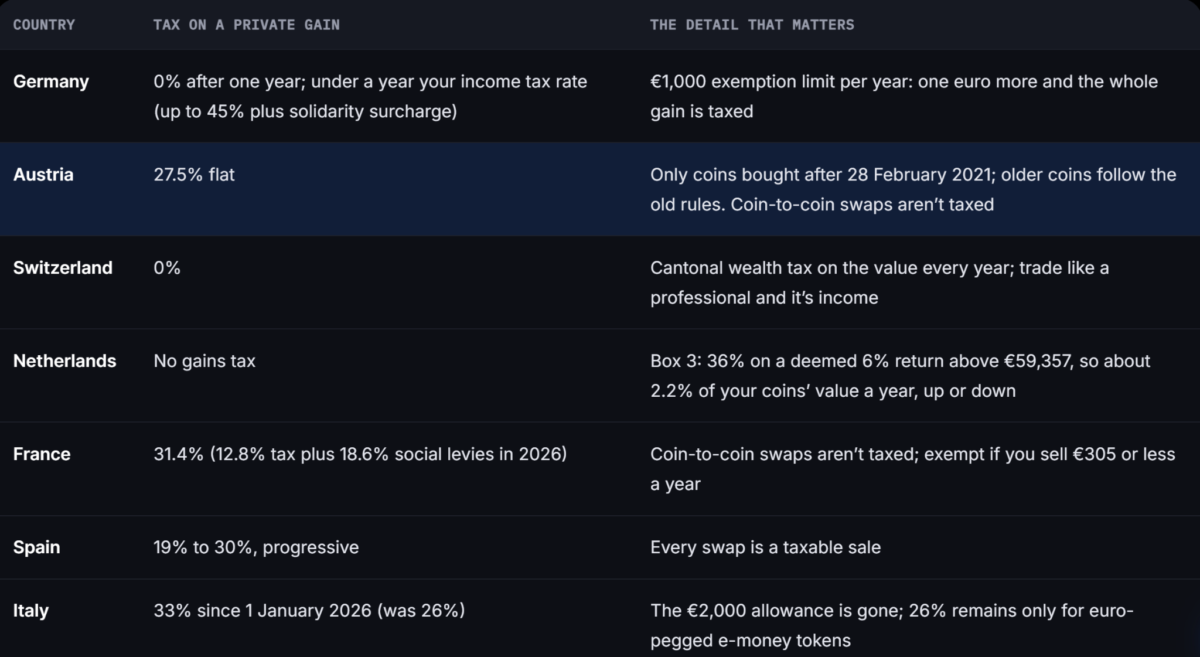
Moreover, the country’s proposal could significantly impact which jurisdictions that cryptocurrency investors will wish to reside within. As previously stated, the UAE has no personal capital gains tax.
Meanwhile, Portugal has no capital gains tax for gains made during the first 365 days of ownership. Switzerland does not subject most private investors‘ gains from cryptocurrencies to income tax. Still, it does subject such gains to wealth tax.
Also, German law provides exemptions from capital gains tax on certain holdings after one year. Given these differences, relocation choices are likely to become significantly influenced by the presence or absence of tax treatment and the risk of double taxation.
Even so, choosing another jurisdiction may not resolve all ambiguity surrounding exit taxes. In fact, the Italian proposed valuation method utilizes the prices of assets prior to departing a country.
In turn, this places foreign-resident investors at risk due to volatile fluctuations in local markets.
Italy’s proposal could ultimately be extended to include other countries. This is because many existing governments currently tax unrealized gains when investors relocate. Austria levies a 27.5% exit tax on digital currencies.
Moreover, illiquid tokens or locked-up funds can present additional challenges to investors attempting to comply with the requirements. Furthermore, subsequent price drops in an investor’s portfolio may cause investors to pay taxes on gains that were never actually obtained.
All in all, upon becoming law, Italy’s regulation will almost certainly generate debate regarding whether relocation should lead to taxing investors on profits they have never realized.
Final Summary
-
Crypto holders could face Italy’s proposed exit tax on unrealized gains when relocating abroad.
-
Italy’s proposal could shape global crypto tax rules on unrealized gains and investor relocation.
