
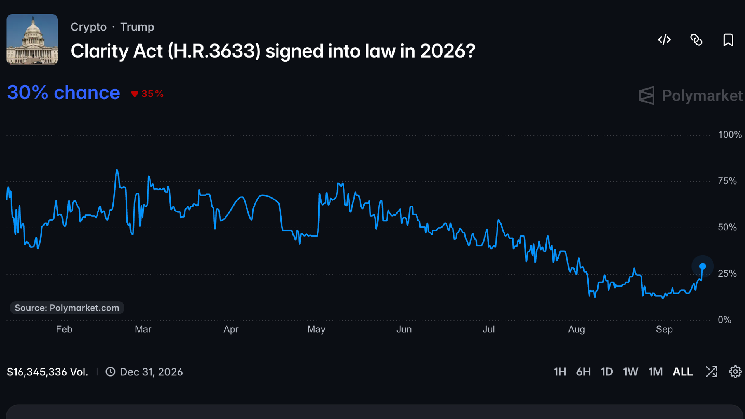

Tuesday’s Senate cloture vote requires 60 senators, forcing the measure to draw bipartisan support. Clearing that threshold would be an important political milestone, but it would not amount to final Senate passage.
Lawmakers could still face a lengthy amendment process of the bill. Any changes would also have to be reconciled with the House before legislation could head to the president, while the congressional calendar adds another source of uncertainty.
The next move belongs to the Democrats, because this wasn’t a negotiated package, one analyst said.
Jaret Sieberg, a financial policy analyst for TD Cowen, said the Democratic lawmakers may not see enough here to justify getting on board, so he maintained a 25% chance of Clarity Act passage on Monday.
“We are not convinced the updated ethics language Senate Republicans released last night is substantive enough for moderate Democrats,” he wrote in a note to clients.
The problems for Democrats: President Trump would still be able to maintain his crypto investments, even if they’re structured in a blind trust, so it doesn’t sever him from the industry he has such an influence on. And the powers for state attorneys general to sue remain very narrow, with no direct actions possible against the president. Also, Trump would tout a yes vote as a major personal victory, Sieberg said, potentially carrying a political cost for the November elections.
