

A NEW RECORD! 🥳 Cardano $ADA processed 1,780,896 transactions in Epoch 660. It’s the new record, surpassing the previous 1,566,974 transactions record from Epoch 304. Also some cool stats: – On average each block had 83.83 transactions – Cardano made ₳ 337.72k in fees https://t.co/og4wr2Xukj
— Cexplorer.io 🅰️ (@cexplorer_io) October 12, 2026
The main driver of traffic was community mobilization during the Voltaire era of decentralized governance. The end of Epoch 660 coincided with the conclusion of major on-chain votes by Delegated Representatives (DReps).
One possible reason is that users massively activated their wallets to vote on changes to the network’s economic parameters, including a reduction in the base pool cost (minPoolCost).
Although the initiatives ultimately failed to reach the required quorum, the voting process turned into a large-scale organic stress test of Cardano’s architecture.
The network handled this load without disruptions: average block density reached 83.83 transactions per block, while the total output volume over five days reached ₳46.71 billion. Fee economics remained stable: the system generated ₳337.72K in transaction fees, keeping the average cost of a single transfer at just ₳0.19 (about $0.05).
Cardano is operating at the limits of its capabilities, but investors seem completely unimpressed
However, the market completely ignored the blockchain’s fundamental achievements. Despite record traffic, the native $ADA token fell 3.58%, dropping to $0.2429.
According to the TradingView technical chart, the asset’s attempt to establish itself above the $0.2600 level failed due to a bearish divergence forming on the RSI oscillator. The price increase was not supported by the indicator’s momentum, leading to a reversal and the asset falling back below the moving averages.
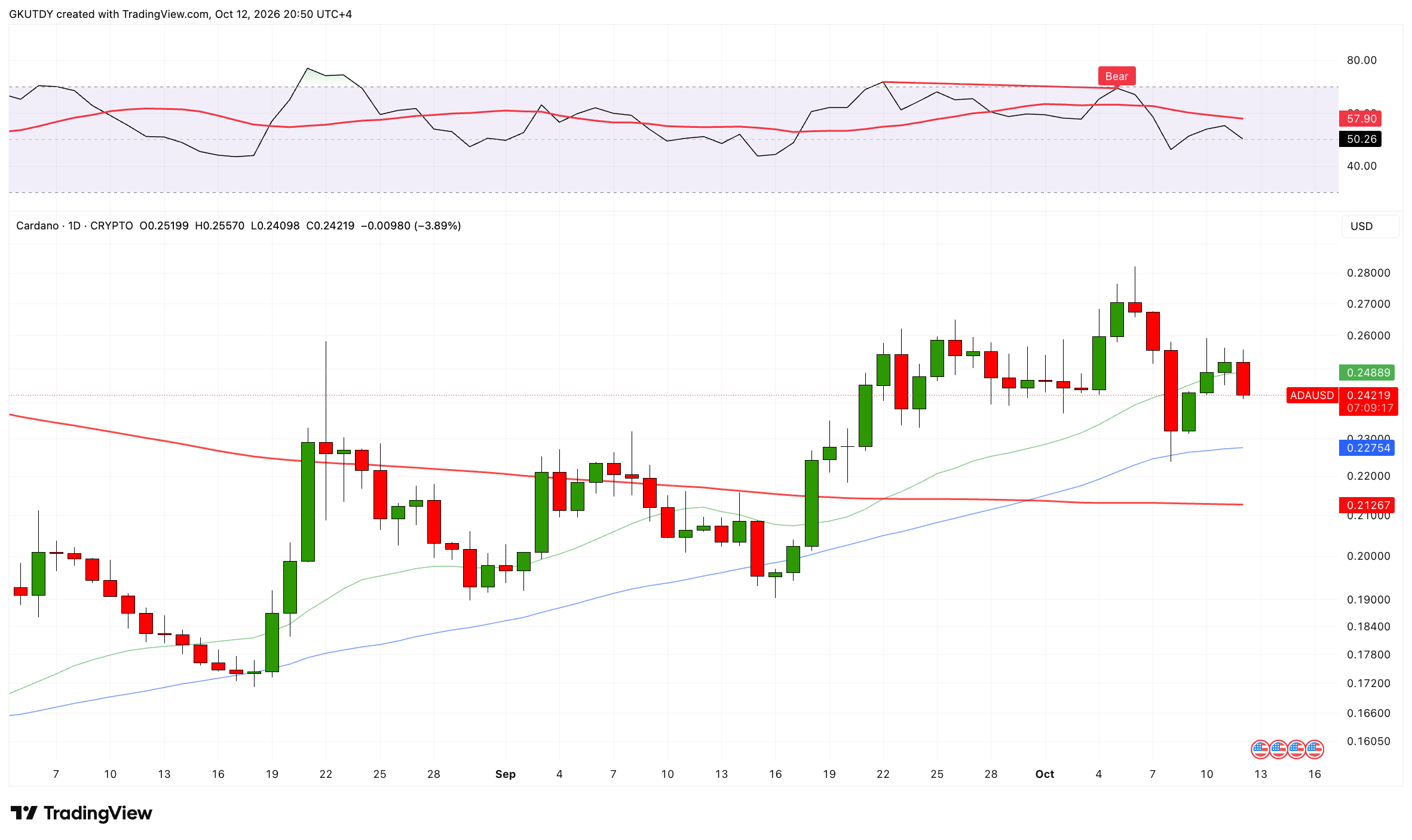
At present, there is a complete decoupling between the network’s operational strength and its market value, although the subsequent Epoch 661 continues to maintain high capacity utilization at 38%.
