
Close Menu
  • Coins
    • Bitcoin
    • Ethereum
    • Altcoins
    • NFT
  • Blockchain
  • DeFi
  • Metaverse
  • Regulation
  • Other
    • Exchanges
    • ICO
    • GameFi
    • Mining
    • Legal
  • MarketCap
What's Hot

Ripple and Wormhole bring multichain token control to issuers

06/11/2026

Investor protection and custody may dominate US crypto oversight under Democratic Congress, executives say

06/11/2026

Kraken to cancel orders across 176 crypto markets in sweeping trading overhaul

06/11/2026
Facebook X (Twitter) Instagram
  • Back to NBTC homepage
  • Privacy Policy
  • Contact
X (Twitter) Telegram Facebook LinkedIn RSS
NBTC News
  • Coins
    1. Bitcoin
    2. Ethereum
    3. Altcoins
    4. NFT
    5. View All

    Why U.S. Institutions Are Selling Bitcoin Faster Than Binance Traders

    06/11/2026

    Bitfinex Analysts Say No Need to Panic, Explain Critical Levels for Both Rises and Falls!

    06/11/2026

    Bitcoin diverges from South Korean stocks as AI concerns deepen the Kospi selloff

    06/11/2026

    What Do the US Transfers Mean? Analysis Company Explains!

    06/11/2026

    Ethereum Privacy Network Aztec Rolls Out Major Security and Speed Upgrade

    06/11/2026

    Ethereum exchange reserves hit 2016 low – As Bitmine adds another $11.22M ETH

    05/11/2026

    Mougayar’s Study Scores Ethereum (ETH) 9.7/10 Against SEC Decentralization Criteria

    05/11/2026

    What ETHGas’s advance transaction bookings offer

    05/11/2026

    Ripple and Wormhole bring multichain token control to issuers

    06/11/2026

    Solana’s offline-signing proposal would keep approvals valid after failed transactions

    06/11/2026

    Ripple Joins Forces with Wormhole for Enhanced Multichain

    06/11/2026

    Derive Proposes Treasury Funding for US-Regulated Derivatives Push

    06/11/2026

    PixieChess Confirms New Weekly Packs for Collectors on Base

    29/10/2026

    Fuzzy Launches Dynamic NFT Collection With Four Phases

    29/10/2026

    Machi’s NFT Sales Exceed 60 as Trader Faces $2.35M Loss

    28/10/2026

    SquiggleDAO Acquires NFT Through Decentralized Community

    24/10/2026

    Ripple and Wormhole bring multichain token control to issuers

    06/11/2026

    Investor protection and custody may dominate US crypto oversight under Democratic Congress, executives say

    06/11/2026

    Kraken to cancel orders across 176 crypto markets in sweeping trading overhaul

    06/11/2026

    Blockchain is ‘perfect solution’ for AI agent trust, VeChain CEO says

    06/11/2026
  • Blockchain

    Blockchain is ‘perfect solution’ for AI agent trust, VeChain CEO says

    06/11/2026

    Phase launches Proxy to enable smartphone-based AI connectivity

    06/11/2026

    Hadron by Tether taps RedStone for pricing and same-day settlement of tokenized assets

    06/11/2026

    OlympusDAO moves OHM bridging to Chainlink CCIP across seven chains

    06/11/2026

    EVM Chains Could Add Post-Quantum Security Before Ethereum 2029

    06/11/2026
  • DeFi

    Aave borrowers faced up to 36% APR while a freeze blocked fresh collateral

    05/11/2026

    41% of Tokenized-Stock Deposits in DeFi

    05/11/2026

    dCOMP/USDC Market Update: Api3DAO Reports Healthy Conditions

    05/11/2026

    Kabu Accepts Ethena’s ENA as Collateral for USDC Borrowing

    05/11/2026

    Firelight Protocol Extends XRP-Backed Cover to $38 Million Across Three DEFI Vaults

    05/11/2026
  • Metaverse

    Exploring the Future of the Metaverse

    19/10/2026

    Is Solana Gaming Back? Kintara Activity Fuels Renewed Optimism in Onchain MMOs

    24/06/2026

    The Sandbox launches AI game engine ‘The Sandbox Studio’ for next-generation creators

    10/06/2026

    Meta commits $13M in funding for Oversight Board through 2028

    29/05/2026

    Why Animoca’s Yat Siu says the future is 100 billion AI agents

    07/05/2026
  • Regulation

    Riot Platforms (RIOT) Stock Falls 33.2% From September Close

    06/11/2026

    60% of S&P 500 Stocks Are Now Down 20%+

    06/11/2026

    18 years in, what has Bitcoin truly done?

    06/11/2026

    Institutions embrace crypto staking despite shrinking yields

    06/11/2026

    The Fight Over Digital Money

    06/11/2026
  • Other
    1. Exchanges
    2. ICO
    3. GameFi
    4. Mining
    5. Legal
    6. View All

    Kraken to cancel orders across 176 crypto markets in sweeping trading overhaul

    06/11/2026

    10 Pairs to Go as October Ends, BTC and ETH Affected

    06/11/2026

    Ethena Pay Rolls Out Earn+ With Up to 12% Target Rewards

    06/11/2026

    Kamino Opens USDC Loans Against Backpack Tokenized Stocks

    06/11/2026

    ICO market slows sharply with only six completions in 2026

    30/04/2026

    South Korea Poised to Lift Ban on Domestic ICOs After 7 Years

    19/12/2025

    Why 2025’s Token Boom Looks Both Familiar and Dangerous

    31/10/2025

    ICO for bitcoin yield farming chain Corn screams we’re so back

    22/01/2025

    FLOKI Ships Valhalla 1.13.2 ‘Special Delivery’ to Players on Mainnet

    27/10/2026

    Top 12 NFT games every player should know about in August 2026

    19/08/2026

    GameShame Studios founder details Raijin Protocol’s roadmap in NeoPod’s sixth AMA

    13/08/2026

    How BC.GAME is turning players into stakeholders

    04/08/2026

    TeraWulf posts $76.2 million Q3 revenue as AI leases outgrow Bitcoin mining

    06/11/2026

    Zcash’s landmark NU7 upgrade goes live, speeding up private payments

    06/11/2026

    VanEck Says the Market is Making a Big Mistake! Here Are the Details

    06/11/2026

    Core Scientific plans to exit Bitcoin mining by the end of 2026

    06/11/2026

    Investor protection and custody may dominate US crypto oversight under Democratic Congress, executives say

    06/11/2026

    Coinbase, Kalshi Denied Shield From State Prediction-Market Enforcement

    06/11/2026

    Do You Still Need Money Transmitter Licenses?

    06/11/2026

    Andy Barr Wins Kentucky Senate Seat, Adding a CLARITY Act Supporter to Congress

    06/11/2026

    Ripple and Wormhole bring multichain token control to issuers

    06/11/2026

    Investor protection and custody may dominate US crypto oversight under Democratic Congress, executives say

    06/11/2026

    Kraken to cancel orders across 176 crypto markets in sweeping trading overhaul

    06/11/2026

    Blockchain is ‘perfect solution’ for AI agent trust, VeChain CEO says

    06/11/2026
  • MarketCap
NBTC News
Home»Altcoins»Solana’s offline-signing proposal would keep approvals valid after failed transactions
Altcoins

Solana’s offline-signing proposal would keep approvals valid after failed transactions

NBTCBy NBTC06/11/2026No Comments6 Mins Read
Share
Facebook Twitter LinkedIn Pinterest Email


Durable nonces remain usable. The Foundation has not set a removal date or made a final choice between Anza’s Programmatic Signer and Blueshift’s Vector. Its roughly six-month migration window is conditional on a suitable replacement being ready, audited and live on mainnet.

The key keeps approving, but the account changes

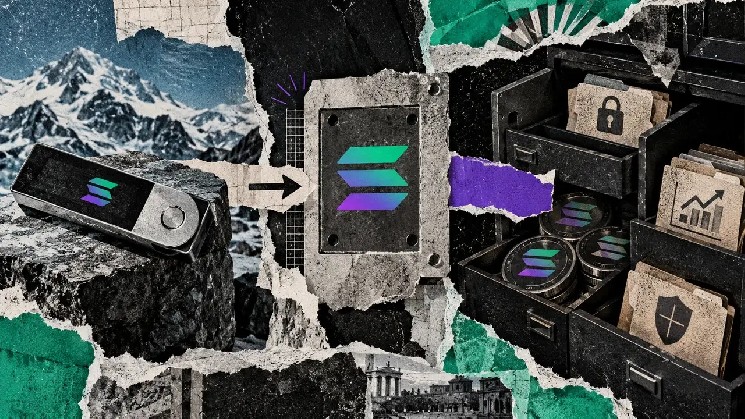
Durable nonces solve a timing problem. Instead of signing a transaction tied to a recent blockhash that soon expires, an offline signer can approve one using a stored nonce. That allows approval and broadcast to happen at different times.

Solana’s separate 200ms slot upgrade reached its final mainnet stage on Oct. 9. Faster block production leaves less wall-clock time for ordinary blockhash-based approvals, although expiry depends on block production rather than a guaranteed timer. CryptoSlate’s earlier coverage examined that timing change; the nonce proposal concerns the architecture used to avoid the short approval window.

Under Programmatic Signer, the cold key signs an authorization message rather than the transaction sent to the network. A relayer places that approval in a fresh-blockhash transaction. The signer program verifies the authorization and executes the approved instructions with the key’s derived address as signer.

The PDA has no private key of its own. Its ability to act comes from the signer program verifying the original key’s approval. Deriving the address does not move any assets or permissions: those must be transferred separately.

The migration guide describes moving native $SOL into the derived address, transferring token balances into accounts controlled by it, and moving mint or freeze permissions to it. Stake accounts can move the staker authority, withdraw authority or both, depending on the permission being migrated. These are separate controls, rather than one universal wallet switch.

The Foundation proposes completing those handoffs while legacy durable nonces still work. For an affected treasury, approving the new signing software is therefore only part of the job. Its account inventory and the permissions each key currently holds determine what must change.

The two candidate designs also handle native $SOL differently. Programmatic Signer’s derived $SOL account is System-owned and can send $SOL through an approved ordinary transfer. Vector initializes a program-owned account and releases $SOL through its own authorized withdrawal or closing operation.

What the cold signature lets a relayer do

The implementation choice affects how tightly an approval constrains the transaction around it.

Programmatic Signer’s message documentation says the cold signatures bind the executor, nonce account and embedded execution message. A relayer cannot alter those authorized bytes while retaining valid signatures. It can, however, choose the outer fee payer and blockhash and add instructions before or after the submission.

Vector commits to the top-level instruction buffer, including the data and accounts used to pass approved actions into other programs. Instructions surrounding those actions must already be included when the cold key signs. A relayer cannot insert, remove or reorder them afterward without invalidating the approval.

Programmatic Signer allows an execution context to be assembled around an approved action; Vector requires the surrounding instruction sequence to be approved in advance. In both cases, paying for broadcast does not grant permission to rewrite the signed action.

A failed execution attempt can leave a cold approval executable later. A current durable-nonce transaction that passes validation but fails during execution still consumes its nonce. Programmatic Signer’s architecture commits the nonce advance and application changes together, or rolls them back together. Vector documents the same ability to retry a failed action.

For operators, retryability means a failed submission has not necessarily invalidated the approval. Without an enforced deadline, it can remain available for later execution while its nonce is unchanged.

Vector explicitly warns that a relayer could withhold a transaction until conditions change, or that a signature exposed by a failed attempt could execute later. A timeout included in the signed instructions can reject execution after a deadline. Revocation requires a separately authorized nonce advance to land. A deadline rejection itself does not consume a nonce whose changes roll back with the failed transaction.

Application access is a separate custody test

The Foundation’s rationale is to simplify validator handling. Durable nonces require special replay-prevention rules, complicate asynchronous execution and make invalid transactions harder to filter. Moving approval and replay state into ordinary programs leaves validators processing normal blockhash transactions.

Applications then receive approved actions through cross-program invocation, or CPI: one program calls another. That can conflict with an application’s rule that an action must arrive directly as a top-level instruction. Checks that inspect only top-level repayment or signature-verification instructions can also miss an action nested inside the signer program.

More available call depth does not resolve a rule that rejects the call’s position or cannot inspect the nested instructions. The Foundation suggests supporting known signer programs or offering another execution path. Whether an application accepts a PDA’s signature is consequently a different question from whether the offline approval is cryptographically valid.

Token-2022’s CPI Guard shows why compatibility needs a precise account-level assessment. With the guard enabled, CPI transfers and burns require delegate authority; approvals through CPI are prohibited, and changing the owner is prohibited even outside CPI. Permanent delegates have transfer and burn exceptions.

Those rules are more specific than a blanket ban on every PDA action. A delegate-based transfer route may exist, but establishing or using that authority introduces its own permission and custody-policy decision.

Institutional concerns raised in March centered on application access and the controls under which funds may move. In the March 4 discussion, a participant identifying himself as Michael from Fireblocks supported nonce deprecation while objecting to CPI Passthrough’s migration, contract dependence and DeFi compatibility burdens. He favored transaction envelopes, with Sudo as an alternative, rather than the proposed CPI-based signing path.

Grant, who identified himself as being at Unit 410, said the same day that a small, auditable signer program might make authority migration acceptable. He rejected a workaround that temporarily moves assets to a hot signer, even for an atomic operation, because funds must remain associated with cold storage in its noncustodial model.

A testable design still needs a production migration path

Programmatic Signer’s current documentation reports devnet deployment and audits in progress, with remediation required before its v1 release and any mainnet deployment. Its interfaces may change. The usage documentation still marks simulation and relay submission as coming soon, while several migration operations are similarly unfinished in the guide.

Vector publishes implementation code and program IDs; its README does not state an audit or mainnet deployment status.

Meanwhile, Fireblocks’ current protocol onboarding kit still describes automatic durable-nonce injection for selected WalletConnect integrations, including Jupiter and Kamino, with a default provider-managed 15-minute validity window. That describes an existing approval workflow which a replacement must accommodate.

An operational migration needs an audited mainnet replacement, usable tools and application paths that retain each operator’s approval controls.

Share. Facebook Twitter Pinterest LinkedIn Tumblr Email
NBTC

NBTC is the editorial account for NBTC News, covering Bitcoin, Ethereum, DeFi, blockchain infrastructure, exchanges, mining, regulation and digital asset markets. The editorial team focuses on clear sourcing, timely updates and practical context for crypto readers.

Related Posts

Ripple and Wormhole bring multichain token control to issuers

06/11/2026

Ripple Joins Forces with Wormhole for Enhanced Multichain

06/11/2026

Derive Proposes Treasury Funding for US-Regulated Derivatives Push

06/11/2026

The Strange Story of How the Coin Was Born

06/11/2026
Add A Comment

Comments are closed.

Top Posts
Get Informed

Subscribe to Updates

Get the latest news from NBTC regarding crypto, blockchains and web3 related topics.

Your source for the serious news. This website is crafted specifically to for crazy and hot cryptonews. Visit our main page for more tons of news.

We're social. Connect with us:

Facebook X (Twitter) LinkedIn RSS
Top Insights

Ripple and Wormhole bring multichain token control to issuers

06/11/2026

Investor protection and custody may dominate US crypto oversight under Democratic Congress, executives say

06/11/2026

Kraken to cancel orders across 176 crypto markets in sweeping trading overhaul

06/11/2026
Get Informed

Subscribe to Updates

Get the latest news from NBTC regarding crypto, blockchains and web3 related topics.

Type above and press Enter to search. Press Esc to cancel.