
Close Menu
  • Coins
    • Bitcoin
    • Ethereum
    • Altcoins
    • NFT
  • Blockchain
  • DeFi
  • Metaverse
  • Regulation
  • Other
    • Exchanges
    • ICO
    • GameFi
    • Mining
    • Legal
  • MarketCap
What's Hot

What to Check Before Leaving an Exchange

12/10/2026

Cardano Founder Accuses Ethereum Co-Founder Of ‘Bag-Holding’ Over AI Cryptography Warning

12/10/2026

Bitcoin Price Taps $87K as SEC Moves to Unlock Institutional Custody

12/10/2026
Facebook X (Twitter) Instagram
  • Back to NBTC homepage
  • Privacy Policy
  • Contact
X (Twitter) Telegram Facebook LinkedIn RSS
NBTC News
  • Coins
    1. Bitcoin
    2. Ethereum
    3. Altcoins
    4. NFT
    5. View All

    Bitcoin Price Taps $87K as SEC Moves to Unlock Institutional Custody

    12/10/2026

    Bitcoin Crashes Below $84K as Crypto Liquidations Near $600M

    12/10/2026

    Analyst Who Previously Accurately Predicted the Drop Forecasts What Might Happen Next with Bitcoin

    12/10/2026

    Bitcoin price faces $86,500 hurdle as ETF buying returns

    12/10/2026

    Ethereum (ETH) Bloodbath: Largest Whales Get Liquidated

    11/10/2026

    How low can Ethereum go after losing $2,500 and wiping out $345M?

    11/10/2026

    Ethereum’s proposed safety checks could still let a bad trade through

    11/10/2026

    Ethereum price at $2,500 crossroads as Supertrend turns bearish

    11/10/2026

    Shiba Inu Developer Breaks Months-Long Silence Amid Shibarium Speculation

    12/10/2026

    Four Korean Banks Join Ripple on the XRP Seoul Stage

    12/10/2026

    Hyperliquid’s USDC Yield Program Gets $14.6 Million for HYPE Buybacks

    12/10/2026

    PUSA Volume on Solana Surpasses Nasdaq

    12/10/2026

    Pudgy Penguins gets support as billionaire buys 117 NFTs

    12/10/2026

    NFT sales rise to $39.85m as Pudgy Penguins jump 125%

    10/10/2026

    Flying Tulip’s NFT Options Market Tops $5 Million in Volume, Cronje Says

    06/10/2026

    NFT sales fall 23% to $40.9m as Panini jumps 557%

    03/10/2026

    What to Check Before Leaving an Exchange

    12/10/2026

    Cardano Founder Accuses Ethereum Co-Founder Of ‘Bag-Holding’ Over AI Cryptography Warning

    12/10/2026

    Bitcoin Price Taps $87K as SEC Moves to Unlock Institutional Custody

    12/10/2026

    Shiba Inu Developer Breaks Months-Long Silence Amid Shibarium Speculation

    12/10/2026
  • Blockchain

    Cardano Founder Accuses Ethereum Co-Founder Of ‘Bag-Holding’ Over AI Cryptography Warning

    12/10/2026

    XRP Ledger Might Be Vulnerable to AI, Avalanche Founder Warns

    12/10/2026

    Circle’s Tokenized Market Cap on BNB Chain Grows by $27.9M

    12/10/2026

    CircuitAI Launches Cross-Chain Swaps and Confidential Intents

    12/10/2026

    OpenAI, Google and Meta battle for AI internet domains as crypto firms target .bitcoin and .wallet

    12/10/2026
  • DeFi

    Significant $500M Drop in DeFi Perpetual Open Interest

    10/10/2026

    Citrini Research Favors AAVE and Others as Tokenization

    10/10/2026

    Citrini Identifies Pendle as Key Player in Wall Street’s

    10/10/2026

    Sanctumso Launches swSOL, a New Alternative to Wrapped $SOL

    10/10/2026

    Ostium Proposes Equity Stakes For Hacked Liquidity Providers

    10/10/2026
  • Metaverse

    Is Solana Gaming Back? Kintara Activity Fuels Renewed Optimism in Onchain MMOs

    24/06/2026

    The Sandbox launches AI game engine ‘The Sandbox Studio’ for next-generation creators

    10/06/2026

    Meta commits $13M in funding for Oversight Board through 2028

    29/05/2026

    Why Animoca’s Yat Siu says the future is 100 billion AI agents

    07/05/2026

    ‘8,000 Jobs’—Polymarket Sees Tech Layoff Surge As Meta AI Push Bites

    18/04/2026
  • Regulation

    Senate tax bill frees stablecoin spending while Bitcoin stays on IRS forms

    11/10/2026

    Ghana crypto market hits $21B, fifth in sub-Saharan Africa

    11/10/2026

    OpenWorld Takes Over Nasdaq Listing to Build RWA Tokenization Business

    11/10/2026

    Galaxy Digital Reveals $100M Position in Yield-Bearing sUSDS

    11/10/2026

    Binance Research Predicts $349B Market

    11/10/2026
  • Other
    1. Exchanges
    2. ICO
    3. GameFi
    4. Mining
    5. Legal
    6. View All

    What to Check Before Leaving an Exchange

    12/10/2026

    Citibank’s Coinbase stablecoin payments let institutional clients skip crypto setup

    11/10/2026

    Breez SDK Debuts New Stablecoin Feature

    11/10/2026

    Solana’s Weekly Memecoin DEX Volume Hits 80% Dominance

    11/10/2026

    ICO market slows sharply with only six completions in 2026

    30/04/2026

    South Korea Poised to Lift Ban on Domestic ICOs After 7 Years

    19/12/2025

    Why 2025’s Token Boom Looks Both Familiar and Dangerous

    31/10/2025

    ICO for bitcoin yield farming chain Corn screams we’re so back

    22/01/2025

    Top 12 NFT games every player should know about in August 2026

    19/08/2026

    GameShame Studios founder details Raijin Protocol’s roadmap in NeoPod’s sixth AMA

    13/08/2026

    How BC.GAME is turning players into stakeholders

    04/08/2026

    YGG Play Shuts Down Services as Yield Guild Pivots to AI Data

    01/08/2026

    Can Bitcoin miners lose power?

    12/10/2026

    Luxor’s reported 6–13% annualized Bitcoin yield depends on mining delivery

    11/10/2026

    Bitcoin miners escape months of distress as daily revenue surges by 78%

    09/10/2026

    Selling Pressure on Bitcoin Miners Has Declined Significantly: What Does This Mean?

    09/10/2026

    OCC Issues Cease-and-Desist Order Against American Express

    12/10/2026

    Europe’s crypto-ATM capital closes its last anonymity gap ahead of FATF review

    12/10/2026

    French lawmakers back stablecoin swap tax in 2027 budget bill

    12/10/2026

    EU lawmakers target crypto and opaque ownership in corruption fight

    12/10/2026

    What to Check Before Leaving an Exchange

    12/10/2026

    Cardano Founder Accuses Ethereum Co-Founder Of ‘Bag-Holding’ Over AI Cryptography Warning

    12/10/2026

    Bitcoin Price Taps $87K as SEC Moves to Unlock Institutional Custody

    12/10/2026

    Shiba Inu Developer Breaks Months-Long Silence Amid Shibarium Speculation

    12/10/2026
  • MarketCap
NBTC News
Home»Regulation»A $407 million Treasury fund reveals how Wall Street is building crypto’s missing collateral layer
Regulation

A $407 million Treasury fund reveals how Wall Street is building crypto’s missing collateral layer

NBTCBy NBTC07/08/2026No Comments6 Mins Read
Share
Facebook Twitter LinkedIn Pinterest Email


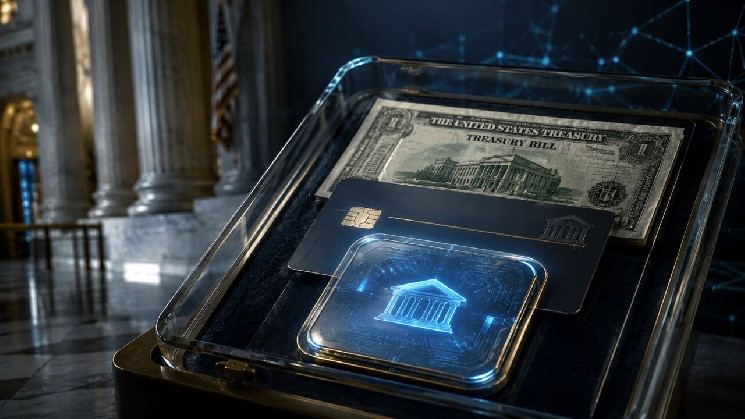
Tokenized sovereign debt spent years sounding like a conference phrase in search of a market. But now, the category has enough working components to deserve serious attention: tokenized government money funds, onchain ownership records, programmable transfer rails, and a growing effort to turn government paper into collateral that digital markets can actually use.

While this might sound like a futuristic asset class, the live products on the market today aren’t that hard to understand. Most of them aren’t sovereign bonds issued directly on public blockchains; they’re tokenized claims on short-duration government exposure, usually through money funds or Treasury-heavy structures.

The tokenized bond market is more developed than the buzzword suggests and less radical than the marketing language implies. In most live products, tokenization changes the operating layer: ownership records, transfer rails, subscription mechanics, and settlement can move onto blockchain infrastructure while the underlying assets remain inside regulated fund structures.

OUSG’s live figures show that at least one major tokenized Treasury product has already reached meaningful scale. On July 10, Ondo’s official OUSG page showed the Ondo Short-Term US Treasuries Fund had about $407.24 million in total value, a quoted 3.45% APY, and a chain split of roughly $222.07 million on XRPL and $185.17 million on Ethereum.

The same page says instant investments and redemptions have a $5,000 minimum, while OUSG is limited to accredited investors and qualified purchasers.

That already tells you this category has moved past theory. A product with a nine-figure asset value, multi-chain distribution, and explicit subscription rules is a working investment vehicle with a user flow, a compliance boundary, and a real balance sheet.

Ondo’s own page also discloses that OUSG holds positions in several other digital Treasury products, including about $150 million in the State Street Galaxy Onchain Liquidity Sweep Fund, $101.01 million in BlackRock‘s BUIDL, $77.08 million in Franklin Templeton‘s BENJI, and about $69.10 million in Fidelity Treasury Digital Fund.

These numbers show that tokenized sovereign debt is no longer just a claim that Treasury exposure might one day move onchain. Ondo’s tokenized Treasury vehicle is already allocating meaningful capital across several other digitally native Treasury products.

That’s a stronger sign of maturation than almost any market-size projection because it shows these instruments are truly being used as portfolio building blocks.

Tokenized funds are starting to own each other

A tokenized Treasury fund that holds other tokenized Treasury products shows how these instruments can become portfolio building blocks for one another. Once regulated products begin allocating to other tokenized funds, the category starts to resemble an investable market structure rather than a collection of isolated experiments.

This is also where the link to the broader crypto market becomes easier to see. Stablecoins solved the cash side of digital markets, as they made dollar exposure fast, portable, and easy to settle. What they didn’t supply was yield-bearing collateral that could move through the same environment.

That gap has become more visible as the market has matured and as stablecoin usage has grown faster than the pile of idle dollars underneath it, a split already traced in CryptoSlate’s coverage of fading stablecoin demand and stronger payment usage.

Short-duration government bonds fit that gap well because they’re already at the center of conventional funding markets. Treasury bills and government money funds are widely accepted, low-risk by market convention, and easy to price. If digital asset markets want a collateral layer that institutions will actually trust, this is where they were always likely to start.

That’s also why Franklin Templeton’s OnChain U.S. Government Money Fund, Ondo’s OUSG, and products tied to BlackRock keep being mentioned together. They are all trying to solve a similar problem: how to take some of the most widely accepted collateral in traditional finance and adapt it to digital rails while preserving the legal structure institutions rely on.

The answer, at least so far, is conservative. The market didn’t start with a dramatic reinvention of sovereign issuance, but with wrappers institutions already understand. A money fund share, a Treasury-heavy fund structure, or a qualified-access vehicle can all be recorded and transferred in a more programmable way while the underlying assets remain in the old legal system.

While that might not sound revolutionary at all, it’s why the category is growing so fast.

It also helps explain the institutional turn described in Wall Street’s capture of the crypto industry. The first successful form of tokenized sovereign debt imported traditional finance onto more flexible rails instead of bypassing traditional finance.

Tokenization changes the operating layer, not the legal claim

To understand the limits of these products, the token must be separated from the legal claim it represents. Tokenization can change how ownership is recorded, how transfers are processed, how quickly positions move between approved parties, and how easily a fund integrates with automated treasury operations. The investor’s legal rights still depend on the underlying structure, offering documents, and applicable law.

The official White House Digital Assets Report under Executive Order 14178 makes the principle explicit. The report says that the regulatory treatment “follows the nature of the underlying asset.” If the token represents a security, it remains a security. That sounds obvious, but it’s the point many overlook.

This is also why access restrictions are still everywhere in the category. Ondo says OUSG is limited to accredited investors and qualified purchasers, while other products rely on permissioned platforms, transfer controls, and administrator oversight. The market is building a regulated digital layer on top of traditional fund law.

That legal reality is part of the model. Institutions won’t use these products at scale unless they know who the counterparty is, who can hold the asset, what happens in a redemption event, and what legal claim survives if the token platform fails.

CryptoSlate’s analysis of tokenized stocks and unclear ownership gets at the same issue from another angle. The interface can look modern while the underlying issue remains old-fashioned: what exactly do you own, and under which legal structure?

That’s also why live asset value shouldn’t be confused with true liquidity. OUSG’s official page gives useful balance-sheet and yield data, though large asset value doesn’t guarantee deep secondary trading or smooth exits in stress. A tokenized fund can be operationally efficient and remain narrow if transfers are limited, redemptions are gated, or the holder base is highly concentrated.

The growth of the category should be read as progress in usable infrastructure, not as proof that every liquidity problem has already been solved.

The important shift is more modest and more durable than the hype cycle usually allows: tokenized sovereign debt is beginning to look like a real product. It now has named issuers, disclosed balances, visible yields, investor thresholds, and portfolio interactions that can be checked against live pages.

That makes the category easier to analyze and harder to romanticize.

The next stage of onchain finance will depend on making trusted old reserve assets work inside digital systems. Government paper is already the center of traditional collateral markets. What tokenization is doing now is testing whether that same paper can become easier to move, easier to verify, and easier to plug into software without losing the legal protections institutions still demand.

Share. Facebook Twitter Pinterest LinkedIn Tumblr Email
NBTC

NBTC is the editorial account for NBTC News, covering Bitcoin, Ethereum, DeFi, blockchain infrastructure, exchanges, mining, regulation and digital asset markets. The editorial team focuses on clear sourcing, timely updates and practical context for crypto readers.

Related Posts

Senate tax bill frees stablecoin spending while Bitcoin stays on IRS forms

11/10/2026

Ghana crypto market hits $21B, fifth in sub-Saharan Africa

11/10/2026

OpenWorld Takes Over Nasdaq Listing to Build RWA Tokenization Business

11/10/2026

Galaxy Digital Reveals $100M Position in Yield-Bearing sUSDS

11/10/2026
Add A Comment

Comments are closed.

Top Posts
Get Informed

Subscribe to Updates

Get the latest news from NBTC regarding crypto, blockchains and web3 related topics.

Your source for the serious news. This website is crafted specifically to for crazy and hot cryptonews. Visit our main page for more tons of news.

We're social. Connect with us:

Facebook X (Twitter) LinkedIn RSS
Top Insights

What to Check Before Leaving an Exchange

12/10/2026

Cardano Founder Accuses Ethereum Co-Founder Of ‘Bag-Holding’ Over AI Cryptography Warning

12/10/2026

Bitcoin Price Taps $87K as SEC Moves to Unlock Institutional Custody

12/10/2026
Get Informed

Subscribe to Updates

Get the latest news from NBTC regarding crypto, blockchains and web3 related topics.

Type above and press Enter to search. Press Esc to cancel.