

The ethics piece has President Donald Trump’s crypto business empire squarely in mind as it seeks to ban senior government officials from direct ties to the industry. Trump recently agreed to accept a narrow version of this concept, surprising some crypto insiders with his willingness, and the White House hailed it as an unprecedented ethics constraint that directly affects the president. But Democratic opponents argued it’s structured in such a way that Trump won’t have to do much — if anything — to comply, and that he won’t have enforcement worries from a Department of Justice led by his appointed loyalists.
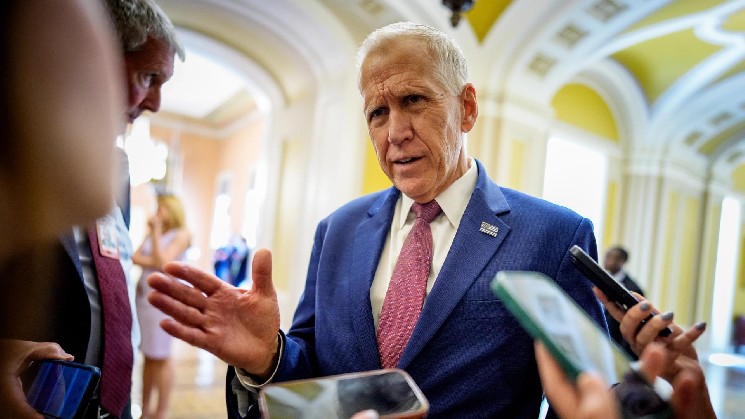
Republican Tillis and Democrat Gallego agreed to try bridging the gap, and the people said the lawmakers indicated they’ve struck new common ground, though they didn’t share any details. Crypto industry lobbyists are eagerly watching the result, because time is running out before the Senate breaks for its August recess, and they contend that finishing the government conflicts-of-interest section is likely to provide momentum to knock out the rest.
Spokespeople for the senators and White House didn’t immediately respond to requests for comment on the status of the ethics negotiation.
Hit after hit
Though the Clarity Act has taken hit after hit in congressional deliberations, it’s still moving, like the John Wick of legislation. But it’s reached its climactic scene as the Senate heads toward its final week of business before its summer break.
