

George Kikvadze adjusts his webcam to display a 2×3 foot circuit board framed and displayed in trophy-like fashion on the wall of his office.
The board, which was used in Bitfury’s early bitcoin mining operations, contains hundreds of small green 55 nanometer silicon chips. These were among the first-ever Application Specific Integrated Circuits, commonly known as ASICs, to be used for industrial-scale bitcoin mining.
“This board itself mined 400,000 bitcoins,” Kikvadze told me in an interview. “Every VC in Silicon Valley missed the chance to get in on this early.”
The prop is a fitting visual for Kikvadze’s new memoir, entitled ‘And Then You Win’. With an impressive story of entrepreneurship, opportunism and perseverance, the book tells the harrowing insider story of how Bitfury arose from nothing to become one of the most consequential companies in the bitcoin ecosystem.
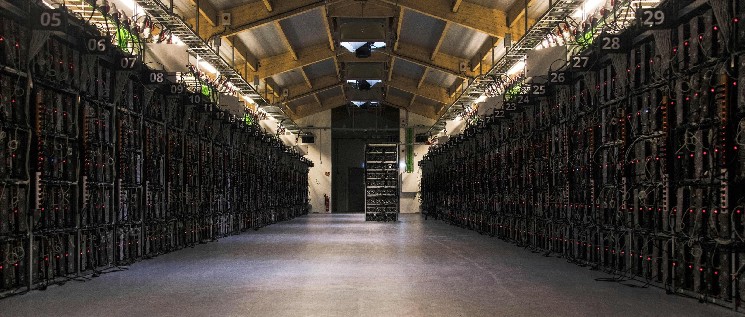
What started as a backwater mining operation in Eastern Europe would go on to employ over 1,000 people in 16 countries. It would operate hundreds of metawatts worth of data centers in Canada, Iceland and Eurasia that powered as much as 40 percent of the bitcoin network. It spun off what would become industry household name miners like Hut 8, Cipher Mining, and American Bitcoin.
Bitfury’s Early Years
Kikvadze begins the story with a personal anecdote that is quite common among early bitcoiners: experiencing a currency collapse as a child. George’s parents saw their savings evaporate overnight when the Soviet Union collapsed in 1991, and the notion that things that appear to be robust and stable can go belly up on a moment’s notice would be forever ingrained in his psyche.
“Growing up under the shadow of Soviet power instilled in me a deep-seated lesson…never entrust your future entirely to centralized authority,” he writes.
He was fortunate enough to leave his home country of Georgia shortly thereafter to study in the US, where he then built a successful hedge fund career.
But fate came calling, and in 2013 he was introduced to Valery Vavilov, originally from Latvia, who would soon red pill him on the “magic internet money” known as bitcoin and convince him to join his upstart mining operation called Bitfury.
George, Val and the Bitfury team would set up shop in a top floor office in central Kiev above Maidan Square, where the team would focus on building out their business by day and, eventually, participating in the 2014 Maidan Revolution by night.
Full Stack Bitcoin Company
Vavilov insisted early on that the grandmaster play was not to simply mine bitcoins in Iceland and Finland, but rather to establish Bitfury as a bitcoin infrastructure company that could service this growing industry across multiple verticals.
They would mine gold, but also sell picks and shovels to fellow prospectors – a “full stack bitcoin company”, as Vavilov put it. “Mining is just the beginning. We build the infrastructure, the security, the software. Everything.”
Manufacturing nanochips was a logical place to start, as there was an obvious need in the industry for a Western counterweight to big Asian chipmakers like Canaan and Bitmain that dominated the space.
It didn’t help that the company’s ragamuffin band of Ukrainian, Finnish and Latvian engineers had no formal education or training in designing silicon chips, building servers, or running data centers. But that liability quickly turned into an asset, as their intellectual horsepower and scrappiness was without rival.
An employee who went only by the name “X” used textbooks and online materials to teach himself the intricacies of chip fabrication, laying the groundwork for future conquests.
In addition to mining and chipmaking, Bitfury would go on to pioneer innovative complementary technologies. It acquired an immersion cooling company called Allied Control that was spun off as LiquidStack in 2021. BlockBox was the first-ever modularized bitcoin mining facility: a self-contained, air-cooled unit that could be unplugged and transported to remote locations with cheap electricity.
Bitfury Capital was created to seed other projects in the bitcoin world, and would go on to invest in names like BitGo, Abra and Xapo.
Axelera was a separate chip division focused specifically on artificial intelligence. Crystal Blockchain became one of leading blockchain analytics tools on the market.
Why Bitcoin Was Shunned by Silicon Valley
But scaling from a backwater miner and self-taught chip design shop into a full stack bitcoin company would require access to significant capital along with some degree of regulatory cover.
Bill Tai, a venture investor, kite surfer and veteran of the semiconductor industry, became the project’s first major backer after seeing how the team had miraculously developed high-performing chips with no formal training. It was “like performing brain surgery without practice,” he says in the book.
“They had no physical headquarters and no background in ‘deep tech’”, Tai writes in his forward to the book in justifying the absurdity of his bet. “None of my well-learned Silicon Valley lessons applied here.”
The rest of Silicon Valley wasn’t as keen, unfortunately. There was a lot of noise and empty promises floating around the bitcoin mining space in 2014, and most investors weren’t convinced that bitcoin itself was worth a look – much less an Eastern European operation waist deep in its ecosystem.
With Silicon Valley uninterested, they decided to look east to their home turf. Through some of Kikvadze’s connections, the company was able to secure a 3 cent per kilowatt hour energy deal at a site in Georgia to build a 20 megawatt facility, which would soon be chocked full of 55 nanometer ASIC chips fresh off the foundry assembly line from Taiwan.
The ragamuffin team of homeschooled chip designers would roll out a 28 nanometer version for commercial distribution in 2015, solidifying Bitfury’s role as a global player in the ASIC chip wars.
Crypto Chip Wars: East Vs. West
The memoir’s most dramatic moment recalls back to 2016 when Bitfury sent its groundbreaking 16 nanometer chip to production at Taiwan-based chipmaker TSMC.
A true next-generation low-voltage chip with unrivaled processing power, there was nothing like it on the market at the time. And the company was effectively betting the farm on its success. It had prepaid millions of dollars for the chips to be produced en masse, and there was a massive queue of customer orders to fill.
But problems soon arose when the chips, which worked flawlessly in lab testing, mysteriously proved defective when manufactured at scale.
Diagnosing and ultimately resolving the problem took nine months – practically an eternity in this fast moving space – and required the help of some hired gun ex-diplomats in Washington, DC who had a direct line to TSMC chairman Morris Chang.
The official explanation given for the defective chips was an overlooked technical issue. Kikvadze, however, has long suspected that the root cause was industrial espionage by his Asian competitors. Behind the scenes, somebody was influencing TSMC managers and employees to intentionally sabotage Bitfury’s chip orders, he reckoned.
“I don’t think people fully understand the Chinese way of doing business,” he told me. “It’s dog eat dog over there.”
For the Bitfury team, the situation was akin to staring death in the face. Kikvadze told me that resolving this crisis was the most harrowing moment of the company’s decade-long roller coaster ride.
“Being forced to lay off 95% of our staff (in 2019 due to the bear market) was easy compared to this.”
In 2018, Kikvadze would have an opportunity of his own to knife a competitor in the back when Bitmain hosted its annual mining conference in Tbilisi, Georgia. To literally march into Bitfury’s backyard and host a conference of this magnitude was a bold and provocative move.
Via his connections at the local power company, Kikvadze claims he explored the idea of having the Tbilisi Opera House’s electricity shut off at the exact moment when Bitmain CEO Jihan Wu would be on stage revealing his new chip design.
Cooler heads prevailed, ultimately, and he chose the more diplomatic option of plastering the city’s billboards with Bitfury advertisements throughout the duration of the conference.
“The strategy worked brilliantly,” he wrote. “While Bitmain held its conference, we were closing deals on the sidelines.”
The rivalry with Bitmain would rear its head again during the 2018-2019 bear market when Bitfury and many other companies in the industry were on life support. Having raised $1 billion the year before and ordering massive quantities of chips from TSMC, Bitmain began dumping chips on the market at 90-95% discounts in a classic race to the bottom.
This put a further clench on Bitfury’s already precarious cash flow position, which induced massive layoffs. Another moonshot miracle was required just to live to fight another day.
Bitfury Today
The FTX collapse and subsequent market unwinding of 2022 ultimately prompted Bitfury to wind down its chip manufacturing business.
The company remains active across high performance compute, edge compute and cloud solutions, venture capital and blockchain-as-a-service through its Exonum platform.
The bear market of 2022-23 was a rough season for most publicly-traded mining firms, with bitcoin collapsing below $20,000 and many firms running into banking issues during the Operation Chokepoint 2.0 era.
But the election of President Donald Trump has breathed fresh life into the mining industry. The new administration’s push to make the United States a strategic hub for bitcoin mining and infrastructure, coupled with rapidly growing AI compute demand, has put these entities back in the driver’s seat.
Chronicling Bitcoin’s History
Despite bitcoin hurtling towards greater mainstream adoption, there remains a shortage of narrative-focused content aimed at documenting bitcoin’s early years.
Why does this matter? Many early bitcoin pioneers have chosen to cash in and live life outside the public eye, and many in the current generation of bitcoiners have been drawn into the movement for financial reasons rather than ideological ones. Because of this, there remains a risk that bitcoin’s birth and history will not be adequately chronicled for future generations to appreciate.
In this capacity, Kikvadze offers a valuable complement to the scholarship documenting bitcoin’s formative period. His frontline perspective on fundraising in the early days, the chip wars with the Asian giants, surviving the Block Size wars and the brutal bear markets of 2018-19 and 2022-23 make for a valuable contribution to bitcoin history.
The book is also a fun and smooth read that can be enjoyed by a novice or experienced bitcoiner alike. It chronicles the fabled Necker Island blockchain summits hosted on Richard Branson’s private island, the birth of the Global Blockchain Business Council trade association and Kikvadze’s many adventures – such as a trip to Cuba where he evangelized bitcoin to Fidel Castro’s son.
Clearly, as a memoir written by a founder there are surely some details of the story that are embellished or that others would likely dispute, but the work as a whole stands on its own merit as a valuable contribution to the bitcoin community and a bridge to bitcoin’s past.
Most importantly, ‘And Then You Win’ offers a powerful example of opportunism, malleability and grit for any budding entrepreneur to follow.
“The Bitfury story, which began with questioning whether digital scarcity was possible, had become proof that transformation was inevitable for those who refused to quit,” Kikvadze concluded. “We’d started as miners, became builders, and evolved into enablers.”
