
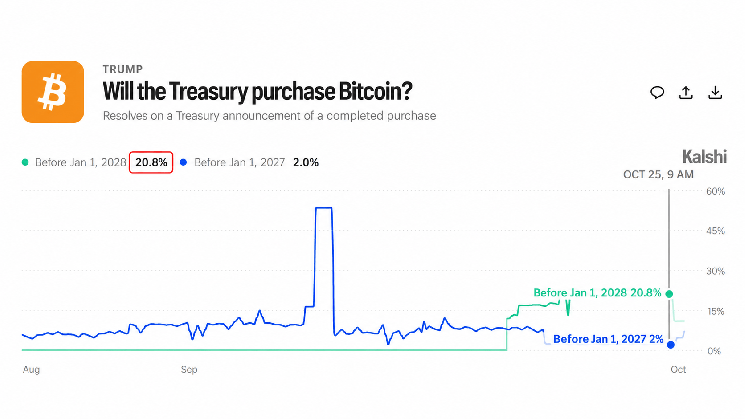

In a market that thin, one motivated trader can move the needle. By Monday morning, the last trade on the 2028 contract had slipped to 11%, with bids at 12 cents and offers at 17 cents.
Compare that with a deeper Kalshi market on whether Trump creates a National Bitcoin Reserve before Jan. 1, 2027. That one has seen close to 200,000 contracts change hands and trades near 3.5%.
Prediction markets also just got a public lesson in humility with Bitcoin.com News recently reporting that most major prediction platforms misread Brazil’s runoff as Lula da Silva came back to win (this was after traders had priced his chances at around 17% the night before).
Where Bitcoin Might Be Headed
Whale Insider flagged that traders see bitcoin going as low as $78,000 this month. Kalshi’s October low contracts back that up as the “below $80,000” contract is effectively settled after last week’s drop, “below $77,500” trades near 44% on more than 117,000 contracts, and “below $75,000” sits near 16%.
Bitcoin’s price slid to $79,146 over the weekend, and Peter Schiff has already said it could hit $75K. Crypto bettors are clearly active, too, with Kalshi and Polymarket just logging a record $2.7 billion week in crypto contracts, driven mostly by bitcoin bets.
The Policy Wall
The case for a Treasury bid rests on rhetoric more than mechanics. Defense Secretary Pete Hegseth told the House Armed Services Committee in April that he is a long-time enthusiast of “Bitcoin and crypto potential,” but described related Pentagon work as classified.
Enthusiasm is not a budget line, though and market tracker Octagon noted that the executive order behind the U.S. Strategic Bitcoin Reserve bars open-market purchases, and that the BITCOIN Act, which would mandate buying, has not been enacted. Without new law or a budget-neutral workaround, the Treasury has no clear path to a “completed purchase.”
That leaves three ways this contract plays out:
- Congress moves: A reserve bill with purchase authority passes in 2027, and the 2028 contract reprices sharply higher.
- A workaround appears: The Treasury announces a budget-neutral swap or revaluation that it calls a purchase, which would test the contract’s wording.
- Nothing happens: The reserve keeps growing only through seizures, and a 21% print on $1,578 of volume fades into a footnote.
