
Close Menu
  • Coins
    • Bitcoin
    • Ethereum
    • Altcoins
    • NFT
  • Blockchain
  • DeFi
  • Metaverse
  • Regulation
  • Other
    • Exchanges
    • ICO
    • GameFi
    • Mining
    • Legal
  • MarketCap
What's Hot

Bitcoin Price Jumps to $69K on US-Iran 45-Day Ceasefire Talks

28/04/2026

AAVE Lands on Solana as Solana Foundation Steps In to Support DeFi Recovery

28/04/2026

Will Ethereum Foundation’s latest $48.9M move fuel more selling pressure ahead?

28/04/2026
Facebook X (Twitter) Instagram
  • Back to NBTC homepage
  • Privacy Policy
  • Contact
X (Twitter) Telegram Facebook LinkedIn RSS
NBTC News
  • Coins
    1. Bitcoin
    2. Ethereum
    3. Altcoins
    4. NFT
    5. View All

    Bitcoin Price Jumps to $69K on US-Iran 45-Day Ceasefire Talks

    28/04/2026

    Bitcoin Hits Weekly High Over $69K on US-Iran Ceasefire Hopes as Oil Slides

    28/04/2026

    Bitcoin climbs above $69K after Trump extends Iran deadline to Tuesday

    28/04/2026

    Is the Crypto Bear Market Finally Ending? Top 3 Signals and 1 Warning

    28/04/2026

    Will Ethereum Foundation’s latest $48.9M move fuel more selling pressure ahead?

    28/04/2026

    Ethereum Price Climbs Gradually, Can Bulls Break $2,400 Barrier?

    28/04/2026

    Bitmine buys $236 million in ether as Tom Lee touts ETH as ‘wartime store of value’

    28/04/2026

    ETH Eyes Breakout as $2,400 Becomes Key Trigger

    28/04/2026

    Solana Stakes Worth Over $211 Million Unlocked in Mere Minutes

    28/04/2026

    Cardano Creator Hoskinson Responds to Avalanche Founder’s Joke About Ripple

    28/04/2026

    Ripple CEO Reacts to BBB Rating for Ripple Prime, Lists Three Points It Validates

    28/04/2026

    There Has Been Significant Whale Activity in Altcoins in Recent Hours – Here Are the Trades They’ve Made

    28/04/2026

    Are NFTs signaling a market shift? THESE indicators say yes

    28/04/2026

    Bored Ape NFT prices jump 81 percent as sales drop

    28/04/2026

    NFTs Attempt Another Comeback as Blue Chips Surge

    28/04/2026

    Pudgy Penguins, BAYC rally masks a shrinking NFT market as volumes and users fall

    27/04/2026

    Bitcoin Price Jumps to $69K on US-Iran 45-Day Ceasefire Talks

    28/04/2026

    AAVE Lands on Solana as Solana Foundation Steps In to Support DeFi Recovery

    28/04/2026

    Will Ethereum Foundation’s latest $48.9M move fuel more selling pressure ahead?

    28/04/2026

    Central Bank of Russia Proposes Opening National Economy to International Markets Using Digital Assets

    28/04/2026
  • Blockchain

    Mastercard joins the blockchain security push — why it matters now

    28/04/2026

    HashKey’s tokenization roadmap could reshape Web3 finance — and the agent economy

    27/04/2026

    Bondex Integrates World ID to Launch Human-Verified Talent Layer for Web3 Hiring

    27/04/2026

    PinGo Integrates With manadia to Power On-Chain Compute Tracking in Potion

    27/04/2026

    NodeOps Network Brings No-Code AI to the BNB Chain Ecosystem

    27/04/2026
  • DeFi

    AAVE Lands on Solana as Solana Foundation Steps In to Support DeFi Recovery

    28/04/2026

    APE Insider Adds to Lido DAO Long, Bringing Position to 10.26 Million LDO Worth $4.58M

    28/04/2026

    Institutions remain bullish on DeFi, but pool, hub models have lost all trust

    28/04/2026

    Curve founder pitches market-based fix for $700K bad debt in contrast to Aave bailout

    28/04/2026

    USDC’s Parent Company, Circle, Announced It Has Made a Purchase of a Surprise Altcoin

    28/04/2026
  • Metaverse

    ‘8,000 Jobs’—Polymarket Sees Tech Layoff Surge As Meta AI Push Bites

    18/04/2026

    Planet Hares Partners With Magne.AI To Bridge Web3 Metaverse With Smartphone Mobile-Ready Applications For Mass Adoption

    08/04/2026

    Mark Zuckerberg’s Meta launches new AI initiative after metaverse retreat

    25/03/2026

    Meta partners with Arm to develop new CPUs for AI deployments

    24/03/2026

    Land values capitulate as $24M metaverse plot collapses to just $9,000

    20/03/2026
  • Regulation

    Central Bank of Russia Proposes Opening National Economy to International Markets Using Digital Assets

    28/04/2026

    According to Some Economists, the Fed May Raise Interest Rates This Year: What Are the Expectations?

    28/04/2026

    Over $172B in Wall St private-credit funds limit withdrawals as investors rush for the exit while Bitcoin climbs

    28/04/2026

    Vertex Ventures investment backs dtcpay funding as firm targets European stablecoin payment expansion

    28/04/2026

    S&P 500 financial stocks form the first Death Cross since 2023

    28/04/2026
  • Other
    1. Exchanges
    2. ICO
    3. GameFi
    4. Mining
    5. Legal
    6. View All

    Nium taps Coinbase to add USDC into global payments network

    28/04/2026

    XRP Secures a Spot on SoFi Bank’s Growing Crypto Platform — Joins Bitcoin, Ethereum & Solana

    28/04/2026

    Polymarket joins Kalshi in race to launch perpetual futures

    28/04/2026

    Shakepay Enables Bitcoin-Backed Lending in Canada After AMF Green Light

    28/04/2026

    South Korea Poised to Lift Ban on Domestic ICOs After 7 Years

    19/12/2025

    Why 2025’s Token Boom Looks Both Familiar and Dangerous

    31/10/2025

    ICO for bitcoin yield farming chain Corn screams we’re so back

    22/01/2025

    Why 2025 Will See the Comeback of the ICO

    26/12/2024

    B.AI and CROSS Transform the Future of AI in Web3 Gaming

    28/04/2026

    Tomoland Partners With Anome Protocol To Advance Web3 Gaming Engagement With DeFi Applications

    25/04/2026

    GameFi is effectively dead as 93% of projects collapse

    23/04/2026

    More than 90% of Web3 games failed after $15 billion boom as gamers never showed up: Caladan

    23/04/2026

    Bitcoin miner Core Scientific shifts to AI with 1.5GW data center push

    28/04/2026

    Tether Develops New Bitcoin Mining Infrastructure with Modular Compute Systems to Control Energy, Cost, and Performance at Scale

    28/04/2026

    Bernstein sees IREN pivoting from Bitcoin mining to $3.7B AI cloud business

    28/04/2026

    Tether launches open-source mining framework to unify Bitcoin infrastructure

    28/04/2026

    Saipan Woman Gets 71 Months for $769K Bitcoin Wire Fraud Scheme

    28/04/2026

    A Very Surprising Altcoin Holds Its First Event in the US Congress! Here Are the Details

    28/04/2026

    Canada’s crypto donation ban clears key vote with support from Conservatives

    28/04/2026

    Romania Blocks 300 Sites and Launches €5M Treatment Fund as Polymarket Ban Holds in Court

    28/04/2026

    Bitcoin Price Jumps to $69K on US-Iran 45-Day Ceasefire Talks

    28/04/2026

    AAVE Lands on Solana as Solana Foundation Steps In to Support DeFi Recovery

    28/04/2026

    Will Ethereum Foundation’s latest $48.9M move fuel more selling pressure ahead?

    28/04/2026

    Central Bank of Russia Proposes Opening National Economy to International Markets Using Digital Assets

    28/04/2026
  • MarketCap
NBTC News
Home»Mining»How $800 hardware can sniff Bitcoin miner traffic via satellite
Mining

How $800 hardware can sniff Bitcoin miner traffic via satellite

NBTCBy NBTC14/10/2025No Comments6 Mins Read
Share
Facebook Twitter LinkedIn Pinterest Email


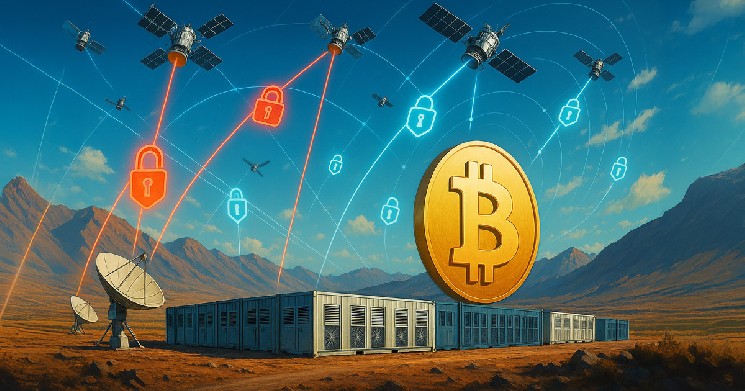
UC San Diego and the University of Maryland researchers have reported findings showing that roughly half of GEO satellite downlinks carry data without encryption.

Further, data interception can be reproduced with just $800 of consumer hardware.

Per WIRED, the team captured telco backhaul, industrial control traffic, and law-enforcement communications, and reported fixes to affected providers where possible.

UCSD’s Systems and Networking group lists the paper “Don’t Look Up” for CCS 2025 in Taipei, reinforcing that this is not a lab curiosity but a documented, peer-reviewed disclosure pipeline. The method targets legacy satellite backhaul rather than any single application layer.

Moreover, the study covered only a slice of visible satellites from San Diego, which implies a wider global surface.

Bitcoin in space – new risks from cheap hardware

For Bitcoin miners and pools operating from remote sites, the exposure maps cleanly to one operational choice: transport security on the path that carries Stratum.

Stratum is the protocol that connects miners to pools, distributes work templates, collects shares and block candidates, directs hashpower, and determines how rewards are accounted for.

Historical deployments of Stratum V1 often run over plaintext TCP unless operators explicitly enable TLS, which means pool endpoints, miner identifiers, and job templates can traverse radio links in the clear when satcom backhaul is in play.

The Stratum V2 specification ships with authenticated encryption by default, using a Noise handshake and AEAD ciphers, which closes the passive interception angle and hardens integrity against share hijack attempts that depend on manipulation of upstream traffic.

According to the Stratum V2 security spec, operators can bridge older rigs through a translation proxy, so firmware swaps on ASICs are not required to start encrypting sessions.

This satellite finding does not implicate every “Bitcoin over space” system.

Blockstream Satellite broadcasts public Bitcoin block data as a one-way downlink, and its Satellite API supports encrypted messages from senders, which places it in a different category than GEO backhaul, which transports private control traffic.

Per Blockstream, the service exists to improve network resilience for receiving blocks in regions with poor internet access and not to carry pool credentials or miner control sessions. Blockstream’s May network update confirms ongoing operations and frequency changes, and does not change the threat model for Stratum links that miners control.

Budget pressure matters for security rollouts. Hashrate is hovering near 1.22 ZH/s, and recent miner economics put hashprice around $51 per PH per day in late September, with the forward curve in the high-forties to low-fifties into the first half of 2026.

According to Hashrate Index, the updated Q4 2025 heatmap details country shares, which helps infer where satellite backhaul is more common due to terrestrial constraints. Present revenue conditions mean operators watch operating costs closely, yet the primary expense for transport encryption is engineering time, not new hardware, which lowers friction for near-term hardening.

A simple sensitivity model frames the downside if network portions still send Stratum V1 over unencrypted satellite links.

Security modeling

Let H denote total hashrate near 1,223 EH/s, and define p_sat as the share using satellite backhaul, p_geo as the share of those on GEO rather than encrypted LEO or terrestrial, and p_v1 as the share still running Stratum V1 without TLS.

At-risk hashrate equals H × p_sat × p_geo × p_v1. The ranges below illustrate order-of-magnitude exposure and the value of migration to TLS or Stratum V2.

The operational guidance follows directly from the protocol stack.

First, enforce TLS across all Stratum V1 endpoints and on the routers in front of them. Then, prefer Stratum V2 for new links and add an SV1→SV2 translation proxy where hardware constraints exist.

TLS 1.3 handshakes are complete in one round trip, and production measurements show low CPU and network overhead on modern systems.

The performance cost is limited in most deployments, which clears a common objection for remote sites that watch latency and utilization. According to the Stratum V2 spec, authenticated encryption protects both confidentiality and integrity of channel messages, which removes the easy win for passive eavesdroppers documented by the satellite study.

Backhaul choices matter beyond header encryption.

Where operators can avoid legacy GEO, an encrypted LEO service or terrestrial path reduces interception risk, although no transport choice replaces endpoint hygiene.

When GEO remains necessary, enforce encryption at every hop, disable insecure management interfaces on satellite modems, and monitor for anomalies in share patterns and endpoint drift that could reveal interference.

The UCSD and UMD work shows that downlink interception is cheap and scalable with commodity hardware, which weakens any assumption that radio links escape attention due to physical distance from the adversary.

Providers, including T-Mobile, addressed specific findings after disclosure, which shows that remediation is practical once visibility exists.

Can this be patched?

The next year will determine how quickly pools and miners normalize encrypted transport. One path is secure by default, where pools accept V1 only over TLS and promote V2 broadly. Translation proxies smooth the transition for older fleets, compressing the window for interception.

A slower path leaves a long tail of unencrypted or partially encrypted sites, creating opportunistic exposure for actors with uplink interference capabilities.

A third path resists change and banks on obscurity, which becomes harder to justify as tools from the study percolate and proof-of-concepts move from academia to hobbyist communities.

None of these trajectories requires protocol invention, only deployment choices that align with well-understood primitives.

Confusion around Blockstream Satellite can distract from the actionable fix. Pool credentials do not live in the broadcast of public block data, and its API supports encrypted payloads for user messages, which separates resilience from control-plane privacy.

The service strengthens receive-side redundancy for the Bitcoin network in regions with weak connectivity, and does not replace transport security on miner-to-pool links.

The study makes one point clear for operators who run from the edge on radio backhaul: plaintext control traffic is now trivial to observe, and encrypting Stratum is a straightforward, low-overhead fix.

The operational path is TLS for V1 today, then Stratum V2.

Noderunner risk

Node operators, or “noderunners,” face a different risk profile than miners because Bitcoin nodes typically receive and relay public blockchain data rather than private credentials or payment instructions.

Running a full node does not require transmitting sensitive authentication material over a satellite link; the data exchanged, blocks, and transactions are already public by design.

However, if a node relies on GEO satellite backhaul for bidirectional internet access, the same exposure that affects any unencrypted TCP traffic applies: peers, IPs, and message metadata could be observed or spoofed if transport encryption is absent.

Using Tor, VPNs, or encrypted overlay networks like I2P minimizes this footprint.

In contrast to miners using Stratum V1, node operators are not leaking value-bearing control traffic but should still encrypt management interfaces and network tunnels to prevent deanonymization or routing interference.

Share. Facebook Twitter Pinterest LinkedIn Tumblr Email
NBTC

Related Posts

Bitcoin miner Core Scientific shifts to AI with 1.5GW data center push

28/04/2026

Tether Develops New Bitcoin Mining Infrastructure with Modular Compute Systems to Control Energy, Cost, and Performance at Scale

28/04/2026

Bernstein sees IREN pivoting from Bitcoin mining to $3.7B AI cloud business

28/04/2026

Tether launches open-source mining framework to unify Bitcoin infrastructure

28/04/2026
Add A Comment

Comments are closed.

Top Posts
Get Informed

Subscribe to Updates

Get the latest news from NBTC regarding crypto, blockchains and web3 related topics.

Your source for the serious news. This website is crafted specifically to for crazy and hot cryptonews. Visit our main page for more tons of news.

We're social. Connect with us:

Facebook X (Twitter) LinkedIn RSS
Top Insights

Bitcoin Price Jumps to $69K on US-Iran 45-Day Ceasefire Talks

28/04/2026

AAVE Lands on Solana as Solana Foundation Steps In to Support DeFi Recovery

28/04/2026

Will Ethereum Foundation’s latest $48.9M move fuel more selling pressure ahead?

28/04/2026
Get Informed

Subscribe to Updates

Get the latest news from NBTC regarding crypto, blockchains and web3 related topics.

Type above and press Enter to search. Press Esc to cancel.