

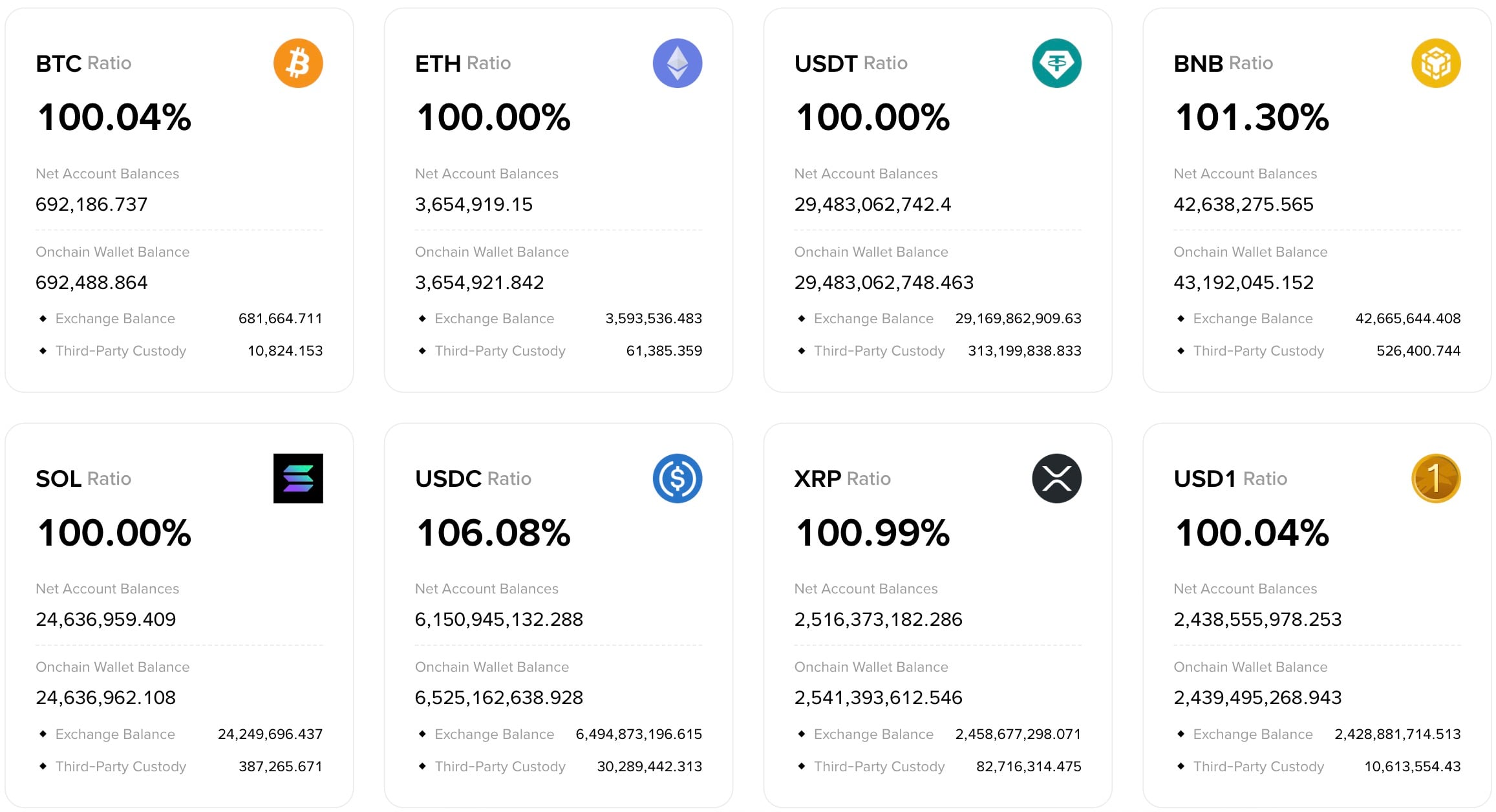
- $XRP: Liabilities to clients grew by 20.84 million coins over the month — from 2,495,533,677 to 2,516,373,182 $XRP. There are currently 2,541,393,612 $XRP on the exchange’s wallets and with custodians.
- $RLUSD: The most notable inflow is in the new stablecoin: user balances grew from 139.53 million to 201.89 million $RLUSD. Binance increased its reserves to 203.56 million $RLUSD.
How Binance plugged the hole
The main thing in the report is something else: Binance confirmed full coverage of the ten most traded assets, including $BTC, $ETH, $USDT, $BNB and $SOL — and did so just two days after the hack.
About $3 billion of the stolen funds was quickly frozen directly on the blockchains with the help of partners, including Tether, Circle and Ripple. To cover the losses and return reserves to 1:1, Binance allocated more than $6.34 billion of its own capital. This reserve included the SAFU fund, the Binance Futures insurance fund and retained earnings.
The remaining 5% of losses are in low-liquidity tokens: they are being quietly bought back through over-the-counter (OTC) desks so as not to crash spot prices.
Each client can verify their own balance: the report is built on Merkle trees and zero-knowledge proofs (zk-SNARKs). For the market, this case sets a new bar: an exchange is no longer judged by whether it gets hacked, but by how quickly it stops an attack and whether it has enough of its own money to plug the hole.
