
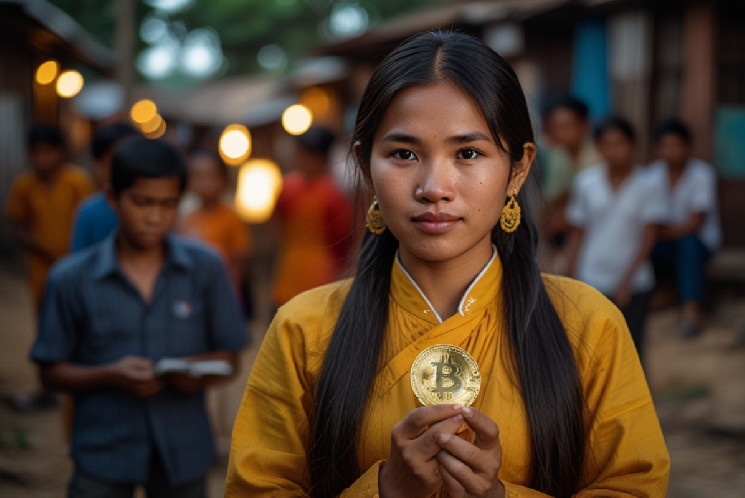

In a world where “talent is everywhere, opportunity is not,” the existing fiat monetary system perpetuates the divide between those with access and resources those without. Even in democratic societies, which have their own flaws, people generally enjoy stable currencies, freedom, and rule of law. These features create an environment rich with opportunities, where a person’s start in life doesn’t have to dictate where they end up.
Bitcoin advocate and bestselling author Lyn Alden is a prime example of overcoming obstacles and taking advantage of the opportunities afforded by democratic societies. Despite experiencing homelessness for several years, she worked her way up to become a well-known figure in financial circles. Her story is not unique; many refugees fleeing war and persecution have found ways to adapt, innovate, and thrive in new lands, contributing significantly to their adopted communities.
WhatsApp co-founder Jan Koum, for example, grew up without electricity in Ukraine, and after immigrating to America he spent several years cleaning grocery stores before finally achieving success. PayPal co-founder Max Levchin has tweeted about how he found success in America after escaping persecution in Russia. “My family and I, and thousands of Soviet Jews like us, came to the US as refugees in ’91, running from a regime that persecuted us because of who we were,”. Another amazing immigrant success story is that of Mai Lee Chang, who was born in a Thai refugee camp to Vietnamese parents and only knew one English word — “restroom” — when she started school in the U.S. Chang overcame numerous obstacles and is now an engineer contributing to NASA’s journey to Mars.
However, the situation is vastly different under authoritarian regimes, where a person’s potential is often predetermined by their birth circumstances. Typically, in such places if you’re not born into a family with connections to corrupt officials—in other words, if you’re not a rich kid—your ability to innovate and your entrepreneurial spirit will be systematically suppressed. Under these regimes, the fiat system isn’t based on merit, but rather rigged in favor of such ‘crony kids.’ In other words, the systems are based on nepotism, family connections, and corruption.
In the past, when there was neither the internet nor smartphones available, the average individual living in such hostile environments simply accepted the harsh reality of being destined to serve dictators and their family members. Today, however, Bitcoin is emerging as more than just a technology; it serves as a gateway to financial empowerment without compromising moral values. It offers a powerful tool for breaking through many of the concrete barriers erected by oppressive governments.
The experience of Swan Htet Aung (Swan), an AI entrepreneur from Myanmar (formerly known as Burma), demonstrates how Bitcoin can provide a lifeline to individuals facing the harsh reality of starting from scratch without money or family connections. After founding his AI company in 2016, Swan’s startup grew quickly, and by 2020 it was generating annual revenue of over $300,000.
Highlighting the importance of Bitcoin in preserving financial health, Swan recalled a pivotal moment after the coup in February 2021. Four days after the military takeover, he withdrew his company’s cash and converted it to Bitcoin and USDT. He made this decision just a couple of weeks before banks in Myanmar began limiting withdrawals for individuals and businesses, allowing him to take control of his company’s assets. Unfortunately, his choice to keep the remaining USD assets in the banks caused him to lose a significant portion of the company’s financial assets when the Myanmar’s junta enacted an extreme new monetary policy designed to conserve USD for its war machine. The policy, issued by Myanmar’s Central Bank on April 3rd 2022, resulted in the forceful conversion of Swan’s USD reserves into Myanmar’s rapidly depreciating local currency (the Myanmar Kyat) without his consent at 30% below the market rate.
The new policy mandated that “Residents within the country must repatriate foreign currency earnings obtained from abroad to Myanmar. These earnings are to be sold and exchanged for Myanmar Kyat within one working day through banks holding Authorized Dealer (AD) licenses by opening a foreign currency account in Myanmar.”
People living in countries with more fair and just legal systems might find it difficult to comprehend such oppressive financial policies. However, Myanmar actually has a history of centralized financial institutions wielding power to suppress its citizens. A notorious example happened in 1987 when the government suddenly demonetized 25, 35, and 75 Kyat notes, effectively erasing 80% of the currency circulating in the economy overnight.
More recently, after Myanmar’s violent military coup in 2021, the Burmese military used tactics such as freezing the bank accounts of activists, journalists, and supporters of the anti-coup movement, further demonstrating the junta’s tactic of oppressing people via the fiat financial system. Unfortunately, such abusive policies are often effective in places such as Myanmar, where people are preoccupied with ensuring their physical survival, securing food for their table, and keeping a roof over their heads – leaving them with little energy or no interest to challenge or fight against injustices.
Before 2010, Myanmar had a lower mobile phone ownership rate than North Korea, and dictator Than Shwe’s regime discouraged internet use by spreading propaganda that the internet was merely a place for adult videos. By 2016, however, the landscape had changed dramatically, as social media, affordable smartphones, and cheap SIM cards had become widely accessible to the majority of the country’s population.
Initially, Myanmar entrepreneur Swan came to the U.S. at age 32 for the GenAI event hosted by AWS in San Francisco to learn and gain new experiences, intending to return to Myanmar. However, while he was in transit, the Burmese military activated a forced conscription law, drastically changing his life trajectory. This law, combined with the financial instability caused by the Central Bank’s actions, widespread socio-economic injustice, and the country’s hyper-surveillance system, prompted Swan to decide to stay longer in the U.S. He now hopes to obtain an O1-Visa to continue his work and rebuild his dream in an environment where there are more opportunities to innovate and develop. While the U.S. has its own inequalities and domestic issues, many foreigners still view it as the best destination to pursue their dreams, believing that hard work and innovation can lead to success.
In a conversation for this article, Swan recounted the early days of his startup in Yangon, Myanmar’s largest city. Along with two friends, Swan launched an AI software company in 2016, a period of time when Myanmar was undergoing significant reforms and gradually increasing its participation in the global community after over half a century of isolation.
“Human labor is cheaper in Myanmar than subscribing to software,” Swan said. “It makes sense for business owners to hire staff at a salary of $100 a month and assign them multiple tasks, whether they’re inside or outside the scope of the job, unlike a chatbot for customer service.” While AI job displacement is rising in the developed world, in developing countries sweatshop conditions and cheap labor costs will always outcompete AI, at least in places where electricity is limited and there’s zero democracy (of course, low wages and sweatshop working conditions also raise a host of ethical problems that must be addressed).
Swan then shared the early struggles of his startup, “We spent pretty much all of 2016 just developing the product because we didn’t get a single customer. I had a side job and lived with my parents in a rented apartment while the other two co-founders left to pursue other full-time opportunities.”
Swan, who speaks Burmese and English fluently, mentioned that he faced social constraints while raising funds, primarily because Myanmar is an emerging market. Additionally, there was an underlying social barrier: he had never worked abroad and held a degree from a university in Yangon. Unlike the privileged ‘crony kids’, Swan lacked a privileged background, so his start-up struggled to find investors despite generating annual revenues of $300,000 in 2020 and signing deals with over 1,000 business partners, including multinational corporations like Samsung, Unilever, Carlsberg, NIVEA, and many more.
If a protocol-based fundraising system like Bitcoin was available for entrepreneurs in the developing world, talented individuals like Swan could scale up their startups regardless of their socio-economic status or whether they have a prestigious degree.
Bitcoin may be seen as an investment asset class in the developed world or misunderstood as an environmentally damaging technology, but it represents a lifeline, money, and access to the global capital market for talented individuals in developing countries who are trapped in an unfair monetary system which primarily benefits privileged ‘crony kids.’ These talented individuals don’t have the luxury of engaging in the unfinished global debate about Bitcoin. Rather, they are desperately trying to break free from the cycle of economic oppression. Thankfully, under the Bitcoin standard individuals can access opportunities and financial freedom, ultimately contributing to a more equal and prosperous global community.
This is a guest post by Win Ko Ko Aung. Opinions expressed are entirely their own and do not necessarily reflect those of BTC Inc or Bitcoin Magazine.
