
Close Menu
  • Coins
    • Bitcoin
    • Ethereum
    • Altcoins
    • NFT
  • Blockchain
  • DeFi
  • Metaverse
  • Regulation
  • Other
    • Exchanges
    • ICO
    • GameFi
    • Mining
    • Legal
  • MarketCap
What's Hot

Bitcoin pulls away from software stocks as Iran war, AI reshape market dynamic

28/04/2026

US stocks open higher as Dow jumps while crypto equities struggle for direction

28/04/2026

Unifas Labs, ZenChain, and Perle Lead Token Sales in Q1 2026 Quarter Based on ATH ROI

28/04/2026
Facebook X (Twitter) Instagram
  • Back to NBTC homepage
  • Privacy Policy
  • Contact
X (Twitter) Telegram Facebook LinkedIn RSS
NBTC News
  • Coins
    1. Bitcoin
    2. Ethereum
    3. Altcoins
    4. NFT
    5. View All

    Bitcoin pulls away from software stocks as Iran war, AI reshape market dynamic

    28/04/2026

    Bitcoin Whale Transfers Over $20 Million Worth of BTC to Binance Exchange! Pre-Sale Preparation? Here Are the Details

    28/04/2026

    Michael Saylor’s Strategy Company Adds Another Bitcoin Purchase to Its Account! Here’s the Latest Purchase

    27/04/2026

    Bitcoin Retests $70,000, Fuels $300 Million in Crypto Shorts Liquidation

    27/04/2026

    Whale Shorts Rise at Key Support

    27/04/2026

    Ethereum Faces ‘Moment Of Truth’ As Price Eyes $2,450 Resistance – Breakout Loading?

    27/04/2026

    ETH Coin Targets $2,500 as Bulls Defend a Strong Support

    27/04/2026

    Ethereum Near Key Zone After 36% Gain – What’s Next?

    26/04/2026

    Unifas Labs, ZenChain, and Perle Lead Token Sales in Q1 2026 Quarter Based on ATH ROI

    28/04/2026

    SafePal TRX Staking Service Launches, Unlocking a Lucrative 10% APY for Crypto Holders

    28/04/2026

    Grayscale Files Amended S-1 for Bittensor TAO Trust

    28/04/2026

    Crypto Founder Explains How XRP Can Settle $50 Million Between Two Big Banks

    27/04/2026

    Bored Ape NFT prices jump 81 percent as sales drop

    28/04/2026

    NFTs Attempt Another Comeback as Blue Chips Surge

    28/04/2026

    Pudgy Penguins, BAYC rally masks a shrinking NFT market as volumes and users fall

    27/04/2026

    Top NFT Sales of the Week, Flying Tulip on Top

    27/04/2026

    Bitcoin pulls away from software stocks as Iran war, AI reshape market dynamic

    28/04/2026

    US stocks open higher as Dow jumps while crypto equities struggle for direction

    28/04/2026

    Unifas Labs, ZenChain, and Perle Lead Token Sales in Q1 2026 Quarter Based on ATH ROI

    28/04/2026

    Hyperliquid whales park $3.66B as long/short ratio hovers near neutral

    28/04/2026
  • Blockchain

    Mastercard joins the blockchain security push — why it matters now

    28/04/2026

    HashKey’s tokenization roadmap could reshape Web3 finance — and the agent economy

    27/04/2026

    Bondex Integrates World ID to Launch Human-Verified Talent Layer for Web3 Hiring

    27/04/2026

    PinGo Integrates With manadia to Power On-Chain Compute Tracking in Potion

    27/04/2026

    NodeOps Network Brings No-Code AI to the BNB Chain Ecosystem

    27/04/2026
  • DeFi

    Solana Prepares to Help Aave in Its Time of Need – They Have Made an Official Announcement

    27/04/2026

    Why DeFi isn’t dead despite massive exploits and $13 billion investor exodus

    27/04/2026

    Aave raises nearly 80% of the $200 million it needs to cover bad debt left by Kelp DAO exploit

    27/04/2026

    XPower Finance Partners With Blazpay To Unlock Cross-Chain Yield Access Across DeFi Applications

    27/04/2026

    Babylon Deposits $3M USDT Into Aave to Boost DeFi Recovery Push

    27/04/2026
  • Metaverse

    ‘8,000 Jobs’—Polymarket Sees Tech Layoff Surge As Meta AI Push Bites

    18/04/2026

    Planet Hares Partners With Magne.AI To Bridge Web3 Metaverse With Smartphone Mobile-Ready Applications For Mass Adoption

    08/04/2026

    Mark Zuckerberg’s Meta launches new AI initiative after metaverse retreat

    25/03/2026

    Meta partners with Arm to develop new CPUs for AI deployments

    24/03/2026

    Land values capitulate as $24M metaverse plot collapses to just $9,000

    20/03/2026
  • Regulation

    US stocks open higher as Dow jumps while crypto equities struggle for direction

    28/04/2026

    Tokenized RWA Market Hits $27B as US Treasury Products Lead Growth

    28/04/2026

    TransFi Secures Pivotal $19.2M Funding to Revolutionize Global Stablecoin Payments

    28/04/2026

    Australian crypto shopping surges, but so do banking blocks: Survey

    27/04/2026

    Kiyosaki Tells Followers to Buy Bitcoin and Ethereum Now Ahead of Market Crash

    27/04/2026
  • Other
    1. Exchanges
    2. ICO
    3. GameFi
    4. Mining
    5. Legal
    6. View All

    Hyperliquid whales park $3.66B as long/short ratio hovers near neutral

    28/04/2026

    Polymarket odds for Waller Fed chair confirmation surge on Powell probe U-turn

    28/04/2026

    Binance Unveils Agentic Wallet for AI-Driven Web3 Trading and Transfers

    27/04/2026

    KuCoin has introduced direct crypto payments via Mastercard’s global network for eligible Australian users

    27/04/2026

    South Korea Poised to Lift Ban on Domestic ICOs After 7 Years

    19/12/2025

    Why 2025’s Token Boom Looks Both Familiar and Dangerous

    31/10/2025

    ICO for bitcoin yield farming chain Corn screams we’re so back

    22/01/2025

    Why 2025 Will See the Comeback of the ICO

    26/12/2024

    Tomoland Partners With Anome Protocol To Advance Web3 Gaming Engagement With DeFi Applications

    25/04/2026

    GameFi is effectively dead as 93% of projects collapse

    23/04/2026

    More than 90% of Web3 games failed after $15 billion boom as gamers never showed up: Caladan

    23/04/2026

    UXLINK Taps ANOME Protocol to Redefine Web3 Gaming, SocialFi, and NFTFi

    23/04/2026

    Bernstein sees IREN pivoting from Bitcoin mining to $3.7B AI cloud business

    28/04/2026

    Tether launches open-source mining framework to unify Bitcoin infrastructure

    28/04/2026

    Luxor expands MicroBT partnership with $100 million mining rig deal

    27/04/2026

    Miners Beat Bitcoin by 70% in 2026 as Terawulf Locks $12.8B in AI Contracts

    27/04/2026

    Matt Mahan: California’s spending has risen 75% with no improved outcomes, bureaucratic inefficiencies are paralyzing governance, and San Jose’s tax-free strategies are reducing crime and homelessness

    27/04/2026

    Rebecca Rettig: Regulatory clarity is essential for crypto growth, the proposed bill is the largest since Dodd-Frank, and the White House is actively pushing for legislation

    27/04/2026

    Mark Warner: Government and society are unprepared for AI advancements, rising unemployment among recent graduates, and the urgent need for regulatory action

    27/04/2026

    UK invites crypto giant Bybit to London to win over some of UAE’s innovation shine

    26/04/2026

    Bitcoin pulls away from software stocks as Iran war, AI reshape market dynamic

    28/04/2026

    US stocks open higher as Dow jumps while crypto equities struggle for direction

    28/04/2026

    Unifas Labs, ZenChain, and Perle Lead Token Sales in Q1 2026 Quarter Based on ATH ROI

    28/04/2026

    Hyperliquid whales park $3.66B as long/short ratio hovers near neutral

    28/04/2026
  • MarketCap
NBTC News
Home»Legal»Why Senate Democrats’ First Closed-Door Crypto Meeting Matters for U.S. Digital Asset Policy
Legal

Why Senate Democrats’ First Closed-Door Crypto Meeting Matters for U.S. Digital Asset Policy

NBTCBy NBTC09/02/2026No Comments6 Mins Read
Share
Facebook Twitter LinkedIn Pinterest Email


Table of Contents

A Fragmented U.S. Approach to Crypto RegulationDemocrats’ Skepticism Toward Digital AssetsFIT21, CLARITY, and Legislative GridlockThe February 2026 Closed-Door MeetingToken Classification and Regulatory BoundariesStablecoins and Yield RestrictionsElectoral Pressure and Political ContextWhat it Means for U.S. Markets and CompetitivenessConsumer Protection and Market IntegrityWhat Comes Next?ConclusionSources:Frequently Asked Questions

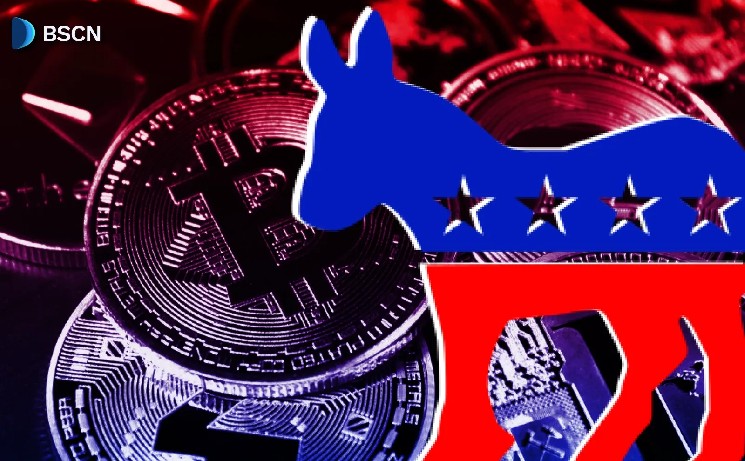
On February 4, 2026, Senate Democrats will hold their first member-level closed-door meeting focused exclusively on cryptocurrency market structure. The discussion centers on how the United States should regulate digital assets, including cryptocurrencies, stablecoins, and tokenized products.

The meeting comes after years of stalled legislation, agency disputes, and political division over how digital assets should be classified and regulated. While Republicans have driven most recent crypto legislation, Democrats have often raised objections regarding consumer protection, financial stability, and the risks of illicit finance.

This internal caucus signals a change in process. Instead of addressing crypto policy through public hearings or regulatory enforcement, Democratic senators are discussing it privately. That shift alone has implications for how Congress may handle digital asset legislation in 2026.

A Fragmented U.S. Approach to Crypto Regulation

Cryptocurrencies such as Bitcoin and Ethereum gained widespread use during the 2010s. Their growth outpaced the development of a clear U.S. legal framework. Oversight has relied on enforcement actions by the Securities and Exchange Commission and the Commodity Futures Trading Commission, rather than comprehensive legislation.

The SEC has argued that many tokens qualify as securities under existing law. The CFTC has maintained authority over commodities such as Bitcoin. The lack of statutory boundaries between the agencies has led to legal disputes, inconsistent compliance standards, and uncertainty for market participants.

Several crypto firms have moved operations outside the United States, citing regulatory ambiguity. Industry groups have warned that the absence of clear rules limits domestic investment and development.

Democrats’ Skepticism Toward Digital Assets

Many Democratic lawmakers have approached crypto with caution. Elizabeth Warren has been one of the most vocal critics, arguing that crypto markets expose consumers to fraud, enable illicit finance, and operate outside standard banking safeguards.

During the Biden administration, Democratic priorities included financial stability, sanctions enforcement, and climate impacts. Bitcoin mining’s energy use became a frequent point of criticism. Stablecoins, which are typically pegged to the U.S. dollar, were compared to unregulated deposit products.

These views placed Democrats at odds with Republicans, who framed crypto as a financial innovation issue. The divide slowed progress on legislation intended to clarify regulatory authority and market structure.

FIT21, CLARITY, and Legislative Gridlock

In 2024, the House passed the Financial Innovation and Technology for the 21st Century Act (FIT21) with bipartisan support. The bill aimed to define when a digital asset is treated as a security or a commodity.

In the Senate, related proposals such as the CLARITY Act have faced delays. The bill seeks to clarify jurisdiction between the SEC and the CFTC, set disclosure standards for token issuers, and establish rules for trading platforms.

Democratic senators raised objections to several elements. These included limits on ethics rules for public officials, controls on stablecoin yields, and safeguards against market manipulation. As a result, committee markups were postponed in late 2025.

The February 2026 Closed-Door Meeting

The February 4 meeting marks the first time Senate Democrats have convened privately to discuss crypto market structure as a caucus. The session was first reported by Eleanor Terrett.

The timing follows a White House-led meeting between banking executives and crypto firms that failed to reach consensus. One participant described the discussion as dominated by institutional interests, with limited representation for retail users.

Democrats are now reviewing the CLARITY Act, the Digital Commodity Infrastructure Act advanced by the Senate Agriculture Committee, and stablecoin proposals under consideration in both chambers.

Key issues include how tokens are classified, whether certain memecoins should fall under commodity rules, and how stablecoin issuers should be regulated.

Token Classification and Regulatory Boundaries

One of the central questions is how digital tokens are defined under U.S. law. Current proposals distinguish between investment contracts and decentralized assets based on network maturity and issuer control.

Under this framework, some memecoins and utility tokens would be treated as commodities once they meet decentralization standards. Oversight would then shift to the CFTC.

Democrats have sought tighter definitions to prevent issuers from avoiding securities rules through technical claims. The closed-door meeting allows senators to compare positions without public pressure.

Stablecoins and Yield Restrictions

Stablecoins represent a market of about $150 billion. They are widely used for trading, payments, and decentralized finance activity.

Banks argue that allowing stablecoin issuers to offer yield creates competition with deposits without equivalent regulation. Crypto firms counter that stablecoins operate on public blockchains with real-time transparency.

Democratic lawmakers have questioned whether yield-bearing stablecoins should be restricted or subject to banking-style supervision. This issue remains one of the largest obstacles to a bipartisan agreement.

Electoral Pressure and Political Context

The meeting occurs less than a year before the November 2026 midterm elections. Any crypto legislation will require 60 votes in the Senate, meaning Democratic support is necessary.

Crypto-focused political action committees spent more than $100 million during the 2024 election cycle. Several lawmakers from technology-heavy states now face pressure from constituents to support clearer rules.

By meeting internally, Democrats may be seeking to unify their approach before negotiations resume with Republicans.

What it Means for U.S. Markets and Competitiveness

Clear federal rules could reduce reliance on enforcement actions and court decisions. Market participants have argued that predictable standards would support compliance and risk management.

Other regions have moved ahead. The European Union’s Markets in Crypto-Assets framework provides licensing rules and consumer protections. Asian jurisdictions have also advanced digital asset regimes.

U.S. policy choices influence global standards. A defined framework could support lawful activity while strengthening oversight of illicit use.

Consumer Protection and Market Integrity

The collapse of major crypto firms in recent years highlighted gaps in custody, disclosure, and governance. Democrats have emphasized the need for protections aimed at retail users.

The closed-door meeting offers an opportunity to assess whether existing proposals address custody standards, reserve disclosures, and conflict-of-interest controls.

Balancing institutional influence with retail safeguards remains a central concern for Democratic lawmakers.

What Comes Next?

If the discussions reduce internal divisions, Senate Banking Committee markups could resume by March 2026. Floor consideration would follow if leadership reaches an agreement.

Observers will watch for statements from lawmakers involved in negotiations, including Cory Booker, who has participated in bipartisan crypto talks.

Failure to align positions could delay legislation until after the election cycle.

Conclusion

The February 2026 closed-door meeting does not change U.S. crypto law on its own. It does change how Senate Democrats are approaching the issue. For the first time, the party is addressing the digital asset market structure through internal policy discussions rather than through reactive opposition.

That process matters. Regulatory clarity depends on consensus across agencies and parties. Whether the outcome is new legislation or continued delay, the meeting reflects a shift toward structured engagement with a market that has operated for years without a clear statutory framework.

Sources:

  • Coingeek: U.S Market Structure Obstacles
  • CryptoRank: Senate Democrats Plan Closed-Door Meeting on U.S. Crypto Market Structure
  • X Post: Eleanor Terrett’s SCOOPLET

Share. Facebook Twitter Pinterest LinkedIn Tumblr Email
NBTC

Related Posts

Matt Mahan: California’s spending has risen 75% with no improved outcomes, bureaucratic inefficiencies are paralyzing governance, and San Jose’s tax-free strategies are reducing crime and homelessness

27/04/2026

Rebecca Rettig: Regulatory clarity is essential for crypto growth, the proposed bill is the largest since Dodd-Frank, and the White House is actively pushing for legislation

27/04/2026

Mark Warner: Government and society are unprepared for AI advancements, rising unemployment among recent graduates, and the urgent need for regulatory action

27/04/2026

UK invites crypto giant Bybit to London to win over some of UAE’s innovation shine

26/04/2026
Add A Comment

Comments are closed.

Top Posts
Get Informed

Subscribe to Updates

Get the latest news from NBTC regarding crypto, blockchains and web3 related topics.

Your source for the serious news. This website is crafted specifically to for crazy and hot cryptonews. Visit our main page for more tons of news.

We're social. Connect with us:

Facebook X (Twitter) LinkedIn RSS
Top Insights

Bitcoin pulls away from software stocks as Iran war, AI reshape market dynamic

28/04/2026

US stocks open higher as Dow jumps while crypto equities struggle for direction

28/04/2026

Unifas Labs, ZenChain, and Perle Lead Token Sales in Q1 2026 Quarter Based on ATH ROI

28/04/2026
Get Informed

Subscribe to Updates

Get the latest news from NBTC regarding crypto, blockchains and web3 related topics.

Type above and press Enter to search. Press Esc to cancel.