
Close Menu
  • Coins
    • Bitcoin
    • Ethereum
    • Altcoins
    • NFT
  • Blockchain
  • DeFi
  • Metaverse
  • Regulation
  • Other
    • Exchanges
    • ICO
    • GameFi
    • Mining
    • Legal
  • MarketCap
What's Hot

ClearBank taps crypto custody firm Taurus to power stablecoin services

10/02/2026

Gemini Slashes Staff, Exits Europe Amid Crypto Downturn

10/02/2026

Google Parent Alphabet Hits $4 Trillion Valuation After Apple AI Deal

10/02/2026
Facebook X (Twitter) Instagram
  • Back to NBTC homepage
  • Privacy Policy
  • Contact
X (Twitter) Telegram Facebook LinkedIn RSS
NBTC News
  • Coins
    1. Bitcoin
    2. Ethereum
    3. Altcoins
    4. NFT
    5. View All

    Price Breaks All-Time High Record Again – Here’s What We Know

    04/08/2025

    Bitcoin Switzerland? El Salvador to Host First Fully Native Bitcoin Capital Markets

    04/08/2025

    Bitcoin Breaks $119K, but XLM and HBAR Aren’t Impressed by Its Meager Percentage Gain

    04/08/2025

    High-Stakes Consolidation Could Define Q3 Trend

    04/08/2025

    Tom Lee says BitMine’s $6 billion ether paper loss is “by design”

    10/02/2026

    Ethereum price enters high-risk zone below $2.3K as network activity surges – further decline ahead?

    09/02/2026

    Ethereum MVRV Ratio Drops to 0.87 Signaling Potential Market Bottom at $1,959

    09/02/2026

    ETF Inflows Return At $14M But $112M Spot Outflows Keep Pressure On

    09/02/2026

    The Sui Ecosystem’s Top 3 Altcoin Performers

    29/07/2025

    Floki Launches $69000 Guerrilla Marketing Challenge With FlokiUltras3

    28/07/2025

    Crypto Beast denies role in Altcoin (ALT) crash rug pull, blames snipers

    28/07/2025

    $1.6 Billion XRP Surge: Here’s What’s Unfolding

    28/07/2025

    GPT360 Taps Infiblue to Boost NFT Utility and Community Growth

    10/02/2026

    Pudgy Penguins Hit New York City With Valentine’s Day Pop-Up Event

    08/02/2026

    Justin Bieber Paid $1.3 Million for a Bored Ape NFT. It’s Now Worth $12K

    07/02/2026

    NFT market cap slides back to 2021 pre-hype levels, near $1.5B

    06/02/2026

    ClearBank taps crypto custody firm Taurus to power stablecoin services

    10/02/2026

    Gemini Slashes Staff, Exits Europe Amid Crypto Downturn

    10/02/2026

    Google Parent Alphabet Hits $4 Trillion Valuation After Apple AI Deal

    10/02/2026

    Crypto infrastructure firm pushes deeper into stablecoin payments with $250 million deal

    10/02/2026
  • Blockchain

    Access Protocol Partners ANT.FUN to Boost Creator Economy on Solana

    09/02/2026

    Critical 24-Hour Outage Stuns Permanent Web

    09/02/2026

    Eigen LabsResearcher Says DAOs Will 100x as AI Crushes Software Costs

    09/02/2026

    Why machine-to-machine payments are the new electricity for the digital age

    09/02/2026

    CRO, ATOM, SEI, INJ, TIA, and Others Lead by Total Staked Value

    09/02/2026
  • DeFi

    Andre Cronje’s Flying Tulip Gears Up for Public Sale

    10/02/2026

    Sushi Solana integration signals strategic DeFi expansion on a fast-growing blockchain

    10/02/2026

    Fireblocks Integrates With Stacks Bitcoin DeFi

    09/02/2026

    Vitalik Buterin Says Most DeFi Is a Lie—Here’s What Really Counts

    09/02/2026

    COTI Earn Brings More Yield to $ADA and $USDT Holders via Carbon DeFi

    08/02/2026
  • Metaverse

    Corning shares surge over 16% after Meta signs $6B data center deal

    27/01/2026

    Mark Zuckerberg’s Meta signs $6B fiber deal with Corning to expand US data centers

    27/01/2026

    Meta to cut 10% of metaverse arm this week amid AI push: Report

    13/01/2026

    Yuga Labs Acquires Otherside Creator Platform From Improbable

    27/12/2025

    Meta CEO Mark Zuckerberg Made a Decision That Will Deeply Affect Metaverse Projects! Here Are the Details

    05/12/2025
  • Regulation

    ClearBank taps crypto custody firm Taurus to power stablecoin services

    10/02/2026

    Google Parent Alphabet Hits $4 Trillion Valuation After Apple AI Deal

    10/02/2026

    Crypto infrastructure firm pushes deeper into stablecoin payments with $250 million deal

    10/02/2026

    Credit unions reject stablecoin rewards, bitcoin traders look to inflation data: Crypto Daybook Americas

    10/02/2026

    World central banks rally behind Powell, stress Fed independence

    10/02/2026
  • Other
    1. Exchanges
    2. ICO
    3. GameFi
    4. Mining
    5. Legal
    6. View All

    Gemini Slashes Staff, Exits Europe Amid Crypto Downturn

    10/02/2026

    Cronos teams up with Fireblocks to build secure global trading infrastructure

    10/02/2026

    Binance and ByBit have reportedly begun withdrawal freezes

    10/02/2026

    Bitcoin Exchange Binance Announces It Purchased Bitcoin for the SAFU Fund! Here Are the Details

    10/02/2026

    South Korea Poised to Lift Ban on Domestic ICOs After 7 Years

    19/12/2025

    Why 2025’s Token Boom Looks Both Familiar and Dangerous

    31/10/2025

    ICO for bitcoin yield farming chain Corn screams we’re so back

    22/01/2025

    Why 2025 Will See the Comeback of the ICO

    26/12/2024

    PlayZap Games Joins GENCY AI to Revolutionize AI-Led Advertising in GameFi Sector

    06/02/2026

    Enjin Launches Cross-Game Multiverse Campaign

    05/02/2026

    New ‘Axie Infinity’ Ethereum Gaming Token Will Be Airdropped to AXS Stakers

    05/02/2026

    W3GG Taps Lussaio to Revolutionize Web3 Gaming Experience with Earning Rewards

    01/02/2026

    Bitcoin miner Cango sold $305 million of BTC during market slump to fund AI shift

    10/02/2026

    Cipher Mining and TeraWulf are buys, MARA a sell, as Morgan Stanley begins bitcoin miner coverag

    10/02/2026

    Is the Future of Bitcoin Mining in the US at Risk? What Happens if US Companies Stop Mining? Here’s What You Need to Know

    10/02/2026

    NFN8 Group Inc. files for Chapter 11 bankruptcy protection

    10/02/2026

    EU sanction threats over Russia ties loom as Kyrgyzstan amends crypto rules

    09/02/2026

    Critics tell UK Lords stablecoins are not future money

    09/02/2026

    XRP ‘Rigged From Day One’? Pro-XRP Lawyer Separates Fact From Fiction

    09/02/2026

    White House Frames Clarity Act as Crown Jewel of Crypto Policy

    09/02/2026

    ClearBank taps crypto custody firm Taurus to power stablecoin services

    10/02/2026

    Gemini Slashes Staff, Exits Europe Amid Crypto Downturn

    10/02/2026

    Google Parent Alphabet Hits $4 Trillion Valuation After Apple AI Deal

    10/02/2026

    Crypto infrastructure firm pushes deeper into stablecoin payments with $250 million deal

    10/02/2026
  • MarketCap
NBTC News
Home»Altcoins»What is Sonic Blockchain and How Does it Work? Full Guide
Altcoins

What is Sonic Blockchain and How Does it Work? Full Guide

NBTCBy NBTC02/03/2025No Comments6 Mins Read
Share
Facebook Twitter LinkedIn Pinterest Email


What Is the Sonic Blockchain?

Sonic is a relatively new Layer-1 blockchain created by Sonic Labs, formerly known as Fantom. The network was co-founded and architected by Andre Cronje, a well-known figure in the blockchain industry who previously contributed to numerous DeFi protocols like Yearn and Keep3r. Under his technical leadership, Sonic focuses on two main things: very fast speeds and helping developers earn money from their work. Sonic works with Ethereum-based apps and can handle up to 10,000 transactions every second. It confirms these transactions in less than one second, which makes it a powerful platform for moving digital assets quickly.

The team behind Sonic designed it to solve common problems that slow down other blockchains. Many networks struggle with either speed, security, or letting developers make money. Sonic tries to fix all three issues at once.

Key Features That Make Sonic Different

Transaction Speed and Confirmation Time

Sonic’s Proof-of-Stake consensus mechanism processes transactions much faster than many competing blockchains. It can handle 10,000 transactions per second, many times faster than networks like Ethereum or Bitcoin. When you send tokens or use an app on Sonic, your transaction completes in less than one second.

This speed makes Sonic useful for:

  • Trading digital assets when prices change quickly
  • Running games that need fast responses
  • Processing payments without waiting
  • Supporting apps with many users at once

Sonic aims to deliver a highly scalable blockchain environment to developers and users alike (official website)

Ethereum Compatibility Through Gateway Bridge

Sonic connects to Ethereum through its native Gateway bridge. This means that users can move their tokens between Sonic and Ethereum without complicated steps. Developers who built apps for Ethereum can bring them to Sonic without rewriting their code.

The Gateway bridge lets people use Ethereum’s security while enjoying Sonic’s speed. This matters because Ethereum has the most users and developers in blockchain, but Sonic offers better performance for everyday use.

Fee Monetization for Developers

Perhaps the most unusual feature of Sonic is how it handles transaction fees. On most blockchains, when users pay fees, the money goes to validators or the network itself. Sonic does something different with its Fee Monetization system (FeeM).

When users pay fees while using an app on Sonic, up to 90% of those fees go back to the developers who built the app. This creates a new way for builders to earn money without constantly asking for investments or charging users extra fees.

This means that if half of all network transactions come from apps using FeeM and the average transaction costs are $0.01, and with 10 million daily transactions, the revenue would be about:

  • $36.5 million in yearly revenue
  • $9.125 million burned yearly (reducing supply)
  • $10.0375 million paid to validators yearly
  • $16.425 million distributed to Sonic developers yearly

This approach could transform how blockchain apps make money. Instead of focusing only on token sales or advertising, developers can earn from regular usage of their products. Even at just a fraction of the network’s technical capacity, this creates a sustainable economic model for the Layer-1 blockchain.
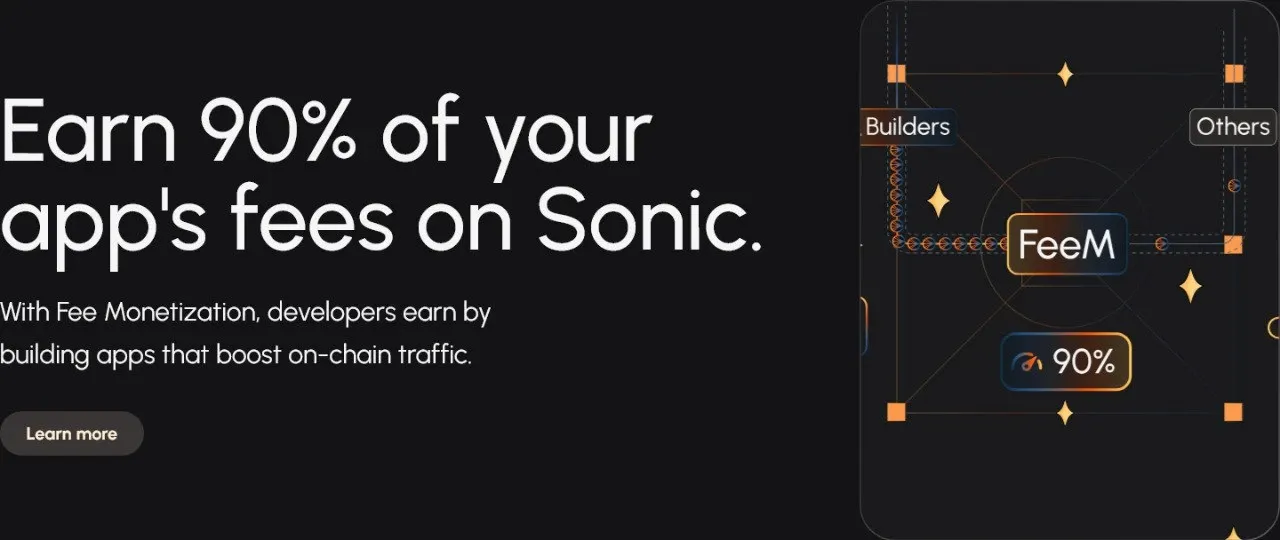
Sonic has various initiatives to encourage development

Sonic is structured to encourage development and participation in its ecosystem (official website)

S Token: Supply and Distribution

The Sonic network uses a token called “S” for various functions. Understanding how these tokens are distributed helps explain how the network will grow over time.

Total and Circulating Supply

The total number of S tokens is 3.175 billion. When the network launched, about 2.88 billion tokens were already in circulation. Many of these were from FTM token holders who swapped their tokens for S tokens at a 1:1 ratio. Unlike many cryptocurrencies, S does not have a fixed maximum supply cap.

The approach helped Sonic start with an active community with many holders instead of building from zero. People who supported Fantom could move to the new network with equivalent value.

User Airdrop Details

About 6% of the initial supply (approximately 190.5 million S tokens) will be given to users who were active on the Opera and Sonic networks. These tokens will be distributed six months after the network launch. Recipients won’t get all their tokens at once – instead, the tokens will unlock gradually over nine months.

This gradual release helps prevent people from selling all their tokens immediately, which could cause price instability.

Growth Funding Mechanism

Starting in June 2025, Sonic will create new tokens to fund network growth. Each year for ten years, the network will issue 1.5% of the total supply (about 47.6 million S tokens annually). These tokens will support development, marketing, and other activities that help the network expand.

Importantly, if the network doesn’t use all these new tokens, it will destroy the extras. This “burning” mechanism helps control the total supply and prevents unnecessary inflation.

Validator Rewards Structure

During the first four years of operation, Sonic will distribute approximately 70,067,224 tokens annually as rewards to validators. These rewards come from the existing token supply, not from newly minted tokens. This approach allows Sonic to avoid creating new S tokens for block rewards during this initial four year period.

From the fourth year onward, Sonic will start creating additional tokens to reward validators. These rewards will add 1.75% to the token supply each year, with a maximum of 70 million new S tokens annually.

This phased approach gives the network time to establish itself before increasing the token supply.

Supporting Developers Beyond Fee Sharing

While the Fee Monetization system provides immediate income to developers, Sonic also offers another incentive program called Sonic Gems.

The Sonic Gems Program

The Sonic Gems Program rewards applications based on how many people use them and how often. Developers receive S tokens when their apps show strong engagement metrics. This approach helps new projects grow without constantly raising money from investors.

For users, this means they might see more free apps and fewer subscription fees. For developers, it means they can focus on building useful products rather than monetization strategies.

Conclusion

Sonic represents a technical evolution in blockchain design with its 10,000 TPS performance and sub-second finality. By combining high transaction speeds, Ethereum compatibility, and strong economic incentives, Sonic aims to accelerate mainstream adoption of Web3 technologies.

Its most distinctive feature remains the Fee Monetization system, which redirects transaction fees to developers rather than validators. This focus on developer earnings could attract talent from traditional tech companies, as programmers can earn directly from their work without middlemen taking most profits. Combined with the Sonic Gems program and careful tokenomics planning, the platform creates a comprehensive economic system for sustainable blockchain application development.

The success of this approach depends on adoption from both developers and users. For developers, the economic incentives provide a clear path to sustainability. For users, the benefits include faster transactions, lower costs, and better applications. The sub-second finality means users receive immediate confirmation of their transactions, creating a smoother experience compared to networks with longer wait times.

With its Ethereum and EVM compatibility and performance advantages, Sonic has positioned itself to compete effectively in the increasingly crowded Layer-1 blockchain market, offering benefits for all ecosystem participants.

Share. Facebook Twitter Pinterest LinkedIn Tumblr Email
NBTC

Related Posts

The Sui Ecosystem’s Top 3 Altcoin Performers

29/07/2025

Floki Launches $69000 Guerrilla Marketing Challenge With FlokiUltras3

28/07/2025

Crypto Beast denies role in Altcoin (ALT) crash rug pull, blames snipers

28/07/2025

$1.6 Billion XRP Surge: Here’s What’s Unfolding

28/07/2025
Add A Comment

Comments are closed.

Top Posts
Get Informed

Subscribe to Updates

Get the latest news from NBTC regarding crypto, blockchains and web3 related topics.

Your source for the serious news. This website is crafted specifically to for crazy and hot cryptonews. Visit our main page for more tons of news.

We're social. Connect with us:

Facebook X (Twitter) LinkedIn RSS
Top Insights

ClearBank taps crypto custody firm Taurus to power stablecoin services

10/02/2026

Gemini Slashes Staff, Exits Europe Amid Crypto Downturn

10/02/2026

Google Parent Alphabet Hits $4 Trillion Valuation After Apple AI Deal

10/02/2026
Get Informed

Subscribe to Updates

Get the latest news from NBTC regarding crypto, blockchains and web3 related topics.

Type above and press Enter to search. Press Esc to cancel.