
Close Menu
  • Coins
    • Bitcoin
    • Ethereum
    • Altcoins
    • NFT
  • Blockchain
  • DeFi
  • Metaverse
  • Regulation
  • Other
    • Exchanges
    • ICO
    • GameFi
    • Mining
    • Legal
  • MarketCap
What's Hot

North Carolina’s New Crypto Law Could Change Banking Forever

25/04/2026

Is crypto prepared for a slow-moving security crisis?

25/04/2026

Cluster Protocol and Pundi AI Launch Fully Decentralized AI Training System

25/04/2026
Facebook X (Twitter) Instagram
  • Back to NBTC homepage
  • Privacy Policy
  • Contact
X (Twitter) Telegram Facebook LinkedIn RSS
NBTC News
  • Coins
    1. Bitcoin
    2. Ethereum
    3. Altcoins
    4. NFT
    5. View All

    Price Breaks All-Time High Record Again – Here’s What We Know

    04/08/2025

    Bitcoin Switzerland? El Salvador to Host First Fully Native Bitcoin Capital Markets

    04/08/2025

    Bitcoin Breaks $119K, but XLM and HBAR Aren’t Impressed by Its Meager Percentage Gain

    04/08/2025

    High-Stakes Consolidation Could Define Q3 Trend

    04/08/2025

    Weakening trader sentiment leads to lost $2B in ETH open interest

    24/04/2026

    ETH Bullish Streak Hits Four Weeks as Bitmine Loads Up on 101,627 ETH

    24/04/2026

    Ethereum Price Rebound At Risk, Failure Signals Could Emerge Soon

    24/04/2026

    Ethereum rips past $2,300 as ETF inflows ignite fresh investor rush

    24/04/2026

    The Sui Ecosystem’s Top 3 Altcoin Performers

    29/07/2025

    Floki Launches $69000 Guerrilla Marketing Challenge With FlokiUltras3

    28/07/2025

    Crypto Beast denies role in Altcoin (ALT) crash rug pull, blames snipers

    28/07/2025

    $1.6 Billion XRP Surge: Here’s What’s Unfolding

    28/07/2025

    Cardano NFT Marketplace Announces Permanent Closure, Shocking ADA Community

    24/04/2026

    Bored Ape Yacht Club turns five today and nobody seems to care

    23/04/2026

    WWE Partners with Blockchain Creative Labs for Official NFT Marketplace – Epic Digital Collectibles Ahead

    20/04/2026

    Top 10 NFT Performers by Weekly Sales Volume, Courtyard Outshines

    19/04/2026

    North Carolina’s New Crypto Law Could Change Banking Forever

    25/04/2026

    Is crypto prepared for a slow-moving security crisis?

    25/04/2026

    Cluster Protocol and Pundi AI Launch Fully Decentralized AI Training System

    25/04/2026

    Europe’s MiCA regime puts smaller crypto firms under pressure

    25/04/2026
  • Blockchain

    Cluster Protocol and Pundi AI Launch Fully Decentralized AI Training System

    25/04/2026

    Coinbase slashes fraud response times with new AI-driven rules engine

    25/04/2026

    Axie Infinity’s Ronin Network to migrate to Ethereum next month, unlocking lower inflation and new builder rewards

    25/04/2026

    Deloitte Gives Chainlink Top Security Certification, Making It the Only Crypto Oracle With SOC 2 Type 2 Status

    25/04/2026

    MarsCat and Crypto Burger Partner to Launch Bitcoin-Secured On-Chain AI Agents

    25/04/2026
  • DeFi

    Asseto Finance Partners With Pharos Network To Provide Deep DeFi Cross-Chain Liquidity To Tokenized Assets

    25/04/2026

    Flamingo Finance airs support dispute with NGD and NF in open letter

    25/04/2026

    Cardano builder seeks smaller funding slice of $46.8 million for scaling and Bitcoin DeFi

    25/04/2026

    Firelight and Sentora partner to bring native DeFi protection to XRP

    25/04/2026

    Flying Tulip adds withdrawal circuit breaker as April DeFi exploits top $600M

    25/04/2026
  • Metaverse

    ‘8,000 Jobs’—Polymarket Sees Tech Layoff Surge As Meta AI Push Bites

    18/04/2026

    Planet Hares Partners With Magne.AI To Bridge Web3 Metaverse With Smartphone Mobile-Ready Applications For Mass Adoption

    08/04/2026

    Mark Zuckerberg’s Meta launches new AI initiative after metaverse retreat

    25/03/2026

    Meta partners with Arm to develop new CPUs for AI deployments

    24/03/2026

    Land values capitulate as $24M metaverse plot collapses to just $9,000

    20/03/2026
  • Regulation

    Powell’s comments on oil, inflation are likely to guide bitcoin traders

    12/04/2026

    Bitcoin quickly pulls back to $72,300 as Iran fears team up with poor U.S. inflation data

    11/04/2026

    US National Debt Surpasses $39 Trillion Amid Fiscal Concerns

    11/04/2026

    Bank of Korea adds two banks to digital won trials as real-world testing begins

    11/04/2026

    “PPI and the Fed!” When Will the Interest Rate Decision Be Announced? Here Are the Expectations

    11/04/2026
  • Other
    1. Exchanges
    2. ICO
    3. GameFi
    4. Mining
    5. Legal
    6. View All

    Is crypto prepared for a slow-moving security crisis?

    25/04/2026

    Fedi Integrates Exolix’s DEX Swap Aggregator To Expand Bitcoin Multichain Swap Liquidity

    25/04/2026

    Gold and Oil Drive Record TradFi Volumes Across Crypto Exchanges

    25/04/2026

    iOS App Store Loophole Exposed

    25/04/2026

    South Korea Poised to Lift Ban on Domestic ICOs After 7 Years

    19/12/2025

    Why 2025’s Token Boom Looks Both Familiar and Dangerous

    31/10/2025

    ICO for bitcoin yield farming chain Corn screams we’re so back

    22/01/2025

    Why 2025 Will See the Comeback of the ICO

    26/12/2024

    GameFi is effectively dead as 93% of projects collapse

    23/04/2026

    More than 90% of Web3 games failed after $15 billion boom as gamers never showed up: Caladan

    23/04/2026

    UXLINK Taps ANOME Protocol to Redefine Web3 Gaming, SocialFi, and NFTFi

    23/04/2026

    ‘Axie Infinity’ Gaming Network Ronin Sets Date for Ethereum Layer-2 Migration

    22/04/2026

    Largest Bank in Brazil Moves to Invest in Bitcoin Mining

    24/04/2026

    14 ASIC Rigs Compared at $0.04 Per kWh

    24/04/2026

    Trump-linked American Bitcoin shares spike over 12% after announcing more mining power

    23/04/2026

    IREN rides Bitcoin mining-era power infrastructure to lead AI data center race

    23/04/2026

    North Carolina’s New Crypto Law Could Change Banking Forever

    25/04/2026

    Europe’s MiCA regime puts smaller crypto firms under pressure

    25/04/2026

    Arthur Hayes Says the Bill Should Be ‘Vetoed’ as Six-Week Window Narrows

    25/04/2026

    DOJ Charges the SPLC With Fraud Over Secret Payments to Extremist Informants

    25/04/2026

    North Carolina’s New Crypto Law Could Change Banking Forever

    25/04/2026

    Is crypto prepared for a slow-moving security crisis?

    25/04/2026

    Cluster Protocol and Pundi AI Launch Fully Decentralized AI Training System

    25/04/2026

    Europe’s MiCA regime puts smaller crypto firms under pressure

    25/04/2026
  • MarketCap
NBTC News
Home»Regulation»What China Banning Nvidia Chips Means for the AI Race
Regulation

What China Banning Nvidia Chips Means for the AI Race

NBTCBy NBTC19/09/2025No Comments6 Mins Read
Share
Facebook Twitter LinkedIn Pinterest Email


China’s decision to ban its tech giants from buying Nvidia chips may be more than just a trade restriction: It could be Beijing’s declaration that the country’s semiconductor industry has reached a critical inflection point where it no longer needs American AI hardware to compete.

Earlier today, the Financial Times reported that China’s internet regulator has demanded the country’s tech companies stop buying Nvidia AI chips, citing three sources familiar with the matter. The ban would ostensibly appear to be part of the ongoing U.S. and China trade war, with Nvidia CEO Jensen Huang telling reporters in London today that the two nations “have larger agendas to work out.”

But, on a practical level, the move would force a fundamental rewiring of AI infrastructure at companies like ByteDance and Alibaba, which must now abandon testing on Nvidia’s RTX Pro 6000D processors—a nerfed version of the new RTX 6000 chips available in America and sold everywhere else in the world—and pivot entirely to domestic alternatives.

More significantly, it signals Chinese regulators’ conviction that homegrown chips from Huawei, Cambricon, and others have closed the performance gap enough to sustain the country’s artificial intelligence ambitions.

China’s researchers published 23,695 AI-related publications in 2024, topping the combined output of the United States (6,378), the United Kingdom (2,747), and the European Union (10,055). According to the Financial Times, Beijing recently concluded that its AI processors matched or exceeded the capabilities of Nvidia products allowed under U.S. export controls—an assessment that would have seemed implausible just two years ago.

Image: Epoch AI

The reported directive arrives as Chinese companies had tens of thousands of Nvidia units on order, forcing an abrupt halt to verification work with suppliers. The RTX Pro 6000D is Nvidia’s last significant product permitted in the Chinese market by the Donald Trump administration.

For Nvidia, the ban eliminates what remained of a market that once generated up to 17% of total revenue. The company’s stock dropped around 4% today, and analysts had previously calculated potential losses of $8 billion to $16 billion annually from trade restrictions in China. The company’s China market share for AI data center chips has already plummeted from 90% to 50% as domestic competitors gain traction.
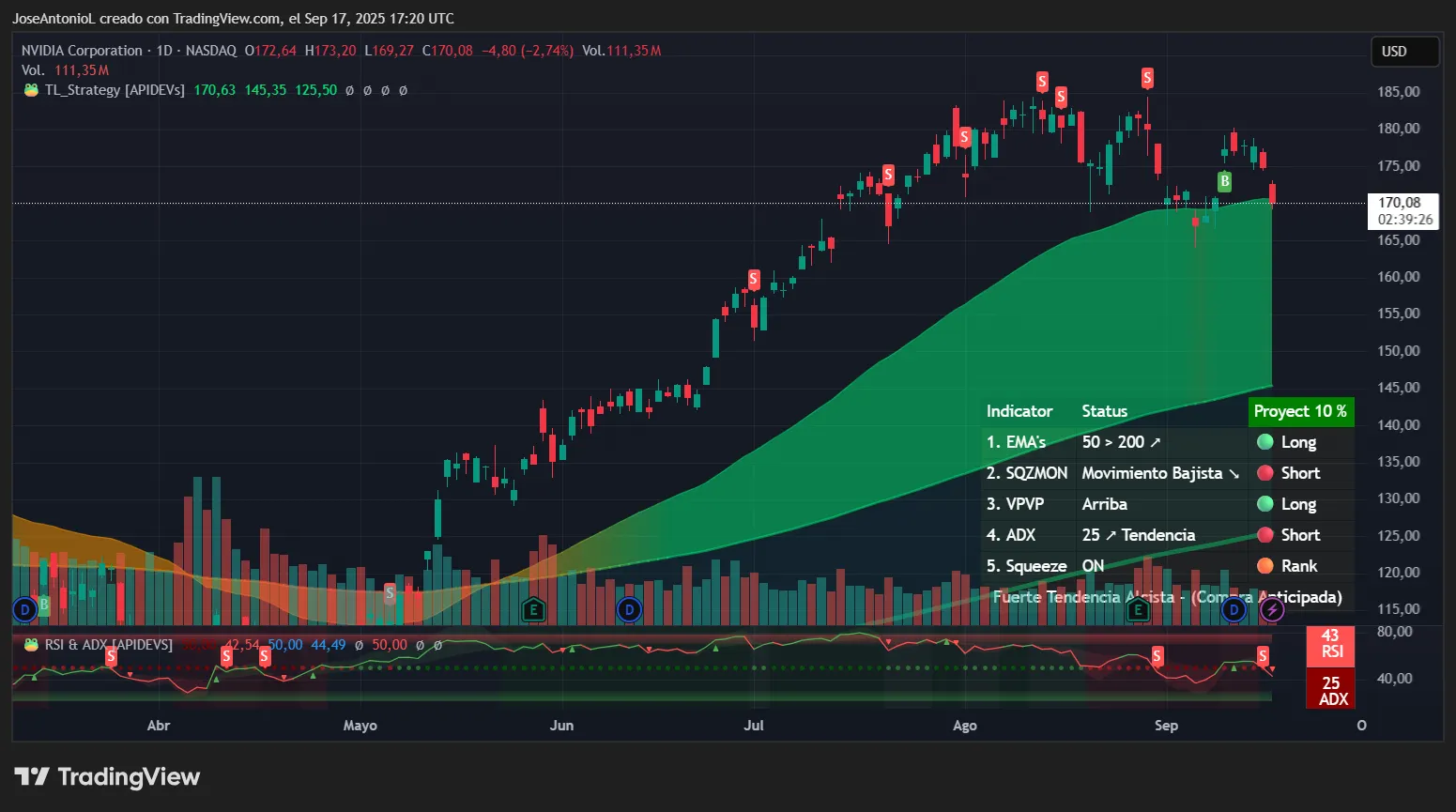
Nividia stock price data. Image: Tradingview

“We can only be in service of a market if the country wants us to be,” Nvidia CEO Jensen Huang said Wednesday in London. “I’m disappointed with what I see. But they have larger agendas to work out between China and the US, and I’m understanding of that.”

The timing reveals Beijing’s growing confidence in its semiconductor sector. Chinese chipmakers plan to triple AI processor output next year, with Huawei’s Ascend 910 series leading the charge. While individual Chinese chips don’t match Nvidia’s most advanced offerings, their cost efficiency allows companies to cluster multiple units for comparable performance—a different architectural approach that sidesteps the need for cutting-edge manufacturing processes China can’t yet achieve.

“The message is now loud and clear,” an executive at one affected tech company told the Financial Times. “Earlier, people had hopes of renewed Nvidia supply if the geopolitical situation improves. Now it’s all hands on deck to build the domestic system.”

China vs America: The battle for AI dominance

The ban accelerates what many viewed as inevitable: a bifurcated global AI ecosystem where Chinese and Western companies develop along separate technological tracks, carrying major costs for both sides.

Just for reference, training OpenAI’s AI model GPT-3 consumed an estimated 1,287 MWh (megawatt-hours) of electricity, roughly equivalent to the energy consumption of an average American home for 120 years. Estimates by the coding platform Baeldung show that the company’s latest model, GPT-5, may have taken 3,500 MWh, “equivalent to the annual energy consumption of around 320 average American homes,” the platform argued.

Chinese companies using less powerful domestic chips may face higher electricity costs and longer training timelines for large language models. Conversely, western companies lose access not just to China’s market but to the massive datasets and real-world AI applications being developed there.

The country’s AI research community, the world’s largest by publication volume, has increasingly focused on efficiency rather than raw computing power—developing techniques that extract more performance from available hardware rather than requiring the most advanced chips.

This is how DeepSeek R1 was born, and this is how a model created with a fraction of the investment costs thrown by western AI behemoths like OpenAI, Google, or Anthropic, was able to release and open source a model capable of beating their state-of-the-art products, offered at premium prices.

We are living in a timeline where a non-US company is keeping the original mission of OpenAI alive – truly open, frontier research that empowers all. It makes no sense. The most entertaining outcome is the most likely.

DeepSeek-R1 not only open-sources a barrage of models but… pic.twitter.com/M7eZnEmCOY

— Jim Fan (@DrJimFan) January 20, 2025

Taking the fight to the software front

The split also impacts the broader technology stack. AMD’s ROCm platform and other alternatives are challenging CUDA’s dominance by offering open-source alternatives that work across different hardware architectures.

CUDA is a parallel computing platform and programming model created by Nvidia, allowing software to use the massive processing power of its own GPUs for tasks like artificial intelligence and scientific computing, making these operations much faster and more efficient. It is currently the standard used for AI training, with developers working with this tech by default.

China’s emphasis on developing CUDA alternatives could accelerate the creation of hardware-agnostic AI frameworks, potentially benefiting the entire industry by breaking Nvidia’s software lock-in that has left technically superior hardware like AMD’s GPUs underutilized in AI applications.

Right now, if your card doesn’t run CUDA (meaning, it’s not Nvidia) you better go back to gaming and leave AI training to the grown ups—or know you’ll deal with AI at painstakingly slow speeds.
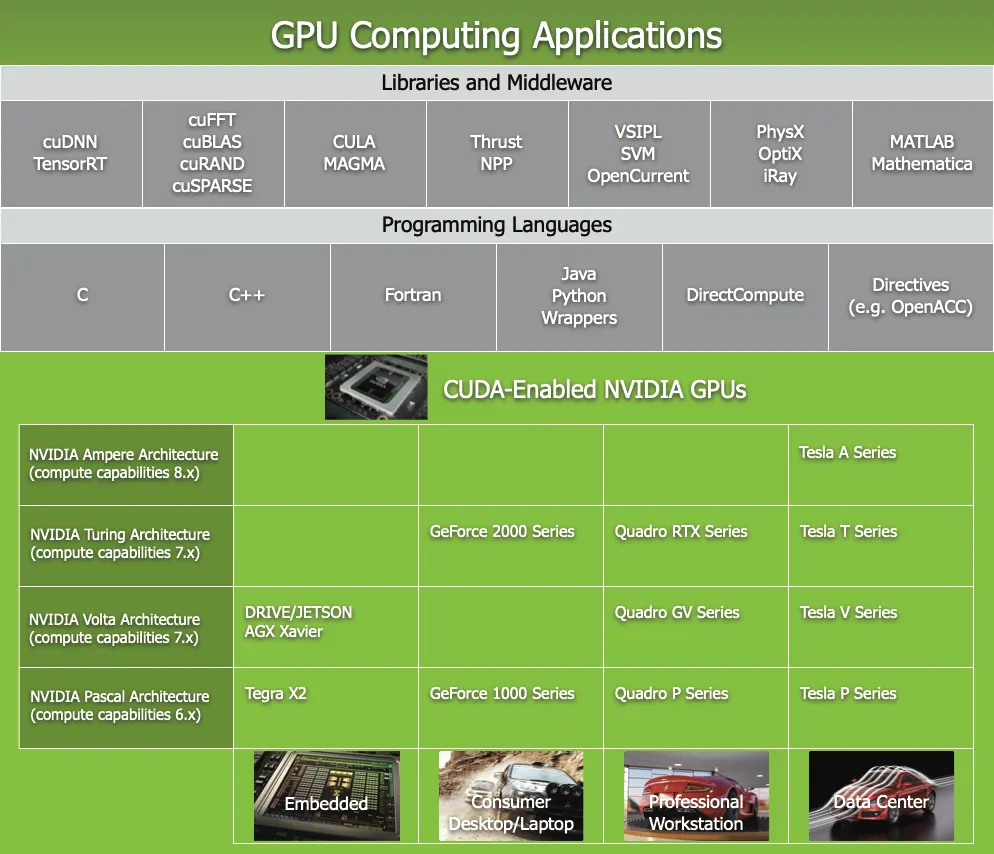
Image: Nvidia

The country’s massive AI research output has created a foundation for rapid iteration and improvement. Chinese universities like Tsinghua and Peking have emerged as global AI research powerhouses, with Tsinghua ranking eighth globally in AI research output ahead of institutions like Facebook AI Research and Princeton, according to Peking University.

“The top-level consensus now is there’s going to be enough domestic supply to meet demand without having to buy Nvidia chips,” an industry insider told the Financial Times.

Nvidia warned analysts to exclude China from financial projections going forward, essentially writing off what had been one of its fastest-growing markets. The company continues exploring options but acknowledges that political dynamics now override commercial considerations.

The ban goes beyond earlier regulatory guidance from the government, which simply encouraged companies to move away from Nvidia. Before the ban, Trump agreed to let Nvidia sell its nerfed chips in exchange for 15% of its profits from those sales.


Share. Facebook Twitter Pinterest LinkedIn Tumblr Email
NBTC

Related Posts

Powell’s comments on oil, inflation are likely to guide bitcoin traders

12/04/2026

Bitcoin quickly pulls back to $72,300 as Iran fears team up with poor U.S. inflation data

11/04/2026

US National Debt Surpasses $39 Trillion Amid Fiscal Concerns

11/04/2026

Bank of Korea adds two banks to digital won trials as real-world testing begins

11/04/2026
Add A Comment

Comments are closed.

Top Posts
Get Informed

Subscribe to Updates

Get the latest news from NBTC regarding crypto, blockchains and web3 related topics.

Your source for the serious news. This website is crafted specifically to for crazy and hot cryptonews. Visit our main page for more tons of news.

We're social. Connect with us:

Facebook X (Twitter) LinkedIn RSS
Top Insights

North Carolina’s New Crypto Law Could Change Banking Forever

25/04/2026

Is crypto prepared for a slow-moving security crisis?

25/04/2026

Cluster Protocol and Pundi AI Launch Fully Decentralized AI Training System

25/04/2026
Get Informed

Subscribe to Updates

Get the latest news from NBTC regarding crypto, blockchains and web3 related topics.

Type above and press Enter to search. Press Esc to cancel.