

Polygon is a Layer 2 blockchain platform that scales Ethereum by processing transactions off-chain before committing checkpoints to Ethereum’s mainnet, enabling fast and low-cost transactions while maintaining security. The platform functions as a multi-chain ecosystem that addresses Ethereum’s scalability limitations through various technical approaches, including sidechains, plasma chains, and zero-knowledge rollups.
What started as Matic Network in 2017 has grown into a blockchain infrastructure giant. Today, Polygon processes 4 million daily transactions across 117+ million total unique wallets—more than most standalone blockchains achieve. The platform hosts $1.13 billion in tokenized real-world assets across 268+ issuances, while maintaining transaction costs averaging $0.01 and achieving a current measured throughput of 1,000 transactions per second.
What Is Polygon and How Does It Scale Ethereum?
Polygon is a Layer 2 scaling solution that processes transactions off-chain before committing periodic checkpoints to Ethereum’s mainnet using Merkle roots. This enables faster settlement while maintaining Ethereum’s security guarantees. Unlike Bitcoin’s Lightning Network, which requires channels, or Optimism’s optimistic rollups that assume validity, Polygon combines multiple scaling approaches within a unified framework.
The technical foundation supports sidechains, plasma chains (initially proposed by Vitalik Buterin), zero-knowledge rollups (like zkSync), and validium implementations (similar to StarkEx) simultaneously. This multi-pronged approach contrasts with single-solution competitors, such as Arbitrum’s optimistic rollups or Base’s OP Stack implementation.
The platform functions as the “Value Layer for the Internet” – a multi-chain infrastructure comparable to how TCP/IP enables internet communication.
Core Technical Components
Four primary components coordinate to deliver a comprehensive scaling infrastructure:
- Polygon PoS chain – EVM compatibility with fast transactions that mirror Ethereum’s smart contract functionality
- zkEVM – Zero-knowledge proofs for enhanced scalability, implementing SNARK technology for general computation
- Miden rollup – Privacy-preserving applications using STARK proofs
- Chain Development Kit (CDK) – Enables teams to build custom Layer 2 solutions for application-specific blockchains
Recent upgrades through Polygon 2.0 have unified these previously separate protocols under a single architectural framework. The AggLayer v0.2 and Heimdall v2 implementations reduced transaction finality to 4-6 seconds while cutting block intervals to 2 seconds, positioning the network for its ambitious roadmap target of 100,000 transactions per second through the Gigagas initiative.
How Did Polygon Evolve From Its Original Design?
Polygon’s transformation from a simple sidechain to a comprehensive multi-chain ecosystem represents one of blockchain’s most successful pivots. The journey spans multiple phases, each marked by strategic decisions that shaped today’s platform.
Early Development (2017-2020)
Polygon’s journey began in 2017 when Indian developers launched Matic Network in Mumbai as a Plasma-based sidechain. They were implementing the scaling framework proposed initially by Ethereum co-founder Vitalik Buterin and Lightning Network creator Joseph Poon. The project represented one of the first practical implementations of the Plasma whitepaper for Ethereum scaling.
The initial mainnet launch in 2020 featured both Proof-of-Stake and Plasma chains designed to handle different transaction types. This approach was similar to Ethereum’s planned sharding strategy before the network pivoted to rollup-centric scaling. The dual-chain approach provided flexibility but lacked the unified vision that characterizes modern Layer 2 networks.
Strategic Rebrand and Expansion (2021-2022)
The pivotal transformation occurred in February 2021 with the strategic rebrand from Matic to Polygon. This change reflected an expansion of ambitions beyond simple sidechains to encompass multiple scaling solutions, including zkRollups, Optimistic Rollups, and inter-chain protocols.
Strategic acquisitions accelerated technical capabilities throughout 2021 and 2022:
- Hermez Network acquisition – $250 million investment to strengthen zero-knowledge proof capabilities
- Major funding round – $450 million raised in 2022 to support ambitious development goals
- zkEVM testnet launch – Practical implementation of theoretical scaling solutions demonstrated
Polygon 2.0 Architecture (2023-Present)
The introduction of Polygon 2.0 in 2023 represented the most comprehensive architectural evolution since inception. This upgrade proposed a unified architecture with the new POL token replacing MATIC, along with governance reforms and technical standardization across all network components.
Implementation accelerated through 2024-2025 with key milestones:
- POL migration launch – September 4, 2024, achieving 99.18% completion by August 2025
- Ecosystem expansion – Growth from 3,000 decentralized applications in 2021 to 120+ CDK-built chains by 2025
- Performance improvements – Enhanced transaction speeds and reduced costs
Who Founded Polygon and What Drives Its Leadership?
The success of any blockchain project ultimately depends on the people behind it. Polygon’s founding team brought together diverse expertise that proved essential for navigating the complex challenges of building scalable blockchain infrastructure.
Founding Team
Four co-founders established Polygon, bringing complementary expertise in blockchain engineering, entrepreneurship, and product development.
Sandeep Nailwal is the current CEO of Polygon Labs. He contributes blockchain programming expertise alongside entrepreneurship experience from founding health technology startups. His business development skills proved crucial in securing major corporate partnerships, which demonstrate institutional confidence in the platform.
Jaynti Kanani served as the original CEO, bringing deep blockchain engineering experience, with a particular expertise in Ethereum protocol development and Web3 infrastructure.
Anurag Arjun focused on product management as former Chief Product Officer, ensuring technical capabilities translated into developer-friendly tools and user experiences.
Mihailo Bjelic contributed expertise in information systems engineering, essential for scalable infrastructure design, particularly in addressing multi-chain coordination challenges.
Current Organizational Structure
The founding team’s composition includes three Indian-origin founders and one Serbian founder, reflecting a global perspective from inception. This international approach proved advantageous for building relationships across different regulatory environments and market conditions.
The current organizational structure divides responsibilities across three specialized entities:
- Polygon Labs – Development and technical advancement
- Polygon Foundation – Research, education, and governance initiatives
- Polygon Ecosystem – Grants and community development with 1 billion POL tokens allocated for community grants in 2025
Technical leadership includes notable blockchain developers like Daniel Lubarov, Antoni Martin, Jordi Baylina, Bobbin Threadbare, and Brendan Farmer. This expanded team brings specialized expertise in zero-knowledge proofs, cryptographic security, and scalable blockchain architecture.
What Technology Makes Polygon Different From Competitors?
Polygon’s technical architecture sets it apart from other Layer 2 solutions through several key innovations that address fundamental blockchain limitations. Rather than focusing on a single scaling approach, the platform combines multiple technologies to create a comprehensive infrastructure solution.
Zero-Knowledge Proof Implementation
Polygon’s technical differentiation centers on zero-knowledge proofs and multi-chain validation capabilities that distinguish it from single-purpose scaling solutions like Optimism or Arbitrum. The platform’s ZK-based solutions enable significantly higher throughput while pessimistic proofs provide additional security layers for complex cross-chain operations.
Zero-knowledge proof implementation extends beyond simple transaction verification to enable complex privacy-preserving applications. The system supports confidential transactions while maintaining network auditability, addressing regulatory requirements that affect privacy-focused alternatives like Monero or Zcash.
Multi-Chain Validation and Staking
The multi-role validator system represents fundamental innovation in blockchain staking economics. Validators can stake across different chains within the ecosystem simultaneously, maximizing capital efficiency compared to traditional single-chain models.
The POL token serves as a “hyperproductive token,” fulfilling multiple simultaneous purposes across the ecosystem. Token holders use POL for gas payments, participate in staking rewards across multiple chains, and engage in governance decisions.
AggLayer Innovation
The AggLayer represents Polygon’s most significant innovation for addressing blockchain interoperability challenges. This system functions as a liquidity aggregation protocol that connects multiple chains without requiring trust assumptions between validators. This approach differs from traditional bridge protocols that require separate validator sets, instead creating unified liquidity pools accessible across connected networks.
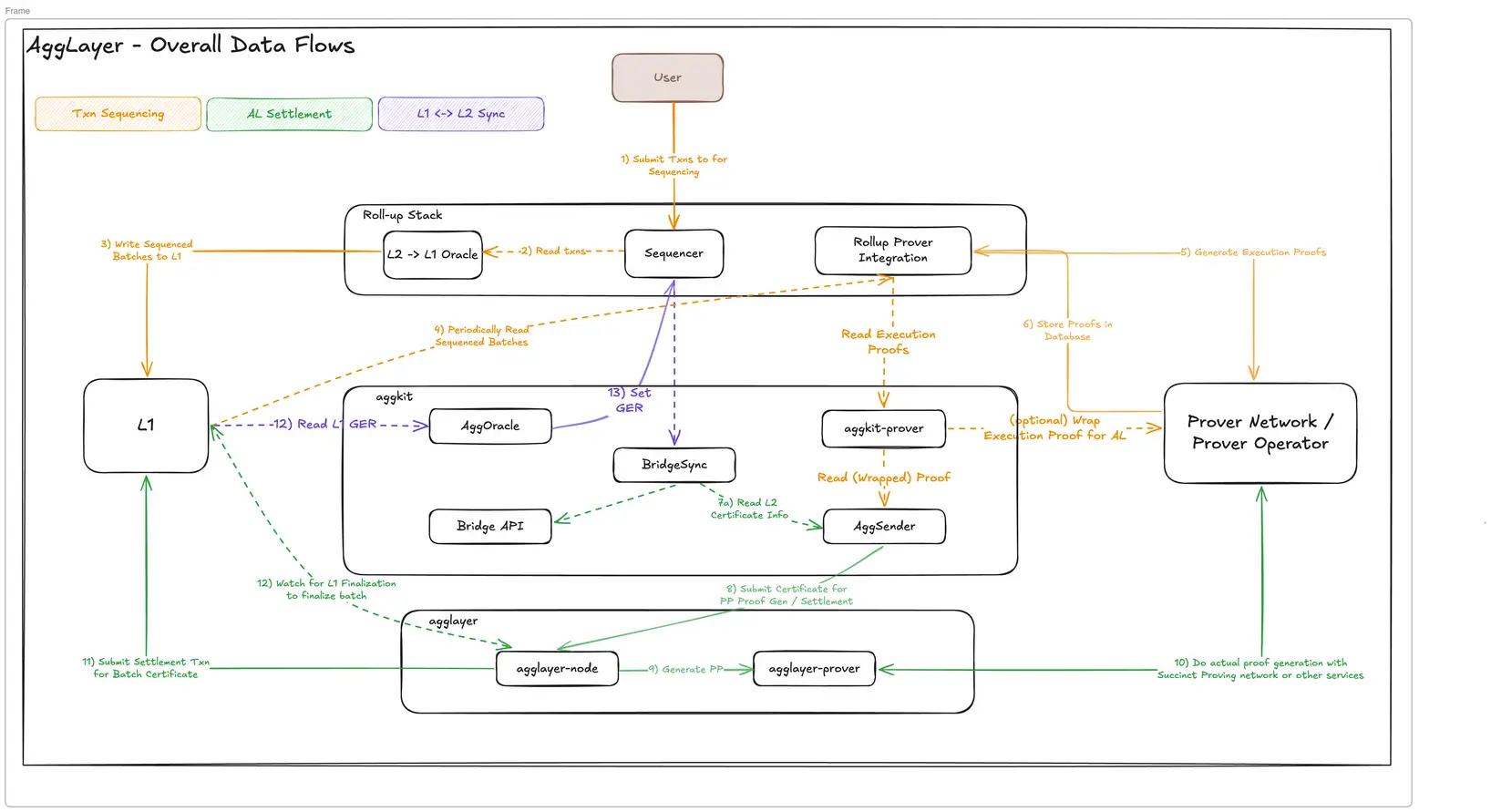
AGGlayer infrastructure visual (AGGlayer docs)
Privacy and Security Features
Privacy and security enhancements include local execution capabilities in Miden for applications requiring enhanced confidentiality. The implementation of EIP-1559 fee market improvements provides more predictable transaction costs compared to the simple auction-based systems used by earlier blockchain networks.
Advanced cryptographic techniques enable applications that require both transparency and selective privacy, addressing the fundamental blockchain trilemma of scalability, security, and decentralization through mathematical proofs rather than relying solely on economic incentives.
How Large Has Polygon’s Ecosystem Grown?
The true measure of any blockchain platform lies not in its technical specifications but in real-world adoption. Polygon’s ecosystem demonstrates substantial growth across multiple application categories, with particular strength in areas requiring high transaction throughput and low costs.
Decentralized Finance Applications
The platform currently hosts over 120 chains built using the Chain Development Kit. This represents significant adoption of its infrastructure-as-a-service approach.
Decentralized finance applications lead adoption metrics, with established platforms maintaining significant value locked in smart contracts. Quickswap, the largest decentralized exchange on Polygon, holds a total value locked of $398 million (Sept. 2025) while processing thousands of daily transactions at significantly lower costs compared to Uniswap on the Ethereum mainnet.
Gaming and NFT Platforms
Gaming applications leverage Polygon’s cost advantages for in-game transactions, NFT minting, and complex smart contract interactions that would be prohibitively expensive on Ethereum. Projects like Decentraland, The Sandbox, and Aavegotchi demonstrate practical blockchain gaming applications requiring frequent micro-transactions with blockchain ownership guarantees.
NFT platforms benefit from cost-effective minting and trading capabilities supporting both individual creators and large-scale commercial operations. The Instagram integration resulted in 2.5 million wallet creations, demonstrating mainstream accessibility for users without prior cryptocurrency experience.
Real-World Asset Tokenization
Real-world asset tokenization represents the fastest-growing application category with $1.13 billion in assets tokenized across 268+ distinct issuances. These applications span multiple asset classes:
- Government securities and municipal bonds
- Real estate investment vehicles and REITs
- Commodity-backed tokens including gold and agricultural products
- Corporate debt instruments and trade finance
- Infrastructure project financing and green bonds
Enterprise and Government Partnerships
Enterprise partnerships demonstrate institutional confidence spanning multiple industries. Meta integrated Polygon for Instagram NFT functionality, enabling millions of users to interact with blockchain technology through familiar social media interfaces. Starbucks implemented loyalty programs using blockchain technology, while Reddit deployed community tokens for subreddit governance. JPMorgan built trading applications leveraging Polygon’s infrastructure, and Fox Network uses it for content distribution. Flipkart’s integrated e-commerce solutions demonstrate practical adoption by traditional businesses.
Government adoption showcases public sector confidence with the Philippines’ budget tokenization project representing the largest government blockchain implementation to date. The Department of Budget and Management launched this fully operational system in July 2025, using Polygon to notarize and publicly track key budget documents including Special Allotment Release Orders and Notices of Cash Allocation. This application demonstrates practical use cases for public finance management, transparency, and audit capabilities that traditional systems cannot provide.
What Are POL Tokenomics and How Do They Work?
Polygon’s economic model underwent a fundamental transformation with the introduction of POL tokens. This shift represented more than a simple rebrand—it established the foundation for multi-chain operations and sustainable ecosystem growth.
Token Supply and Distribution
The $POL token replaced MATIC in 2024 as the cornerstone of Polygon 2.0’s unified tokenomics model. This design supports multi-chain validation and ecosystem expansion.
Unlike MATIC’s fixed 10 billion token supply, POL features an infinite supply mechanism. This enables sustainable long-term network growth without artificial scarcity constraints. However, network fees partially burn POL tokens under specific conditions, creating deflationary pressure that helps balance the infinite supply mechanism during periods of high activity.
Current circulation: 10.49 billion POL tokens as of September 2025
Original MATIC distribution structure:
- Ecosystem development initiatives: 23.33%
- Foundation operations: 21.86%
- IEO investors: 19%
- Team members: 16%
- Staking rewards: 12%
- Advisors: 4%
- Private investors: 3.8%
This represents a more balanced distribution than many projects where teams and early investors hold majority stakes.
Migration Process
The migration process from MATIC to POL achieved 99.18% completion by August 2025 through a straightforward smart contract swap mechanism, preserving all holder balances and staking positions. This technical achievement demonstrates the network’s ability to execute complex protocol upgrades without disrupting user experience or security.
Multi-Chain Staking Model
Staking mechanisms enable POL holders to secure multiple networks simultaneously rather than limiting participation to single-chain validation. This implements concepts similar to shared security models. The multi-role validation system creates opportunities for higher yields and improved capital efficiency. Currently, 2.55 billion tokens are locked in staking.
Governance and Treasury Management
The governance framework evolved from centralized decision-making to community-driven proposals through Polygon Improvement Proposals (PIPs). Token holders participate in protocol decisions, resource allocation, and technical upgrade approvals through transparent voting mechanisms.
Community treasury management demonstrates practical governance with the allocation of 1 billion POL tokens for grants in 2025, supporting:
- Developer incentives and recruitment
- Ecosystem growth initiatives
- Research projects and innovation
- Public goods development
Providing a sustainable funding model for long-term ecosystem development.
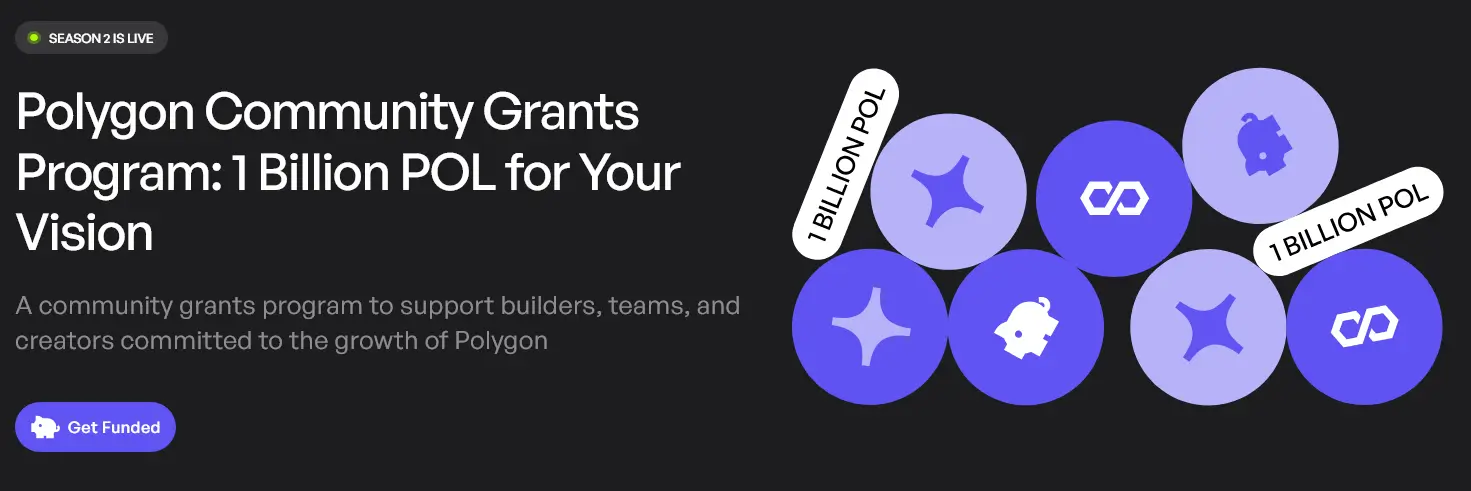
1 Billion POL tokens community Grants program (Polygon.technolgy)
Economic Mechanisms
Protocol emissions offer sustainable incentives for network security through validator rewards, supplemented by additional revenue streams from connected chains that process stablecoin transactions. Network fees partially burn POL tokens under specific conditions, creating deflationary pressure that balances the infinite supply mechanism during periods of high activity.
How Does Polygon’s Governance System Function?
Effective governance represents one of blockchain’s greatest challenges. Polygon strives to strike a balance between community participation and the technical expertise necessary for making complex infrastructure decisions.
Proposal and Decision-Making Process
Polygon utilizes a decentralized governance model, striking a balance between community participation and the technical expertise necessary for complex blockchain infrastructure decisions. The system recognizes that blockchain networks require both democratic input and specialized knowledge for optimal operation.
The Polygon Improvement Proposal system enables any community member to suggest protocol changes, ecosystem improvements, or resource allocation modifications. Proposals progress through structured review stages, including technical evaluation, community discussion, and formal voting processes.
Three-Pillar Governance Structure
The three-pillar governance structure under Polygon 2.0 encompasses:
- Protocol development – Technical upgrades and infrastructure improvements
- Tokenomics – POL supply, distribution, and utility decisions
- Community oversight – Resource allocation and ecosystem direction
POL holders participate in staking decisions and voting processes, while technical decisions require additional input from qualified developers and researchers with relevant expertise. This creates checks and balances between different stakeholder groups.
Ecosystem Council Role
The Ecosystem Council serves as a specialized technical body responsible for smart contract upgrades and protocol security decisions. This structure strikes a balance between broad community input and the concentrated technical expertise required for complex modifications that could impact network security or functionality.
Implementation and Safety Measures
Implementation of governance decisions follows established timelines and procedures designed to prevent hasty changes that could compromise network stability:
- Extended discussion periods for major protocol upgrades
- Technical audits before implementation
- Staged deployment processes enabling thorough testing
Following the best practices established by critical infrastructure projects.
Practical Governance Examples
Community treasury management is the most visible aspect of governance in practice, demonstrating the system’s ability to make significant financial decisions through collaborative processes that incorporate diverse stakeholder perspectives. This creates accountability mechanisms for resource allocation decisions.
Validator governance addresses network security and operational concerns through mechanisms enabling validator input on technical parameters. These decisions affect block production, transaction processing, and network upgrade coordination, requiring specialized operational knowledge.
Transparency and Accountability
Transparency mechanisms ensure governance decisions and their implementation remain visible to all stakeholders. Regular reports, public discussions, and open development processes enable community oversight of both technical development and resource allocation decisions.
What Recent Developments Are Shaping Polygon’s Direction?
Polygon’s development pace accelerated significantly from 2024 to 2025, marked by major technical milestones and expanding real-world adoption. These recent developments provide insight into the platform’s strategic direction and execution capabilities.
Technical Infrastructure Upgrades
Recent protocol upgrades demonstrate Polygon’s ability to execute complex technical transitions while maintaining operational continuity. The transition of the original PoS chain to zkEVM validium architecture enhances security properties while maintaining backward compatibility with existing applications.
Architecture Transitions:
- PoS to zkEVM validium – Enhanced security properties while maintaining backward compatibility
- AggLayer v0.2 deployment – Reduced transaction finality to 4-6 seconds
- Heimdall v2 implementation – Cut block intervals to 2 seconds for improved user experience
Multi-Chain Ecosystem Growth
AggLayer adoption accelerated significantly with 120+ chains connecting to the aggregated liquidity system throughout 2025. This growth demonstrates market demand for interoperable blockchain infrastructure and validates Polygon’s strategic focus on multi-chain coordination rather than single-chain optimization.
Real-World Applications Expansion
Real-world asset tokenization growth exceeded expectations with $1.13 billion in assets tokenized across 268+ issuances by September 2025. This adoption demonstrates institutional confidence in blockchain infrastructure for traditional finance applications.
Asset Tokenization Milestones:
- $1.13 billion in assets tokenized across 268+ issuances by September 2025
- Government securities, real estate, commodities, and corporate debt instruments
- Institutional confidence in blockchain infrastructure for traditional finance applications
Government and Enterprise Adoption
Government blockchain adoption shows accelerating momentum, particularly in budget management and public finance applications. The Philippines project serves as a successful model for other jurisdictions considering blockchain implementation for enhanced transparency and operational efficiency.
Strategic partnerships continue to expand with enterprise clients implementing blockchain solutions tailored to specific business requirements. These relationships provide sustainable revenue streams while demonstrating practical blockchain applications that extend beyond speculative trading or simple token transfers.
Performance and Scalability Roadmap
The Gigagas roadmap progress toward 100,000 transactions per second continues through systematic technical optimizations and architectural improvements. These developments aim to achieve performance levels comparable to those of traditional payment processors.
Key development areas include:
- zkEVM mainnet deployment – Enhanced zero-knowledge proof capabilities
- Miden rollout expansion – Privacy-preserving applications for specialized use cases
- Performance targets – Aiming for throughput levels comparable to traditional payment processors
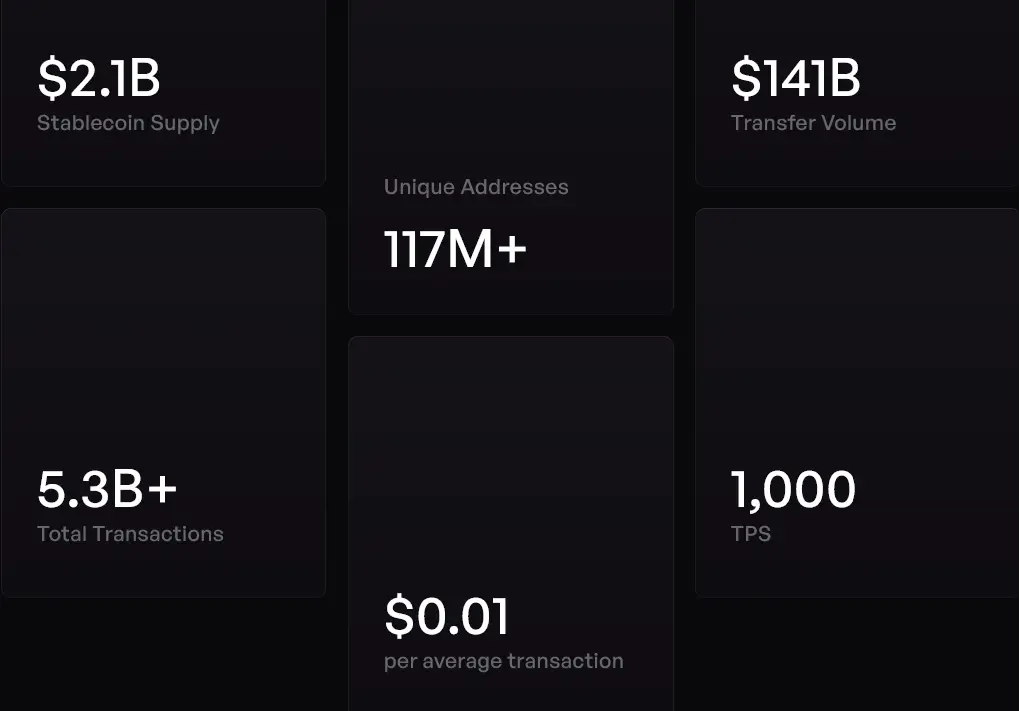
Current Polygon metrics (polygon.technology)
What Challenges Does Polygon Face in Today’s Market?
Despite its technical achievements and growing adoption, Polygon faces a reality check in 2025. The Layer 2 landscape has become fiercely competitive, and the numbers tell a story that Polygon’s leadership can’t ignore.
Competitive Pressure Metrics
Base has emerged as the elephant in the room. Coinbase’s Layer 2 solution leads with 21.7 million monthly active addresses versus Polygon’s 5.96 million—a gap that’s only widening thanks to Coinbase’s massive user base and marketing muscle. While Polygon boasts 117+ million total unique wallets, the reality is that only a fraction remain actively used, a common pattern across blockchain networks that reveals the difference between hype and sustained engagement.
The total value locked also shows some critical observations. Arbitrum maintains $3.22 billion compared to Polygon’s $1.2 billion as of September 2025. These aren’t just numbers—they represent real developer and user preferences voting with their wallets.
Performance Concerns
The competitive pressure shows up in Polygon’s own metrics, and the trends aren’t encouraging. Active addresses dropped 12% in Q1 2025, while fee revenue plummeted 38% to just $835,000. Weekly decentralized exchange volume fell 20% to $1.2 billion, suggesting users are migrating to alternatives that offer better liquidity or user experience.
These declines matter because they create a negative feedback loop. Lower activity means less fee revenue, which impacts the platform’s ability to fund development and compete with well-funded rivals.
Technical and Operational Challenges
Centralization concerns persist despite ongoing decentralization efforts:
- Top 10 token holders control approximately 88% of the supply (though most are smart contracts and exchange wallet addresses)
- Top 5 validators control 47% of staked POL
- Validator set remains capped at just 100 participants
This creates more centralization than competitors like Ethereum’s proof-of-stake system.
Technical debt from rapid expansion creates its own problems. The platform must support legacy infrastructure while implementing next-generation solutions, forcing difficult tradeoffs between backward compatibility and innovation. Resource allocation becomes a zero-sum game when you’re trying to maintain old systems while building new ones.
Regulatory uncertainty adds another layer of complexity. As governments worldwide develop blockchain policies, compliance requirements vary dramatically across jurisdictions. For a global platform serving diverse markets, this creates operational headaches that smaller, more focused competitors can avoid.
How Is Polygon Addressing These Competitive Pressures?
Rather than simply acknowledging challenges, Polygon has implemented specific strategies to maintain and expand its market position. The approach focuses on technical differentiation and sustainable competitive advantages that competitors cannot easily replicate.
Technical Differentiation Strategy
Polygon’s response to competitive challenges focuses on technical differentiation through advanced zero-knowledge proof implementation and unique aggregated liquidity solutions that competitors cannot easily replicate.
The AggLayer specifically addresses fragmentation concerns by enabling seamless cross-chain liquidity sharing without requiring manual asset bridging. This creates technical advantages through proprietary infrastructure and ecosystem integration.
Core Competitive Advantages:
- AggLayer implementation – Seamless cross-chain liquidity sharing without manual asset bridging
- Multi-chain validation – Network effects that strengthen as more chains connect to the ecosystem
- Zero-knowledge proofs – Advanced cryptographic solutions for scalability and privacy
Multi-Chain Network Effects
The multi-chain validation model creates sustainable competitive advantages through network effects that strengthen as more chains connect to the ecosystem. Each additional chain increases the value proposition for validators and users while creating higher barriers to exit compared to single-chain alternatives.
Performance and Efficiency Improvements
Protocol efficiency improvements through systematic upgrades demonstrate commitment to technical advancement despite market pressures. These provide measurable performance improvements while reducing operational costs for users and developers.
Recent technical achievements include:
- zkEVM validium transition – Enhanced security with maintained compatibility
- Heimdall v2 implementation – Faster transaction processing and reduced costs
- AggLayer optimization – Improved cross-chain liquidity aggregation
Strategic Market Positioning
Strategic positioning in real-world asset tokenization and government applications creates defensible market niches that require regulatory compliance and technical reliability. These use cases favor established platforms with proven track records over newer alternatives that lack operational history and established regulatory relationships.
This creates switching costs for enterprise clients through compliance certifications and integration complexity.
Defensible Market Niches:
- Real-world asset tokenization – Regulatory compliance and technical reliability requirements
- Government applications – Proven track record and institutional relationships
- Enterprise partnerships – Sustainable revenue through actual utility rather than speculation
Developer Ecosystem Investment
The community treasury’s allocation of 1 billion POL tokens for grants and ecosystem development creates powerful incentives for developer retention and attracting new projects. The funding enables competitive compensation for top developers while supporting innovative projects that might not receive traditional venture capital funding.
The approach implements strategies used by major technology companies to maintain ecosystem leadership.
Community Investment Strategy:
- 1 billion POL grant allocation – Competitive compensation for top developers
- Ecosystem development – Support for innovative projects lacking traditional VC funding
- Developer tools – Enhanced infrastructure and documentation
Innovation and Research Focus
Technical innovation continues through research and development investments in next-generation scaling solutions. The Gigagasroadmap and advanced cryptographic implementations position Polygon for future market cycles while addressing current performance limitations.
Evolution of governance toward genuine decentralization addresses concerns about centralization through a systematic redistribution of power and influence. Community treasury control and validator diversification initiatives work to reduce concentration risks over time.
Conclusion
Polygon has grown from an experimental Ethereum sidechain into a multi-chain platform that actually works. The numbers speak for themselves: 4 million daily transactions across 117+ million wallets, with fees averaging just one cent. The platform maintains $1.2 billion in total value locked across DeFi protocols and $1.13 billion in tokenized real-world assets.
The platform’s true strength lies in its practical applications rather than its promises. Companies like Meta and Starbucks utilize it for real-world products, governments like the Philippines run budget systems on it, and $1.13 billion in traditional assets now reside on Polygon chains. The successful MATIC to POL token migration, reaching 99.18% completion, demonstrated that the team can execute complex technical upgrades without compromising stability—no small feat in blockchain.
Visit the official Polygonwebsite and follow@0xPolygon on X for updates.
Sources:
- Polygon Labs Official Documentation
- DeFiLlama – Polygon market data
- CoinMarketCap – Market and token data
- Polygon Foundation – Polygon Community Treasury Board and Governance Framework.
- Philippines Department of Budget and Management – Blockchain Implementation
- RWA.xyz – Polygon Network Data
- Official Polygon X account – Recent updates
- Wikipedia – Polygon
- Agglayer – documentation
