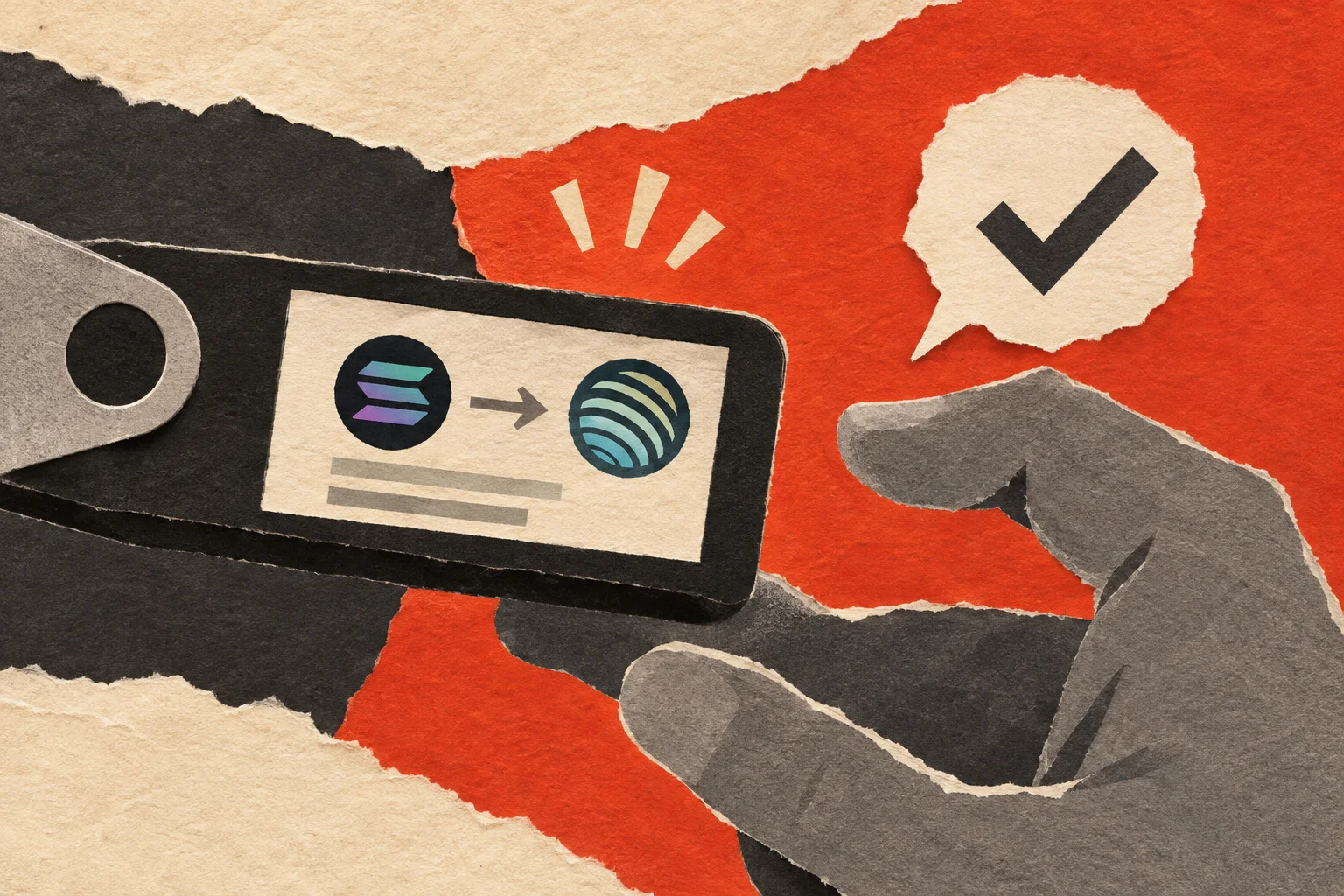
Ledger has launched Clear Signing for Solana, allowing hardware wallet users to see what a DeFi transaction does before approving it.
The company announced the feature at Solana Breakpoint in London. For a security brand, the launch amounts to an awkward admission: until now, its devices could not show Solana DeFi users what they were signing.
Ledger put it plainly in a post on X on Monday.
“Until now, most Solana DeFi on a Ledger meant signing blind,” the company wrote.
From 13 screens to 3
On Solana, the problem is structural. A single DeFi action on the network typically bundles 5-8 separate instructions. In raw form, each looks like technical data that means little to most people.
Clear Signing condenses that bundle into a readable summary, showing the user’s intent, the assets involved and the action being performed.
Decentralized exchange aggregator Jupiter is the first app to integrate the feature. Before approval, a Jupiter swap now shows in plain language what the user is sending and what they will receive.
The interface change is dramatic. Previously, approving a swap on Jupiter required 13 confirmation screens on a Ledger device. With Clear Signing, it requires 3.
Lending protocol Kamino has also added support. Clear Signing currently works with nine Solana applications in total. It covers 18 of the 22 most common on-chain actions on the network.
How it works under the hood
The implementation is based on sRFC 41, a Solana community standard that describes how to turn a complex set of instructions into a single human-readable intent.
The work required cooperation. Ledger worked with the Solana Foundation and Anza, the engineering firm behind one of Solana’s validator clients.
Developers seeking to make their apps display clearly on Ledger devices are being asked to submit Codama IDLs. An IDL is a machine-readable map of a program’s instruction structure. Using that map, the wallet can translate raw transaction data into something people can understand.
Users also need to meet a practical requirement: Clear Signing requires version 1.17.0 or higher of the Ledger Solana app. It works only with wallets built using Ledger’s DMK developer toolkit.
Breakpoint, AI agents and the Atom device
Clear Signing was not Ledger’s only pitch at Breakpoint. The company also promoted Agent Intents, a feature designed for AI agents that transact onchain.
Ledger also showcased its upcoming Atom device. The device will carry the Solana Seeker app store, suggesting Ledger wants a deeper presence in the Solana mobile ecosystem.
What this means for Solana users and wallet makers
The coverage figures matter more than the launch itself. Nine apps and 18 of 22 common actions make for a solid start. The remaining gaps are where blind signing will persist.
For Solana, the Foundation and Anza collaboration on sRFC 41 points to a broader goal: the network wants standard ways for wallets to describe transactions, rather than requiring each wallet maker to decode every protocol on its own.