
Close Menu
  • Coins
    • Bitcoin
    • Ethereum
    • Altcoins
    • NFT
  • Blockchain
  • DeFi
  • Metaverse
  • Regulation
  • Other
    • Exchanges
    • ICO
    • GameFi
    • Mining
    • Legal
  • MarketCap
What's Hot

Optimism new proposal weakens council power over standalone chains

06/11/2026

US BTC activity shows signs of weakness as demand diverges

06/11/2026

Japan’s central bank will sell ETFs 2.6 times faster and could still take 43 years to exit

06/11/2026
Facebook X (Twitter) Instagram
  • Back to NBTC homepage
  • Privacy Policy
  • Contact
X (Twitter) Telegram Facebook LinkedIn RSS
NBTC News
  • Coins
    1. Bitcoin
    2. Ethereum
    3. Altcoins
    4. NFT
    5. View All

    US BTC activity shows signs of weakness as demand diverges

    06/11/2026

    Bitcoin’s quantum-safe protection gets 82% cheaper as researchers race to secure 6 million exposed BTC

    06/11/2026

    Bitcoin Faces $77K Test as Whales Accumulate 16,010 BTC

    06/11/2026

    Bitcoin Price Recovery Stalls as $84,000 Resistance Holds Firm

    06/11/2026

    Ethereum Privacy Network Aztec Rolls Out Major Security and Speed Upgrade

    06/11/2026

    Ethereum exchange reserves hit 2016 low – As Bitmine adds another $11.22M ETH

    05/11/2026

    Mougayar’s Study Scores Ethereum (ETH) 9.7/10 Against SEC Decentralization Criteria

    05/11/2026

    What ETHGas’s advance transaction bookings offer

    05/11/2026

    Pendle Launches RWA Insights Series Featuring Institutional

    06/11/2026

    Massive Solana Transfer of 1.1M Tokens Raises Eyebrows

    06/11/2026

    Polkadot Puts dotUSD at the Center of Its User Growth Strategy

    06/11/2026

    Ondo Joins Forces With Tradexyz to Offer Real-World Asset

    06/11/2026

    PixieChess Confirms New Weekly Packs for Collectors on Base

    29/10/2026

    Fuzzy Launches Dynamic NFT Collection With Four Phases

    29/10/2026

    Machi’s NFT Sales Exceed 60 as Trader Faces $2.35M Loss

    28/10/2026

    SquiggleDAO Acquires NFT Through Decentralized Community

    24/10/2026

    Optimism new proposal weakens council power over standalone chains

    06/11/2026

    US BTC activity shows signs of weakness as demand diverges

    06/11/2026

    Japan’s central bank will sell ETFs 2.6 times faster and could still take 43 years to exit

    06/11/2026

    Pendle Launches RWA Insights Series Featuring Institutional

    06/11/2026
  • Blockchain

    Optimism new proposal weakens council power over standalone chains

    06/11/2026

    LOBSTR Becomes First Wallet Live With WalletConnect Pay on Stellar Network

    04/11/2026

    Chainlink Forms Partnership With Hanwha Investment & Securities to Power Global RWA Tokenization Platform

    04/11/2026

    Pump.fun Adds Polygon Support as Memecoin Platform Widens Multichain Push Beyond Solana

    04/11/2026

    Tokenized Collateral on the Table!

    04/11/2026
  • DeFi

    Aave borrowers faced up to 36% APR while a freeze blocked fresh collateral

    05/11/2026

    41% of Tokenized-Stock Deposits in DeFi

    05/11/2026

    dCOMP/USDC Market Update: Api3DAO Reports Healthy Conditions

    05/11/2026

    Kabu Accepts Ethena’s ENA as Collateral for USDC Borrowing

    05/11/2026

    Firelight Protocol Extends XRP-Backed Cover to $38 Million Across Three DEFI Vaults

    05/11/2026
  • Metaverse

    Exploring the Future of the Metaverse

    19/10/2026

    Is Solana Gaming Back? Kintara Activity Fuels Renewed Optimism in Onchain MMOs

    24/06/2026

    The Sandbox launches AI game engine ‘The Sandbox Studio’ for next-generation creators

    10/06/2026

    Meta commits $13M in funding for Oversight Board through 2028

    29/05/2026

    Why Animoca’s Yat Siu says the future is 100 billion AI agents

    07/05/2026
  • Regulation

    Japan’s central bank will sell ETFs 2.6 times faster and could still take 43 years to exit

    06/11/2026

    Ethereum-Tokenized Equities Hit $827 Million After 170% Growth

    06/11/2026

    Yale and Cornell Researchers Find 9 of 10 AI Agents Raised USDC Wallet Limits

    06/11/2026

    Nvidia, Nike and 48 Other Companies Oppose OKX Stock Tokenization Plan

    06/11/2026

    Blackrock, JPMorgan and Visa Bolster Grayscale’s Crypto Growth Case

    06/11/2026
  • Other
    1. Exchanges
    2. ICO
    3. GameFi
    4. Mining
    5. Legal
    6. View All

    Coinbase to Host Q3 Earnings AMA with Key Guests Tomorrow

    06/11/2026

    Coinbase Reveals Insight on Bitcoin and Stablecoin Market

    06/11/2026

    OKX Declares ‘New Money Lives Onchain’ in Eye-Catching Tweet

    06/11/2026

    Alipay Denies Crypto Trading Support

    06/11/2026

    ICO market slows sharply with only six completions in 2026

    30/04/2026

    South Korea Poised to Lift Ban on Domestic ICOs After 7 Years

    19/12/2025

    Why 2025’s Token Boom Looks Both Familiar and Dangerous

    31/10/2025

    ICO for bitcoin yield farming chain Corn screams we’re so back

    22/01/2025

    FLOKI Ships Valhalla 1.13.2 ‘Special Delivery’ to Players on Mainnet

    27/10/2026

    Top 12 NFT games every player should know about in August 2026

    19/08/2026

    GameShame Studios founder details Raijin Protocol’s roadmap in NeoPod’s sixth AMA

    13/08/2026

    How BC.GAME is turning players into stakeholders

    04/08/2026

    Core Scientific plans to exit Bitcoin mining by the end of 2026

    06/11/2026

    Keel Infrastructure Dumps Entire Bitcoin Treasury for $192M as Mining Exit Accelerates

    06/11/2026

    IREN pushes more than $4 billion in annualized revenue target to January

    06/11/2026

    Bitcoin miner Riot could pay Anthropic 12% interest under $28 billion AI deal

    05/11/2026

    Hong Kong passes law requiring crypto exchanges to report customer transactions to tax authorities

    06/11/2026

    Digital Chamber Says SEC Should Modernize Transfer Agent Rules

    06/11/2026

    Blockchain Association Says SEC Must Clarify Developer Roles

    06/11/2026

    Is a New Chapter Opening for Cryptocurrencies in the US? Will a New Bill Replace the Clarity Act? Famous Journalist Shares Democrats’ New Plan!

    06/11/2026

    Optimism new proposal weakens council power over standalone chains

    06/11/2026

    US BTC activity shows signs of weakness as demand diverges

    06/11/2026

    Japan’s central bank will sell ETFs 2.6 times faster and could still take 43 years to exit

    06/11/2026

    Pendle Launches RWA Insights Series Featuring Institutional

    06/11/2026
  • MarketCap
NBTC News
Home»Regulation»Japan’s central bank will sell ETFs 2.6 times faster and could still take 43 years to exit
Regulation

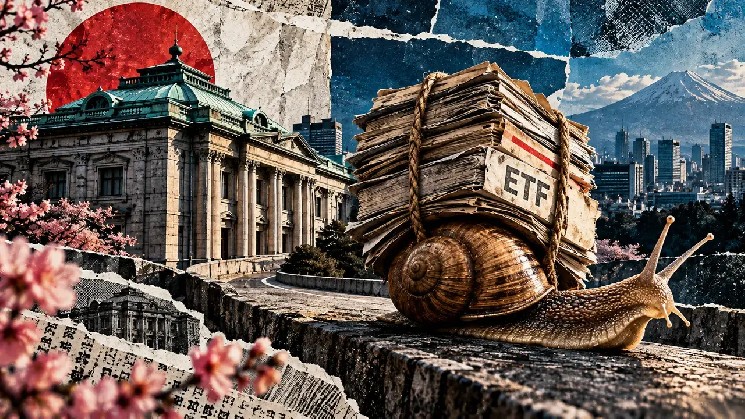
Japan’s central bank will sell ETFs 2.6 times faster and could still take 43 years to exit

NBTCBy NBTC06/11/2026No Comments7 Mins Read
Share
Facebook Twitter LinkedIn Pinterest Email


On Oct. 30, the bank held its overnight interest-rate target around 1.25% while approving faster ETF disposals from January 2027. The rate decision governs the current cost of money, and the sales program deals with assets accumulated under an earlier effort to make investors more willing to take risks.

Private buyers now have to accept more of that equity exposure, at prices the BOJ is prepared to accept.

How the Bank of Japan ended up owning stock funds

The BOJ brought equity funds into its monetary easing program in 2010, when the bank wanted to encourage investment in an economy struggling with weak demand and deflation.

By buying exchange-traded funds, which hold baskets of company shares, the bank could gain broad stock market exposure rather than pick individual companies to invest in.

At the time, its stated objective was to reduce the extra return investors demanded for holding risky assets. When a central bank adds demand for equities, it can support their prices and encourage investors to accept lower prospective returns for owning them.

That was a way to ease financial conditions when short-term interest rates were already near zero.

Even at the outset, the bank acknowledged the consequences of moving into these assets. In a November 2010 explanation of the program, then-Governor Masaaki Shirakawa discussed potential losses and the effects of the central bank’s deeper involvement in allocating resources across companies and industries.

That kind of ownership brought responsibilities that would continue beyond the purchases themselves.

The bank ended new ETF purchases in March 2024, but stopping purchases left the existing investments on its balance sheet. Unlike an individual bond, an ordinary equity ETF has no maturity date when the issuer repays principal, so the BOJ couldn’t just stop reinvesting and wait for the portfolio to expire.

To exit this trade, the bank needs to transact with actual buyers, who assume the risk of future gains and losses.

ETF units can pass between investors without selling every underlying share immediately, but the central bank still needs demand for the investment it wants to relinquish. It would be much easier to announce an end to support than to find acceptable prices for the accumulated holdings.

That explains the restraint in its disposal rules, which require seeking “appropriate prices” and want to avoid both losses and disruptions to the market in Japan as far as possible.

Selling faster transfers risk sooner but asks buyers to absorb more each year. Selling slowly leaves the bank exposed to equities longer. ETF sales began in January 2026 and have now accelerated, while retaining the option to adjust or suspend disposals when market conditions warrant it.

Selling faster without selling in a hurry

The new pace is about ¥860 billion annually at book value, up from ¥330 billion. Book value is the accounting amount assigned to the holdings being removed, rather than the cash the BOJ expects to receive. However, the difference between these values can be huge.

Using the relationship between market prices and book values in ETFs it sold during January through September, the bank estimates that the new pace corresponds to about ¥2.46 trillion at market value.

The market value equivalent can also move as prices move, while the book value pace defines how much of the recorded portfolio is being sold.

Source: Bank of Japan, Oct. 30, 2026. Disposal horizons assume a constant book-value sales pace; they are arithmetic estimates, not completion forecasts.

The bank estimates that its revised sales will represent roughly one-thousandth of market trading value, based on activity in the Tokyo Stock Exchange’s Prime Market during January through September.

Faster ETF sales still imply decades of BOJ ownership

BOJ arithmetic estimates using end-September 2026 holdings divided by a constant annual book-value sales pace. Approximately 112 years at ¥330 billion annually and 43 years at ¥860 billion. The revised pace begins January 2027; these are not completion forecasts.

Chart: Bank of Japan estimates of approximately 112 and 43 years at the respective annual sales paces. Constant-pace arithmetic, not completion forecasts.

That’s why an increase of roughly 161% in annual book-value sales can coexist with a cautious exit. Spreading transactions over time gives buyers opportunities to adjust their portfolios and allows the BOJ to reassess execution if conditions deteriorate.

Officials say sales since January have gone smoothly, with no major effect on the market. The decision to accelerate also accounts for higher overall trading activity.

The 43-year estimate doesn’t establish that Japan’s market needs four decades to absorb the portfolio, or that the BOJ couldn’t finish dumping its bonds sooner under another policy.

The bank is accepting prolonged equity ownership in exchange for limiting the volume it puts before buyers now, and future officials will inherit both the remaining assets and the discretion to sell them.

Bitcoin’s exposure runs through the borrowing

A direct route runs from Japanese monetary policy to Bitcoin, since the yen carry trade has been a favorite strategy for financing large Bitcoin buys for years.

Traders who borrow yen and buy unhedged dollar-denominated investments (Bitcoin or others) owe yen debt against an asset priced in a foreign currency. That makes the exchange rate capable of eroding the trade even if the asset’s dollar price remains stable.

If the yen strengthens, converting the asset back produces fewer yen to repay the loan. Higher borrowing costs can further reduce the return, and lenders may require more collateral under the financing terms.

Investors who need cash can sell other holdings, including Bitcoin, which allows trouble in one part of a portfolio to affect assets with no direct connection to the original trade.

Unfortunately, we can’t know for sure whether this is happening now or at what scale. The BOJ’s ETF program and private investors’ financing are different, even if they can be affected by the same market currents.

Japan’s inflation outlook and yen funding are conditionally connected, but this still requires evidence of actual borrowing stress.

The latest foreign investment numbers make the need for precision concrete. During Oct. 18-24, investors covered by the Ministry of Finance’s weekly report recorded ¥92.6 billion of net disposals of foreign long-term debt, but bought ¥430.8 billion of foreign securities overall.

Purchases in other categories more than offset the debt reduction, so the numbers don’t describe a general withdrawal of Japanese money from foreign markets, nor does that debt category identify US Treasury sales or prove that proceeds were converted into yen.

The report covers designated major investors, and disposals include redemptions, so it measures securities transactions rather than investors’ funding needs.

Establishing a forced selling episode would require financing stress connected to position reductions. Declining futures open interest could help document deleveraging, but would not identify the currency borrowed.

For now, the Bank of Japan’s four-decade calculation captures the consequences of prolonged intervention: ending a purchase program can leave a central bank managing its investments for much longer than it spent building them.

Private investors will gradually take over that exposure, while the bank can slow its exit when conditions worsen.

Bitcoin becomes vulnerable when investors elsewhere need to sell assets to meet obligations, and the decisive difference is whether those investors can afford the patience Japan has built into its own program.

Share. Facebook Twitter Pinterest LinkedIn Tumblr Email
NBTC

NBTC is the editorial account for NBTC News, covering Bitcoin, Ethereum, DeFi, blockchain infrastructure, exchanges, mining, regulation and digital asset markets. The editorial team focuses on clear sourcing, timely updates and practical context for crypto readers.

Related Posts

Ethereum-Tokenized Equities Hit $827 Million After 170% Growth

06/11/2026

Yale and Cornell Researchers Find 9 of 10 AI Agents Raised USDC Wallet Limits

06/11/2026

Nvidia, Nike and 48 Other Companies Oppose OKX Stock Tokenization Plan

06/11/2026

Blackrock, JPMorgan and Visa Bolster Grayscale’s Crypto Growth Case

06/11/2026
Add A Comment

Comments are closed.

Top Posts
Get Informed

Subscribe to Updates

Get the latest news from NBTC regarding crypto, blockchains and web3 related topics.

Your source for the serious news. This website is crafted specifically to for crazy and hot cryptonews. Visit our main page for more tons of news.

We're social. Connect with us:

Facebook X (Twitter) LinkedIn RSS
Top Insights

Optimism new proposal weakens council power over standalone chains

06/11/2026

US BTC activity shows signs of weakness as demand diverges

06/11/2026

Japan’s central bank will sell ETFs 2.6 times faster and could still take 43 years to exit

06/11/2026
Get Informed

Subscribe to Updates

Get the latest news from NBTC regarding crypto, blockchains and web3 related topics.

Type above and press Enter to search. Press Esc to cancel.