
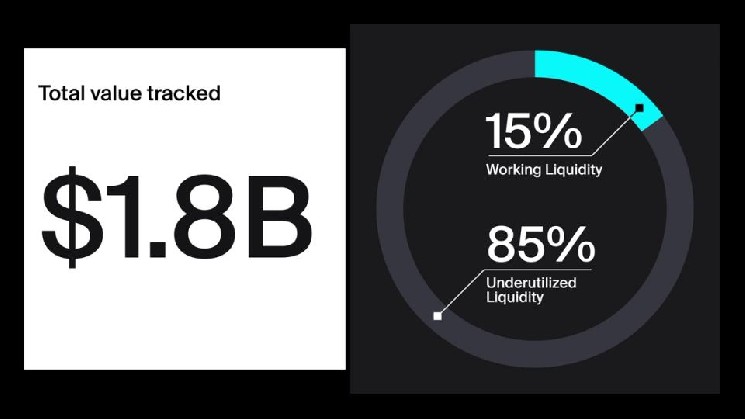

Concentrated liquidity pools let providers place assets within a chosen price range. The capital supports more trading and collects more fees while the market stays within that range; once the price moves beyond it, the position stops working until the provider adjusts the range or the market returns to its original setting.
For example, a position in an $ETH/USDC pool set between $2,000 and $2,500 stops earning fees if the price of $ETH moves outside that band. The provider must set a new range or wait for the market to return to it.
Dune tracked Uniswap v3 and v4, PancakeSwap v3 and Aerodrome Slipstream across 7 chains using weekly snapshots from Jan. 6 to June 30. The out-of-range share stayed mostly between 25% and 35%, rising to nearly 41% in early February.
The study linked idle liquidity more closely to price movements than to volatility. A steady price move in one direction is more likely to strand capital than a volatile week that ended near where it began. Incidentally, the bitcoin price was hovering near $90,000 during January before crashing to around $60,000.
Additionally, larger positions are usually less likely to sit idle, but the research found that those pools of money still held most of the inactive capital.
