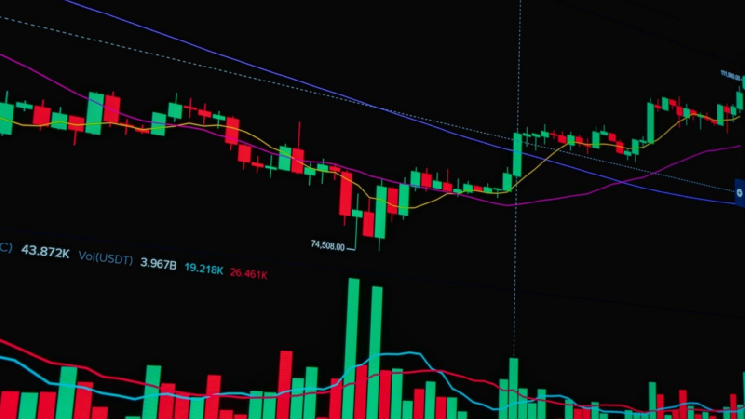
One of Wall Street’s favorite Bitcoin trades is quietly being wound down. Hedge funds have largely unwound the Bitcoin basis trade, reducing their net short position in CME Bitcoin futures by 89% from the peak reached in December 2024.
As of November 3, 2026, leveraged funds held a net short position of 2,591 contracts, or about 12,955 $BTC. This was their smallest such position since February 2023.
The trade that stopped paying
The basis trade is a bit like buying concert tickets at face value while simultaneously listing them for more on a resale site. The profit comes from the difference between the two prices, not from whether the band is any good.
In Bitcoin, a fund holds spot exposure, often through an ETF, while shorting CME futures trading at a premium. The fund is largely indifferent to where Bitcoin goes next. It earns the spread as the futures contract converges with the spot price at expiry.
That spread, known as the basis, is the whole point. But it has narrowed. The CME Bitcoin futures basis fell to just 4.8% annualized, offering minimal excess return over US Treasury yields.
Put simply, funds can earn nearly as much by holding cash in government debt, without the operational hassle, margin calls or crypto headline risk. When the reward for complexity falls to almost nothing, sophisticated investors tend to stop bothering.
ETF holdings and open interest move in tandem
Futures are only half the picture. A group of multi-strategy hedge funds, including Millennium Management and Brevan Howard, also sharply reduced their spot Bitcoin ETF exposure.
Nine hedge funds cut about 68,000 $BTC in spot Bitcoin ETF exposure between September 2025 and June 2026. The stake was valued at around $5.4 billion.
CME activity has also thinned. By early November 2026, open interest in CME Bitcoin futures had fallen to approximately 17,527 contracts, or about 87,635 $BTC. Trading volume has declined as well.
A brief detour into net long territory
One detail stands out. In August 2026, leveraged funds briefly shifted to a net long position in CME Bitcoin futures for the first time.
That is unusual. Leveraged funds have long been structural short sellers in this market, largely because of the basis trade. The shift has been described as a potential signal of bullish sentiment toward Bitcoin.
Background: how the basis trade grew
The basis trade became a dominant force after spot Bitcoin ETFs gave institutions a clearer way to hold the long leg in a regulated wrapper. Pairing ETF shares with CME futures shorts gave funds a relatively straightforward way to earn yield from Bitcoin’s futures premium.
The December 2024 peak marked the height of that enthusiasm. Since then, the premium has narrowed, multi-strategy funds have reduced their ETF holdings, and the market’s short side has shrunk dramatically.
The current net short position is now at its lowest level since February 2023. That effectively takes the market back to a period before the ETF-driven carry boom took hold.
What this means for the Bitcoin market
For starters, this complicates how investors interpret ETF flow data. A meaningful share of past ETF buying came from funds that were hedged and had no directional view on Bitcoin. As that activity fades, ETF flows may become a clearer signal of genuine demand rather than arbitrage mechanics.
The reverse is also true. Some ETF outflows linked to the unwind may not reflect bearish sentiment at all. Funds selling ETF shares while closing futures shorts are dismantling a spread trade, not necessarily betting against Bitcoin.
The key variable to watch is the basis itself. At 4.8% annualized, the trade barely beats Treasuries. If the premium widens again, the economics of the carry trade could return, along with the hedge funds.