
Close Menu
  • Coins
    • Bitcoin
    • Ethereum
    • Altcoins
    • NFT
  • Blockchain
  • DeFi
  • Metaverse
  • Regulation
  • Other
    • Exchanges
    • ICO
    • GameFi
    • Mining
    • Legal
  • MarketCap
What's Hot

JPMorgan says Hyperliquid’s rise threatens Circle’s USDC economics

05/08/2026

2.96 Billion SHIB Burned in Biggest Weekly Burn of Year

05/08/2026

Clarity Act talks enter final stretch as GOP seeks Democratic votes

05/08/2026
Facebook X (Twitter) Instagram
  • Back to NBTC homepage
  • Privacy Policy
  • Contact
X (Twitter) Telegram Facebook LinkedIn RSS
NBTC News
  • Coins
    1. Bitcoin
    2. Ethereum
    3. Altcoins
    4. NFT
    5. View All

    Why BlackRock Is Building Beyond Bitcoin ETFs?

    05/08/2026

    Michael Saylor rejects Ethereum-style Bitcoin yield in new BTC framework

    05/08/2026

    Bitcoin OG Moves 2,373 BTC After 7 Years of Silence

    05/08/2026

    Bitcoin yield is already here, now finance wants to make it normal

    05/08/2026

    Ethereum’s Network Is Booming, So Why Is ETH Still Underperforming?

    04/08/2026

    BitMEX Founder Arthur Hayes Made a Large Purchase of This Altcoin! Here Are the Details

    04/08/2026

    Abraxas Capital Moves $61.2M USDT to Bitfinex, Supplies 40,000 ETH to Spark

    04/08/2026

    Can ETH Break $2,000 as ETH/BTC Ratio Forms a Cup and Handle?

    04/08/2026

    2.96 Billion SHIB Burned in Biggest Weekly Burn of Year

    05/08/2026

    XRP Ledger Processes $4.28B in Stablecoin Transfers as RLUSD Dominance Grows

    05/08/2026

    A National Health Authority, Live and Verifiable on IOTA

    05/08/2026

    Evernorth updates SEC filing for $1B XRP treasury

    05/08/2026

    What Happens to Your Attendance NFTs?

    04/08/2026

    StonkBrokers NFT on Robinhood hits $12.6K in 2 weeks: Can momentum hold?

    04/08/2026

    Top NFT Sales of the Week, Ethereum Dominates with $52.2M Sale

    02/08/2026

    Are NFTs Dead in 2026? What Happened to the Market

    29/07/2026

    JPMorgan says Hyperliquid’s rise threatens Circle’s USDC economics

    05/08/2026

    2.96 Billion SHIB Burned in Biggest Weekly Burn of Year

    05/08/2026

    Clarity Act talks enter final stretch as GOP seeks Democratic votes

    05/08/2026

    Ondo Unveils Fixed-Rate Lending Feature for Tokenized Stocks

    05/08/2026
  • Blockchain

    NeoLine wallet ships Neo X signing transparency in v5.9.2

    05/08/2026

    SodaBot Taps Matrix Chain to Accelerate AI Agent Execution via BNB Chain

    05/08/2026

    BitGo’s WBTC move pushes LayerZero-to-Chainlink tally near $15 billion

    05/08/2026

    Wells Fargo to Launch In-House Blockchain Deposit Token This Fall

    05/08/2026

    Ondo Finance Brings USDY, a Yield-Bearing Stablecoin Backed by U.S. Treasuries, to BNB Chain

    05/08/2026
  • DeFi

    1inch Aqua liquidity hands full custody control to DeFi traders on 13 chains

    04/08/2026

    DeFi Curated Vault Market Grows to $7.18B Despite Lending TVL Decline

    04/08/2026

    DeFi Platform Drops Consumer App, Pivots to Big Tech OTC Lending After 75% Revenue Crash

    04/08/2026

    What are intents and solvers? The invisible layer executing your DeFi trades

    04/08/2026

    ValueQube Taps X-Agent to Build AI-Readable DeFi Asset Infrastructure

    04/08/2026
  • Metaverse

    Is Solana Gaming Back? Kintara Activity Fuels Renewed Optimism in Onchain MMOs

    24/06/2026

    The Sandbox launches AI game engine ‘The Sandbox Studio’ for next-generation creators

    10/06/2026

    Meta commits $13M in funding for Oversight Board through 2028

    29/05/2026

    Why Animoca’s Yat Siu says the future is 100 billion AI agents

    07/05/2026

    ‘8,000 Jobs’—Polymarket Sees Tech Layoff Surge As Meta AI Push Bites

    18/04/2026
  • Regulation

    JPMorgan says Hyperliquid’s rise threatens Circle’s USDC economics

    05/08/2026

    Fed Chair Kevin Warsh Testified Before Congress—He Made Hot Comments, Including on Cryptocurrencies

    05/08/2026

    Mizuho downgrades Circle to underperform, cuts price target to $50 on Open USD threat

    05/08/2026

    Circle stock tumbles as US banks challenge CLARITY Act loophole

    05/08/2026

    $400B in 2025 payments has banks on edge

    05/08/2026
  • Other
    1. Exchanges
    2. ICO
    3. GameFi
    4. Mining
    5. Legal
    6. View All

    Ondo Unveils Fixed-Rate Lending Feature for Tokenized Stocks

    05/08/2026

    Multi-trillion-dollar offshore engine driving 90% of crypto trading arrives in America – and CME is suing to crush it

    05/08/2026

    Samsung Wallet Stablecoins Could Reshape Android Payments — Or Not

    05/08/2026

    Crypto exchanges are giving foreign traders access to Chinese AI stocks

    05/08/2026

    ICO market slows sharply with only six completions in 2026

    30/04/2026

    South Korea Poised to Lift Ban on Domestic ICOs After 7 Years

    19/12/2025

    Why 2025’s Token Boom Looks Both Familiar and Dangerous

    31/10/2025

    ICO for bitcoin yield farming chain Corn screams we’re so back

    22/01/2025

    How BC.GAME is turning players into stakeholders

    04/08/2026

    YGG Play Shuts Down Services as Yield Guild Pivots to AI Data

    01/08/2026

    why gameplay now beats crypto rewards

    29/07/2026

    From NFT gaming to mining simulators

    29/07/2026

    Trump-linked Bitcoin firm reaches $2.5M settlement with DOJ over pandemic loan

    05/08/2026

    ‘Crypto King’ Barry Silbert Shares Huge Power Milestone for Zcash (ZEC) Mining

    05/08/2026

    MARA Opens Slipstream to the Public as Coldcard Victims Race to Escape

    05/08/2026

    It Could Significantly Change BTC

    05/08/2026

    Clarity Act talks enter final stretch as GOP seeks Democratic votes

    05/08/2026

    Kalshi, Polymarket win pause against Minnesota’s prediction market ban

    05/08/2026

    U.S. Senate puts off crypto Clarity Act for now as it focuses limited bandwidth elsewhere

    05/08/2026

    Schumer Submits SEC and CFTC Nominees to White House in Crypto Bill Talks, Source Says

    05/08/2026

    JPMorgan says Hyperliquid’s rise threatens Circle’s USDC economics

    05/08/2026

    2.96 Billion SHIB Burned in Biggest Weekly Burn of Year

    05/08/2026

    Clarity Act talks enter final stretch as GOP seeks Democratic votes

    05/08/2026

    Ondo Unveils Fixed-Rate Lending Feature for Tokenized Stocks

    05/08/2026
  • MarketCap
NBTC News
Home»Blockchain»Encryption and encrypted passwords in the world of blockchain and crypto
Blockchain

Encryption and encrypted passwords in the world of blockchain and crypto

NBTCBy NBTC06/05/2024No Comments6 Mins Read
Share
Facebook Twitter LinkedIn Pinterest Email


The storage and secure management of data and passwords is one of the most important aspects in the crypto and blockchain world, and more generally in all online environments.

Encryption, intense as the art of “hidden writings” capable of converting plain text into encrypted text and vice versa, comes to our aid making it difficult for hackers to allow unauthorized access to certain networks and transactions.

Let’s delve into the different methods through which encryption can protect valuable information and safeguard passwords.

  • Symmetric and asymmetric password encryption in the crypto sector
  • The most common formats of encrypted passwords
  • Hash functions and digital signatures

Symmetric and asymmetric password encryption in the crypto sector

Generally when talking about password protection in cryptography, reference is made to two encryption methods: symmetric and asymmetric.

That symmetric one refers to a type of text encryption that uses a single key to encrypt and decrypt information:

The encryption key is shared between sender and recipient and is usually agreed upon in advance: it represents the central element that in cryptocurrencies allows users to access and manage their digital resources.

Symmetric encryption with a single key is one of the most common means to protect passwords, transactions, and communication between operating nodes.

When performing, for example, a funds transfer from one wallet to another, it ensures that the information is read and shared only by two parties involved in the transaction, keeping the data safe from prying eyes.

However, despite the advantages it brings, symmetric encryption has limitations in terms of scalability and key management.

Indeed, the need for communication in pairs greatly limits the expansion of this practice in a system with many more users. At the same time, more users imply human errors in the management and conservation of the so-called “private key”, which if lost leads to the loss of crypto or data stored in the virtual wallet.

To overcome these limitations, asymmetric cryptography comes to our aid by providing a pair of separate keys (public and private) in the encoding and decoding of passwords.

This additional level of security instantly increases data protection: the public key can be shared with anyone on any network (like when we share our address to receive a payment in crypto), while the private key must be kept secret.

Both keys are generated by an algorithm that uses large prime numbers to create two unique and mathematically linked keys.

Anyway, whoever possesses the public key can encrypt a message, but only the holder of the private counterpart can decrypt the text. We can imagine this as if it were an email inbox: whoever holds the public key can send a message, but only the owner of the private key can open the email and read the messages.

Non-custodial software wallets like Trust Wallet or MetaMask use asymmetric cryptography to offer the highest possible security to their users.

Source: https://www.javaboss.it/crittografia-in-java/

The most common formats of encrypted passwords

Password encryption in the crypto and blockchain sector occurs according to different formats that can be used for different purposes and offer different levels of security:

  1. MD5 (Message Digest 5):

The MD5 algorithm, developed by Ronald Rivest in 1991, generates a 128-bit hash (32 hexadecimal characters) from a variable-length input.

It is no longer considered secure due to vulnerabilities discovered in its algorithm. However, it is still used in some legacy contexts, for example to verify the integrity of files.

  1. SHA-1 (Secure Hash Algorithm 1):

SHA-1 generates a 160-bit hash (40 hexadecimal characters).

It is no longer considered as secure as it once was, having shown several vulnerabilities: it is now generally replaced by more robust algorithms such as SHA-256 and SHA-3. However, it is still used in a wide range of systems and new applications.

  1. Salt:

The salt is a random sequence of bits that is added to the password before calculating the hash.

It solves the problem of collisions (two different passwords generating the same hash) in hashing methods.

By adding a salt, even identical passwords will have completely different hashes. This makes it harder for attackers to decrypt passwords through brute force attacks.

  1. Bcrypt:

Bcrypt is a hashing algorithm specifically designed for password encryption.

Use a salt and a number of iterations to slow down the hash calculation. It is widely used to protect user passwords in the field of databases.

The choice of encryption format depends on the specific needs of the reference system. Nowadays, it is advisable to use hashing algorithms such as bcrypt or SHA-2 to protect passwords and mitigate cyber attacks.

Hash functions and digital signatures

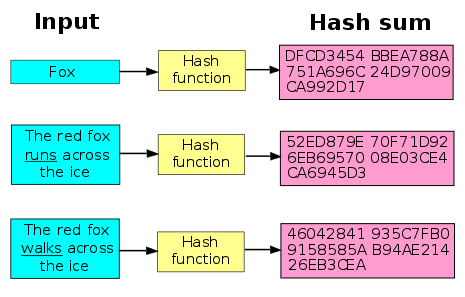
Another way to protect passwords and valuable information in cryptocurrencies is to rely on hash functions, that is algorithms that transform any form of data into a string of characters of fixed length.

By using robust hashing algorithms, we can effectively protect sensitive information and prevent cyber attacks.

Hash functions are irreversible: it is not possible to convert a hash back into its original data. They are essential in data management on the blockchain because they allow structuring information without compromising its initial integrity

Hashes can also act as fingerprints for all encrypted passwords, protecting the user against unauthorized actions on their account.

Indeed, any modification to the original data would result in a new hash, which would no longer correspond to the original source and therefore would not be verifiable on the blockchain.
Another method to ensure password security, and more specifically the authenticity and integrity of data in a message, is to use the so-called “digital signatures” (asymmetric cryptography technique).

This is simply a method to ensure that the owner of those specific data is approving the transaction. Generally, the sender creates the digital signature using a private key to encrypt the signature data, while the recipient obtains the signer’s public key to decrypt the data. This code represents irrefutable proof that a message has been created solely by the sender and has not been tampered with online.

When talking about digital signatures, one immediately thinks of signature devices like Ledger, Trezor, and Bitbox that allow to validate a transaction before it is broadcasted to the rest of a cryptographic network.

However, be careful not to consider these devices as wallets: they do not contain your cryptocurrencies but only allow you to approve the transactions necessary to spend them.

We often say, “my crypto is ON my Ledger”.

But your digital assets aren’t actually stored physically on your Ledger – they’re on the blockchain.

Your Ledger stores and protects your private keys and keeps them safe so you can fully own and manage your assets.@iancr explains: pic.twitter.com/PGrmQIvKpV

— Ledger (@Ledger) May 11, 2023


Share. Facebook Twitter Pinterest LinkedIn Tumblr Email
NBTC

NBTC is the editorial account for NBTC News, covering Bitcoin, Ethereum, DeFi, blockchain infrastructure, exchanges, mining, regulation and digital asset markets. The editorial team focuses on clear sourcing, timely updates and practical context for crypto readers.

Related Posts

NeoLine wallet ships Neo X signing transparency in v5.9.2

05/08/2026

SodaBot Taps Matrix Chain to Accelerate AI Agent Execution via BNB Chain

05/08/2026

BitGo’s WBTC move pushes LayerZero-to-Chainlink tally near $15 billion

05/08/2026

Wells Fargo to Launch In-House Blockchain Deposit Token This Fall

05/08/2026
Add A Comment

Comments are closed.

Top Posts
Get Informed

Subscribe to Updates

Get the latest news from NBTC regarding crypto, blockchains and web3 related topics.

Your source for the serious news. This website is crafted specifically to for crazy and hot cryptonews. Visit our main page for more tons of news.

We're social. Connect with us:

Facebook X (Twitter) LinkedIn RSS
Top Insights

JPMorgan says Hyperliquid’s rise threatens Circle’s USDC economics

05/08/2026

2.96 Billion SHIB Burned in Biggest Weekly Burn of Year

05/08/2026

Clarity Act talks enter final stretch as GOP seeks Democratic votes

05/08/2026
Get Informed

Subscribe to Updates

Get the latest news from NBTC regarding crypto, blockchains and web3 related topics.

Type above and press Enter to search. Press Esc to cancel.