
Close Menu
  • Coins
    • Bitcoin
    • Ethereum
    • Altcoins
    • NFT
  • Blockchain
  • DeFi
  • Metaverse
  • Regulation
  • Other
    • Exchanges
    • ICO
    • GameFi
    • Mining
    • Legal
  • MarketCap
What's Hot

“We’re in an Institutional Bull Market for Bitcoin”

22/06/2026

Okratech Token Partners with Predict Protocol to Expand Web3 Utility

22/06/2026

Sellers Remain in Control as ETH Recovery Hits a Wall

22/06/2026
Facebook X (Twitter) Instagram
  • Back to NBTC homepage
  • Privacy Policy
  • Contact
X (Twitter) Telegram Facebook LinkedIn RSS
NBTC News
  • Coins
    1. Bitcoin
    2. Ethereum
    3. Altcoins
    4. NFT
    5. View All

    “We’re in an Institutional Bull Market for Bitcoin”

    22/06/2026

    Ray Dalio explains why central banks won’t touch BTC

    22/06/2026

    A sports betting ETF bitcoin traders may want to watch

    22/06/2026

    Bitcoin Bull Arthur Hayes Reveals His Price Prediction for BTC and Names Three Altcoins!

    22/06/2026

    Sellers Remain in Control as ETH Recovery Hits a Wall

    22/06/2026

    Ethereum posts strong H1 2026 activity metrics to date, defying slower trading

    22/06/2026

    Ethereum stuck within a 10-month bearish trend, buyer conviction is still lacking

    22/06/2026

    Ethereum whale activity crashes 86% – Can ETH reclaim $1,800?

    21/06/2026

    Ripple’s Latest 50 Million XRP Move Isn’t Just Another Coinbase Deposit

    22/06/2026

    A $575 bet on a Shiba-themed token became $1.17 million in 5 days

    22/06/2026

    A Whale Waited Patiently, Found the Peak! Turned $575 into $1.7 Million! Here’s the Altcoin It Bought!

    22/06/2026

    Bitwise CIO makes the case for new AVAX ETF launch

    22/06/2026

    Top 10 NFT Performers by Trading Volume, Courtyard Outshines

    22/06/2026

    Pudgy Penguins expands retail footprint with Target trading card rollout

    20/06/2026

    Collectible NFTs in focus during nations 250th anniversary

    12/06/2026

    NFTfi Shuts Down After $737M in Loans as NFT Market Contraction Makes Operations Unsustainable

    11/06/2026

    “We’re in an Institutional Bull Market for Bitcoin”

    22/06/2026

    Okratech Token Partners with Predict Protocol to Expand Web3 Utility

    22/06/2026

    Sellers Remain in Control as ETH Recovery Hits a Wall

    22/06/2026

    Can a Crypto Miner Deliver?

    22/06/2026
  • Blockchain

    Kawasaki Heavy Industries partners with Nvidia to open US robotics center in San Jose

    22/06/2026

    Moody’s rolls out credit ratings on Solana in tokenized asset push

    21/06/2026

    Thiel-backed Plasma debuts stablecoin neobank with Visa card and XPL rewards

    21/06/2026

    FIFA wanted Avalanche’s blockchain to help curb World Cup ticket scalping. Here’s how it’s going

    21/06/2026

    Private-market documents get on-chain verification as Inveniam and Docugami target AI’s data trust gap

    21/06/2026
  • DeFi

    Okratech Token Partners with Predict Protocol to Expand Web3 Utility

    22/06/2026

    Aave V4 targets Wall Street’s $12 trillion repo market

    21/06/2026

    Liquify DAO Joins AstroX to Explore New Opportunities

    21/06/2026

    DeFi’s next institutional wave may come from users who never see “behind the scenes” – CEO of Katana

    20/06/2026

    Ledn adds Tether Gold as loan collateral, expanding Bitcoin-backed lending model

    20/06/2026
  • Metaverse

    The Sandbox launches AI game engine ‘The Sandbox Studio’ for next-generation creators

    10/06/2026

    Meta commits $13M in funding for Oversight Board through 2028

    29/05/2026

    Why Animoca’s Yat Siu says the future is 100 billion AI agents

    07/05/2026

    ‘8,000 Jobs’—Polymarket Sees Tech Layoff Surge As Meta AI Push Bites

    18/04/2026

    Planet Hares Partners With Magne.AI To Bridge Web3 Metaverse With Smartphone Mobile-Ready Applications For Mass Adoption

    08/04/2026
  • Regulation

    Can a Crypto Miner Deliver?

    22/06/2026

    Japan Banks, Hong Kong Rules, and South Korea’s Tokenized Asset Tax

    22/06/2026

    Middle East ceasfire, Fed interest-rate decision: Crypto Week Ahead

    22/06/2026

    Markets cheer U.S.-Iran Breakthrough though Middle East risks, Fed remain in focus

    22/06/2026

    AI Stock Valuations Are a Bubble, Says India’s Chief Economic Advisor

    21/06/2026
  • Other
    1. Exchanges
    2. ICO
    3. GameFi
    4. Mining
    5. Legal
    6. View All

    OKX’s Star Xu Accuses CZ of Mixed Messages on Hyperliquid

    22/06/2026

    Binance APAC chief says regulation, liquidity and real-world utility will shape crypto’s next chapter

    22/06/2026

    Humanity Protocol H airdrop moves to major exchanges

    22/06/2026

    CoinMENA, Standard Chartered partner on UAE payment rails

    22/06/2026

    ICO market slows sharply with only six completions in 2026

    30/04/2026

    South Korea Poised to Lift Ban on Domestic ICOs After 7 Years

    19/12/2025

    Why 2025’s Token Boom Looks Both Familiar and Dangerous

    31/10/2025

    ICO for bitcoin yield farming chain Corn screams we’re so back

    22/01/2025

    Nexus Acquires Homegrown App Marketplace One Store, Expanding into Global Web3 Game Hub

    21/06/2026

    GMATRIXS and Plum Protocol Partner to Blend GameFi with Meme Assets, Driving Multi-Chain Web3 User Experience

    16/06/2026

    Crypto game studio Uncharted to shutdown along with Fishing Frenzy

    15/06/2026

    Pudgy Penguins Halts Web3 Mobile Game Pudgy Party to Focus on Pudgy World

    14/06/2026

    SpaceX pledges to cover power grid upgrade costs for data centers

    22/06/2026

    Ford capitalizes on AI boom with new energy storage division

    21/06/2026

    Bitdeer Sells All 218 BTC Mined This Week, Returns to Zero Bitcoin Balance

    20/06/2026

    rare event or miner strategy?

    20/06/2026

    SEC targets 20-year-old rule standing between Wall Street and blockchain trading

    22/06/2026

    South Korea’s Finance Ministry Classifies Tokenized Stocks as Securities, Taxation Could Begin in H2

    22/06/2026

    Zimbabwe Ends Crypto Legal Gray Zone with First Mandatory Registration Rules

    22/06/2026

    The CLARITY Act has a two-month window. Here is the map

    22/06/2026

    “We’re in an Institutional Bull Market for Bitcoin”

    22/06/2026

    Okratech Token Partners with Predict Protocol to Expand Web3 Utility

    22/06/2026

    Sellers Remain in Control as ETH Recovery Hits a Wall

    22/06/2026

    Can a Crypto Miner Deliver?

    22/06/2026
  • MarketCap
NBTC News
Home»Legal»Canada wants to ban crypto ATMs as fraud fears turn Bitcoin access into a political target
Legal

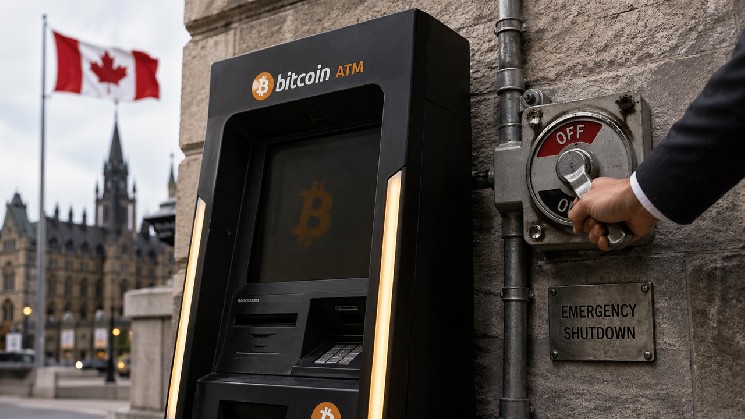
Canada wants to ban crypto ATMs as fraud fears turn Bitcoin access into a political target

NBTCBy NBTC08/05/2026No Comments6 Mins Read
Share
Facebook Twitter LinkedIn Pinterest Email


The country that gave the world its first crypto ATMs is now preparing to eliminate them entirely. In April 2013, a Vancouver coffee shop installed what would become crypto’s most recognizable retail footprint, a machine that let ordinary people convert cash into Bitcoin without a bank account, a broker, or much friction at all.

Thirteen years later, Canada has nearly 4,000 of these machines operating across the country, the highest concentration per capita in the world. And the federal government’s Spring Economic Update 2026 has proposed banning them outright.

The proposal didn’t come out of the blue. Canadians reported losing more than $704 million to fraud in 2025, bringing total reported losses since 2022 to over $2.4 billion. The government estimates that only 5 to 10 percent of fraud incidents are ever reported, which means the real figures are almost certainly a multiple of what’s on paper.

Officials described crypto ATMs in the update as a “primary method for scammers to defraud victims and for criminals to place their cash proceeds of crime.” This kind of language sounds like a public verdict on a product category that’s been operating under a compliance framework designed for currency exchange counters and Western Union branches.

Crypto ATMs: Machines that made fraud easy to explain

To understand why Ottawa moved on these machines before any other corner of crypto, we need to think about how regulators communicate risk to the general public, and what makes a target legible enough to act on politically.

Crypto ATMs are physically present. They sit all over the country in convenience stores, gas stations, and shopping malls. They don’t require a bank account to use; most transactions under $1,000 only require a phone number, and unlike a bank teller, there’s no human interaction capable of recognizing fraud in progress.

That combination of visibility and low verification threshold makes them uniquely exposed to political action. A regulator can point to the machine and explain the problem in a single sentence, which is an advantage that no other corner of the crypto ecosystem currently offers. No one needs to understand DeFi, cross-chain bridges, or stablecoin mechanics to see how they’re being scammed out of their money, and that simplicity is now the industry’s greatest liability.

A 2023 internal analysis by FINTRAC, Canada’s financial intelligence agency, found that bitcoin ATMs are likely to remain “the primary method” fraudsters use to collect and launder funds from victims. That conclusion sat in the background for years while operators continued to expand, and industry-specific regulations never materialized.

When CBC News requested interviews with Finance Minister François-Philippe Champagne and FINTRAC last fall to ask what action they were taking, neither request was granted. The Spring Economic Update was, in effect, the answer that neither institution had been willing to give on record.

The industry’s own compliance record complicates its defense. Nearly a dozen former employees of crypto ATM companies operating in Canada told CBC News that fraudsters tricking scam victims into sending money through the machines is a known problem within the companies, with half of them saying they don’t believe the operator they worked for would be profitable without transactions tied to fraud.

That allegation, if accurate, reframes the problem with ATMs in a way that compliance measures alone can’t easily address. Warnings, cooling-off periods, and identity checks can blunt fraud at the margins, but they don’t address a model that may structurally depend on it.

The FBI has been flagging crypto ATM scams as a growing trend for years, and California moved to cap Bitcoin ATM transactions at $1,000 per day in 2023 to create friction before irreversible transfers are completed. Ottawa’s approach is more categorical than either of those responses.

Who actually loses when the on-ramp closes

The government’s proposal includes a carve-out: Canadians would still be able to purchase digital assets through other regulated channels, including brick-and-mortar money services businesses already subject to existing oversight frameworks.

This essentially makes the ban a restriction on the unattended cash-to-crypto pipeline rather than a prohibition on crypto access itself, which is an important distinction, though one that matters considerably less to users who relied on these machines because the alternatives weren’t available to them.

Some Canadians use crypto ATMs because they’re underbanked or cash-dependent, because they’re making small purchases and don’t want to go through identity verification on a regulated exchange, or simply because the machine is in the corner store where they already buy groceries.

A full ban removes a legal access point for that population without creating a meaningfully equivalent replacement. According to the Canadian Anti-Fraud Centre, fraud victims reported theft of $14.2 million in scams through crypto ATMs in 2024, with losses exceeding $4.2 million in the first three months of 2025 alone.

Those figures represent only an estimated 5 to 10 percent of actual incidents, so the harm is real and material. The question is whether its concentration justifies eliminating a channel that also carries legitimate use, and Canada’s government has decided it does.

That decision has precedent. Bybit’s exit from Canada and the fines levied against Bybit and KuCoin for securities failures show a regulatory environment that’s willing to accept access reduction as a byproduct of enforcement. The pattern shows us that when Ottawa decides a compliance problem is serious enough, it prioritizes the problem over the product.

The playbook Canada is writing for everyone else

If enacted, Canada’s ban would be among the most comprehensive responses to the crypto ATM fraud problem in any major economy.

The UK effectively restricted crypto ATMs in 2021 by requiring all operators to register with the Financial Conduct Authority (FCA), and as of 2026, no operator has obtained that registration, rendering each machine in practice illegal and subject to enforcement.

Australia took a softer approach, with AUSTRAC imposing per-transaction cash limits in mid-2025 following a joint review focused on fraud and consumer protection. The UK’s approach achieved removal through bureaucratic friction rather than legislation, while Australia chose graduated controls.

Canada’s route is more direct, and it’s emerging from a government that’s simultaneously standing up a Financial Crimes Agency with $352.7 million in funding over five years and a mandate to follow illicit money wherever it flows.

The logic and motivation behind this proposal are worth taking seriously beyond their immediate application.

When a retail crypto product becomes associated with fraud in the public mind, particularly fraud targeting vulnerable populations, Canada’s current answer is immediate removal.

That’s a much different regulatory stance than the industry has historically faced, and it isn’t limited to machines in corner stores. Prepaid crypto cards, self-custody apps, stablecoin on-ramps, and any product with a simple retail interface and low verification requirements are all operating inside the same political risk window, even if none of them has reached the ATM’s level of public notoriety yet.

Canada’s evolving regulatory record suggests that when the fraud association sticks, the product follows.

The country that installed the world’s first Bitcoin ATM in a Vancouver coffee shop may be about to become the first major economy to make them entirely illegal. That’s a striking inversion, and a signal worth paying attention to well outside Canada’s borders.

Share. Facebook Twitter Pinterest LinkedIn Tumblr Email
NBTC

NBTC is the editorial account for NBTC News, covering Bitcoin, Ethereum, DeFi, blockchain infrastructure, exchanges, mining, regulation and digital asset markets. The editorial team focuses on clear sourcing, timely updates and practical context for crypto readers.

Related Posts

SEC targets 20-year-old rule standing between Wall Street and blockchain trading

22/06/2026

South Korea’s Finance Ministry Classifies Tokenized Stocks as Securities, Taxation Could Begin in H2

22/06/2026

Zimbabwe Ends Crypto Legal Gray Zone with First Mandatory Registration Rules

22/06/2026

The CLARITY Act has a two-month window. Here is the map

22/06/2026
Add A Comment

Comments are closed.

Top Posts
Get Informed

Subscribe to Updates

Get the latest news from NBTC regarding crypto, blockchains and web3 related topics.

Your source for the serious news. This website is crafted specifically to for crazy and hot cryptonews. Visit our main page for more tons of news.

We're social. Connect with us:

Facebook X (Twitter) LinkedIn RSS
Top Insights

“We’re in an Institutional Bull Market for Bitcoin”

22/06/2026

Okratech Token Partners with Predict Protocol to Expand Web3 Utility

22/06/2026

Sellers Remain in Control as ETH Recovery Hits a Wall

22/06/2026
Get Informed

Subscribe to Updates

Get the latest news from NBTC regarding crypto, blockchains and web3 related topics.

Type above and press Enter to search. Press Esc to cancel.