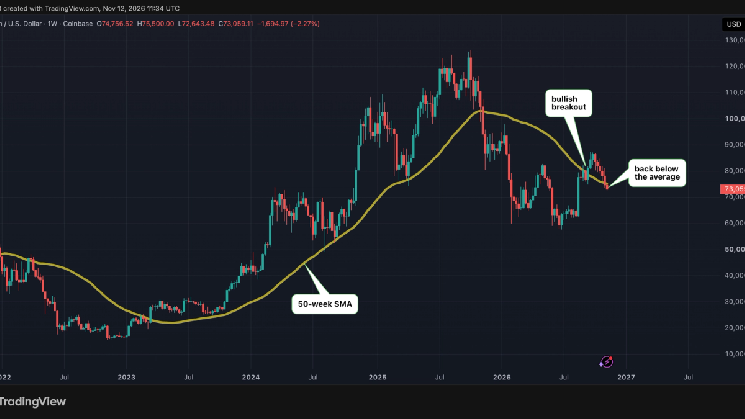
Bitcoin $BTC$73,512.58 fell below a key level, reversing a September signal that had led analysts to believe a new bull run was underway.
More specifically, the largest cryptocurrency dropped below its 50-week simple moving average. $BTC recently traded below $73,400, at a discount to its 50-week SMA of $75,153.
This is a failed breakout, a pattern that technical analysts often interpret as a sign that sellers have regained control of the market.
In September, prices moved decisively above the 50-week average, leading several analysts, including Alex Thorn, research head at Galaxy Digital, to say it signaled the start of a new bull run.
Thorn’s analysis found that in four of the five previously completed bear markets, the first weekly close above the 50-week SMA preceded a bull run. The only exception was the 2021–22 cycle, when two brief moves back above the average were followed by a deeper selloff.
For now, that bullish view has been invalidated, as large outflows from spot ETFs also point to weak institutional demand.
“We stay cautious while $BTC sits under its 50-week average, with $68k the next level down and reclaiming $80k changing that view,” said leading crypto market maker Wintermute.
Elsewhere, the U.S. Dollar Index, which measures the currency against major peers, briefly rose above 103, its highest level since March 2025. Sustained dollar strength makes bitcoin and the broader crypto market less attractive.
Some observers remain optimistic, saying the dollar’s rally may be nearing its end, with markets largely pricing in the prospect of a Federal Reserve interest-rate increase in December.
“We think much of that hawkishness is already reflected in prices, leaving the balance of risk tilted toward profit-taking on dollar longs. A narrowing of US yield differentials would take pressure off crypto and could help bring buyers back,” said Joel Kruger, market strategist at LMAX Group, in an email.
Kruger added that Fed commentary and Friday’s U.S. producer price inflation report are the next tests of that view. The conflict with Iran is also a swing factor through oil prices, as renewed supply pressure could keep inflation concerns elevated.
“If those catalysts give the dollar little reason to extend its gains, we see scope for Bitcoin to lead a recovery from here,” he noted.
Meanwhile, some observers worry that MSCI’s exclusion of Strategy (MSTR) from its indexes could limit the company’s ability to raise funds for bitcoin purchases. Still, they added, much of the bad news may already be priced in.