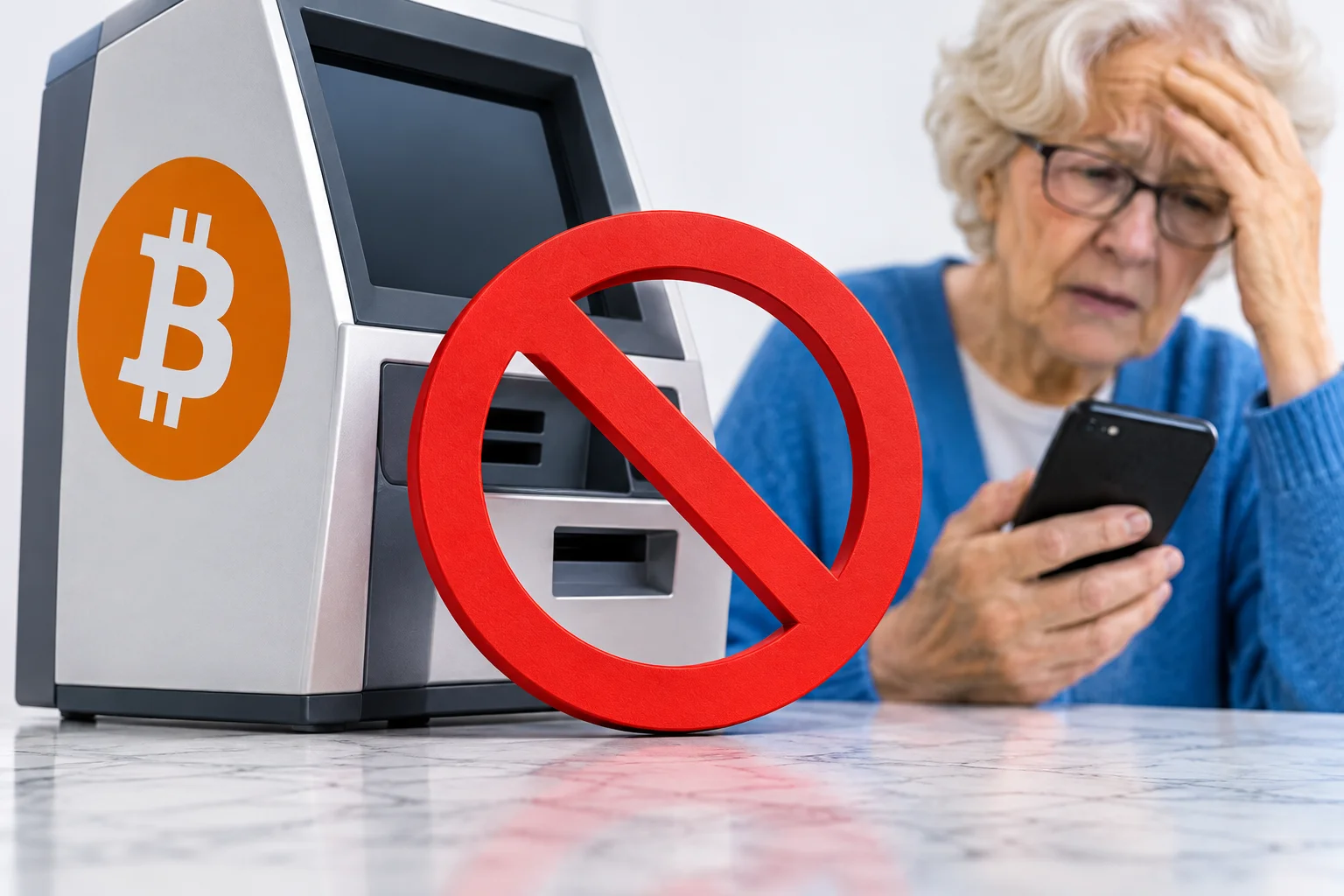
As of November 16, 2026, some U.S. states and municipalities are increasingly moving to ban cryptocurrency kiosks, often called Bitcoin ATMs, amid a surge in financial scams linked to the machines. Last year, the FBI received 13,460 complaints involving crypto kiosks, with reported losses totalling nearly $389 million.
The crackdown comes as scammers increasingly direct victims to these machines, often found in gas stations, convenience stores and grocery stores. Victims deposit money that is converted into digital currency and transferred to accounts controlled by criminals.
US States and Cities Move to Ban Cryptocurrency Kiosks
States and cities across the United States are increasingly banning or severely restricting cryptocurrency kiosks amid rising scam losses. In 2025, the FBI recorded 13,460 complaints involving these machines and reported losses of nearly $389 million. Compared with 2024, complaints rose 23% and losses increased 58%. More than half of the complaints involved people older than 50, who accounted for more than $302 million in losses.
In 2026, four states enacted statewide bans. Indiana was first, in March, followed by Tennessee in July and Minnesota and Vermont in August. Hawaii also enacted a law in October prohibiting cash deposits into kiosks to purchase cryptocurrency.
By August 2026, at least 20 communities in Massachusetts had banned crypto kiosks. In October, Jackson, Michigan, enacted a ban. Other municipalities have introduced fraud warnings, ID checks and transaction limits.
Attorneys general in the District of Columbia, Iowa and Massachusetts also sued major Bitcoin ATM operators, alleging inadequate fraud protections. A three-year Iowa investigation found that 98% of transactions at Bitcoin Depot kiosks and 94% at CoinFlip kiosks in the state were linked to scams. Bitcoin Depot later declared bankruptcy amid restrictive regulations and bans, and removed its machines in May 2026.
Follow us on X for real-time crypto updates.
Why Some US States Have Stopped Trying to Regulate Crypto Kiosks
Earlier efforts focused more on regulation, including licensing, customer verification, daily transaction limits, fee caps and fraud warnings. Several states and localities initially took this approach. But many legislators found regulation alone was insufficient because cryptocurrency transfers made with cash were irreversible, and many transactions involved fraud.
Indiana illustrates how some lawmakers shifted from considering stricter regulations to supporting an outright ban. After hearing testimony from law enforcement, scam victims and consumer advocates, legislators moved toward prohibition. At a committee hearing, Republican state Sen. Scott Baldwin said he could see ‘no legitimate reasons, no substantial legitimate reasons’ for the machines.
Consumer advocates, including AARP, have said that each day of inaction results in more permanent losses. Scammers typically stay on the phone with victims, directing them to withdraw cash and deposit it into a kiosk using a QR code linked to a wallet controlled by criminals. Transaction fees are usually between 20% and 30%, and transfers cannot be reversed once sent.
What’s Next for Consumer Protection?
At least 35 states have taken legislative or regulatory action. Industry representatives continue to oppose the bans, warning of economic consequences for businesses and people who rely on these services. They also argue that outright bans would push criminals toward other payment systems that are harder for investigators to track.
More local bans could follow, with additional state-level bills pending in states including Texas. Meanwhile, operators face pressure to offer refunds, set daily transaction floors and increase reporting, as federal agencies continue to warn about crypto kiosks' role in fraud and money laundering.
For consumers, government agencies and advocates emphasize basic precautions. They recommend hanging up on unsolicited callers requesting payment through cryptocurrency kiosks, independently checking claims through official channels and never putting cash into a machine while speaking with someone on the phone.
Subscribe to our YouTube channel for the latest crypto news.
Related: Albuquerque Bans Crypto ATMs, Gives Operators 45 Days to Remove Machines