
Close Menu
  • Coins
    • Bitcoin
    • Ethereum
    • Altcoins
    • NFT
  • Blockchain
  • DeFi
  • Metaverse
  • Regulation
  • Other
    • Exchanges
    • ICO
    • GameFi
    • Mining
    • Legal
  • MarketCap
What's Hot

Vitalik Buterin reveals his bold new plan to fix Ethereum’s scaling problem

06/03/2026

Northern Trust enters tokenized Treasurys fund market with new share class

06/03/2026

Former Ripple CTO David Schwartz Responds to Cardano Founder Hoskinson’s Comments on XRP and ADA

06/03/2026
Facebook X (Twitter) Instagram
  • Back to NBTC homepage
  • Privacy Policy
  • Contact
X (Twitter) Telegram Facebook LinkedIn RSS
NBTC News
  • Coins
    1. Bitcoin
    2. Ethereum
    3. Altcoins
    4. NFT
    5. View All

    Price Breaks All-Time High Record Again – Here’s What We Know

    04/08/2025

    Bitcoin Switzerland? El Salvador to Host First Fully Native Bitcoin Capital Markets

    04/08/2025

    Bitcoin Breaks $119K, but XLM and HBAR Aren’t Impressed by Its Meager Percentage Gain

    04/08/2025

    High-Stakes Consolidation Could Define Q3 Trend

    04/08/2025

    Vitalik Buterin reveals his bold new plan to fix Ethereum’s scaling problem

    06/03/2026

    Ethereum Foundation launches Project Odin to support public goods teams

    06/03/2026

    Ethereum Slips 5% as Price Stalls in Tight Range: What’s Next for ETH?

    06/03/2026

    Buy/sell ratio signals potential pivot

    06/03/2026

    The Sui Ecosystem’s Top 3 Altcoin Performers

    29/07/2025

    Floki Launches $69000 Guerrilla Marketing Challenge With FlokiUltras3

    28/07/2025

    Crypto Beast denies role in Altcoin (ALT) crash rug pull, blames snipers

    28/07/2025

    $1.6 Billion XRP Surge: Here’s What’s Unfolding

    28/07/2025

    Magic Eden to shut down Bitcoin and EVM marketplaces, pivot to Solana and iGaming

    28/02/2026

    Shutting Down Bitcoin and EVM Marketplaces to Fortify Solana Focus

    27/02/2026

    ‘Biggest NFT trading platform on TRON,’ AINFT, has $6 in volume

    25/02/2026

    Atlasbrary and InfiblueNFT Ally for Smarter and Intelligent Digital Ecosystem

    25/02/2026

    Vitalik Buterin reveals his bold new plan to fix Ethereum’s scaling problem

    06/03/2026

    Northern Trust enters tokenized Treasurys fund market with new share class

    06/03/2026

    Former Ripple CTO David Schwartz Responds to Cardano Founder Hoskinson’s Comments on XRP and ADA

    06/03/2026

    Binance doubles down on APAC, plans 5 new licenses this year to expand global footprint

    06/03/2026
  • Blockchain

    Band Protocol Moves Its Oracle from Blaze to Sonic Testnet as Teams Push Toward Mainnet

    06/03/2026

    BNB Chain Outperforms Other Major L1s with Onchain Growth

    06/03/2026

    Alchemy introduces autonomous payment rails for AI agents on Base

    06/03/2026

    SocialGrowAI Joins AGNT Hub to Offer AI-Driven Web3 Execution on X Social Feed

    06/03/2026

    RAX Finance Partners With 4AI to Unlock Tokenized RWAs’ Liquidity Using Verifiable On-Chain Data, AI Standards  

    06/03/2026
  • DeFi

    Hyperdrive Targets Institutional DeFi With New Redemption-Based Settlement Protocol

    06/03/2026

    DigiFT CEO says DeFi must become ‘institutional grade’ to attract big money

    06/03/2026

    Hex Trust Joins Doppler Finance to Make $XRP Multi-Chain with Wider Use Cases

    06/03/2026

    AI just bypassed the Cloudflare protection that DeFi needs

    06/03/2026

    Aave trades within tight range as Aave Labs advances contested V4 upgrade

    06/03/2026
  • Metaverse

    ‘The Sandbox’ Adds Web-Based Games in Season 7 Accessibility Push

    24/02/2026

    AMD jumps as Meta signs multiyear AI infrastructure partnership

    24/02/2026

    Corning shares surge over 16% after Meta signs $6B data center deal

    27/01/2026

    Mark Zuckerberg’s Meta signs $6B fiber deal with Corning to expand US data centers

    27/01/2026

    Meta to cut 10% of metaverse arm this week amid AI push: Report

    13/01/2026
  • Regulation

    Northern Trust enters tokenized Treasurys fund market with new share class

    06/03/2026

    Wall Street Dumps Tech, Rotates Hard into War Economy Names; Defense Shares Rip

    06/03/2026

    Israeli Markets Hit All-Time Highs Amid Military Conflict With Iran

    06/03/2026

    60% of OTC Insiders Expect Fewer Liquidity Providers to Survive 2026, Survey Finds

    06/03/2026

    Tether, Anchorage Tap Deloitte for First USAT Stablecoin Reserve Report

    06/03/2026
  • Other
    1. Exchanges
    2. ICO
    3. GameFi
    4. Mining
    5. Legal
    6. View All

    Binance doubles down on APAC, plans 5 new licenses this year to expand global footprint

    06/03/2026

    South Korea’s Largest Cryptocurrency Exchange Upbit Lists a New Altcoin on its Spot Trading Platform! Here Are the Details

    06/03/2026

    BitGo expands MiCA-compliant crypto-as-a-service across EEA

    06/03/2026

    CoinShares Launches Pioneering Staking Product on Swiss Exchange

    06/03/2026

    South Korea Poised to Lift Ban on Domestic ICOs After 7 Years

    19/12/2025

    Why 2025’s Token Boom Looks Both Familiar and Dangerous

    31/10/2025

    ICO for bitcoin yield farming chain Corn screams we’re so back

    22/01/2025

    Why 2025 Will See the Comeback of the ICO

    26/12/2024

    METYA Partners With Kult Games to Expand Web3 Gaming Ecosystem

    05/03/2026

    AurumX Collaborates with FishWar to Redefine Web3-Based Gaming Economies

    05/03/2026

    C. Thi Nguyen: Prioritizing enjoyment over efficiency in games, the pitfalls of social media scoring systems, and how metrics can obscure true value

    03/03/2026

    You Can Earn Real Bitcoin for Playing This Mining Empire Game—Should You Bother?

    01/03/2026

    Bitcoin Mining Cost Climbs to $70,027 Per BTC

    06/03/2026

    CleanSpark sold 97% of February bitcoin production to fund AI pivot

    06/03/2026

    Bitcoin miners offload 15K BTC since October, with more sales expected

    06/03/2026

    Trump-backed American Bitcoin board members scoop up stock following earnings

    05/03/2026

    Former Ripple CTO David Schwartz Responds to Cardano Founder Hoskinson’s Comments on XRP and ADA

    06/03/2026

    Trump urges passage of U.S. Clarity Act, attacks banks for ‘undercutting’ GENIUS

    06/03/2026

    Stablecoin yield standoff could roil crypto markets as French Hill pushes senate

    06/03/2026

    What’s at stake for crypto as 3 US states kick off party primaries?

    06/03/2026

    Vitalik Buterin reveals his bold new plan to fix Ethereum’s scaling problem

    06/03/2026

    Northern Trust enters tokenized Treasurys fund market with new share class

    06/03/2026

    Former Ripple CTO David Schwartz Responds to Cardano Founder Hoskinson’s Comments on XRP and ADA

    06/03/2026

    Binance doubles down on APAC, plans 5 new licenses this year to expand global footprint

    06/03/2026
  • MarketCap
NBTC News
Home»Regulation»What China Banning Nvidia Chips Means for the AI Race
Regulation

What China Banning Nvidia Chips Means for the AI Race

NBTCBy NBTC19/09/2025No Comments6 Mins Read
Share
Facebook Twitter LinkedIn Pinterest Email


China’s decision to ban its tech giants from buying Nvidia chips may be more than just a trade restriction: It could be Beijing’s declaration that the country’s semiconductor industry has reached a critical inflection point where it no longer needs American AI hardware to compete.

Earlier today, the Financial Times reported that China’s internet regulator has demanded the country’s tech companies stop buying Nvidia AI chips, citing three sources familiar with the matter. The ban would ostensibly appear to be part of the ongoing U.S. and China trade war, with Nvidia CEO Jensen Huang telling reporters in London today that the two nations “have larger agendas to work out.”

But, on a practical level, the move would force a fundamental rewiring of AI infrastructure at companies like ByteDance and Alibaba, which must now abandon testing on Nvidia’s RTX Pro 6000D processors—a nerfed version of the new RTX 6000 chips available in America and sold everywhere else in the world—and pivot entirely to domestic alternatives.

More significantly, it signals Chinese regulators’ conviction that homegrown chips from Huawei, Cambricon, and others have closed the performance gap enough to sustain the country’s artificial intelligence ambitions.

China’s researchers published 23,695 AI-related publications in 2024, topping the combined output of the United States (6,378), the United Kingdom (2,747), and the European Union (10,055). According to the Financial Times, Beijing recently concluded that its AI processors matched or exceeded the capabilities of Nvidia products allowed under U.S. export controls—an assessment that would have seemed implausible just two years ago.

Image: Epoch AI

The reported directive arrives as Chinese companies had tens of thousands of Nvidia units on order, forcing an abrupt halt to verification work with suppliers. The RTX Pro 6000D is Nvidia’s last significant product permitted in the Chinese market by the Donald Trump administration.

For Nvidia, the ban eliminates what remained of a market that once generated up to 17% of total revenue. The company’s stock dropped around 4% today, and analysts had previously calculated potential losses of $8 billion to $16 billion annually from trade restrictions in China. The company’s China market share for AI data center chips has already plummeted from 90% to 50% as domestic competitors gain traction.
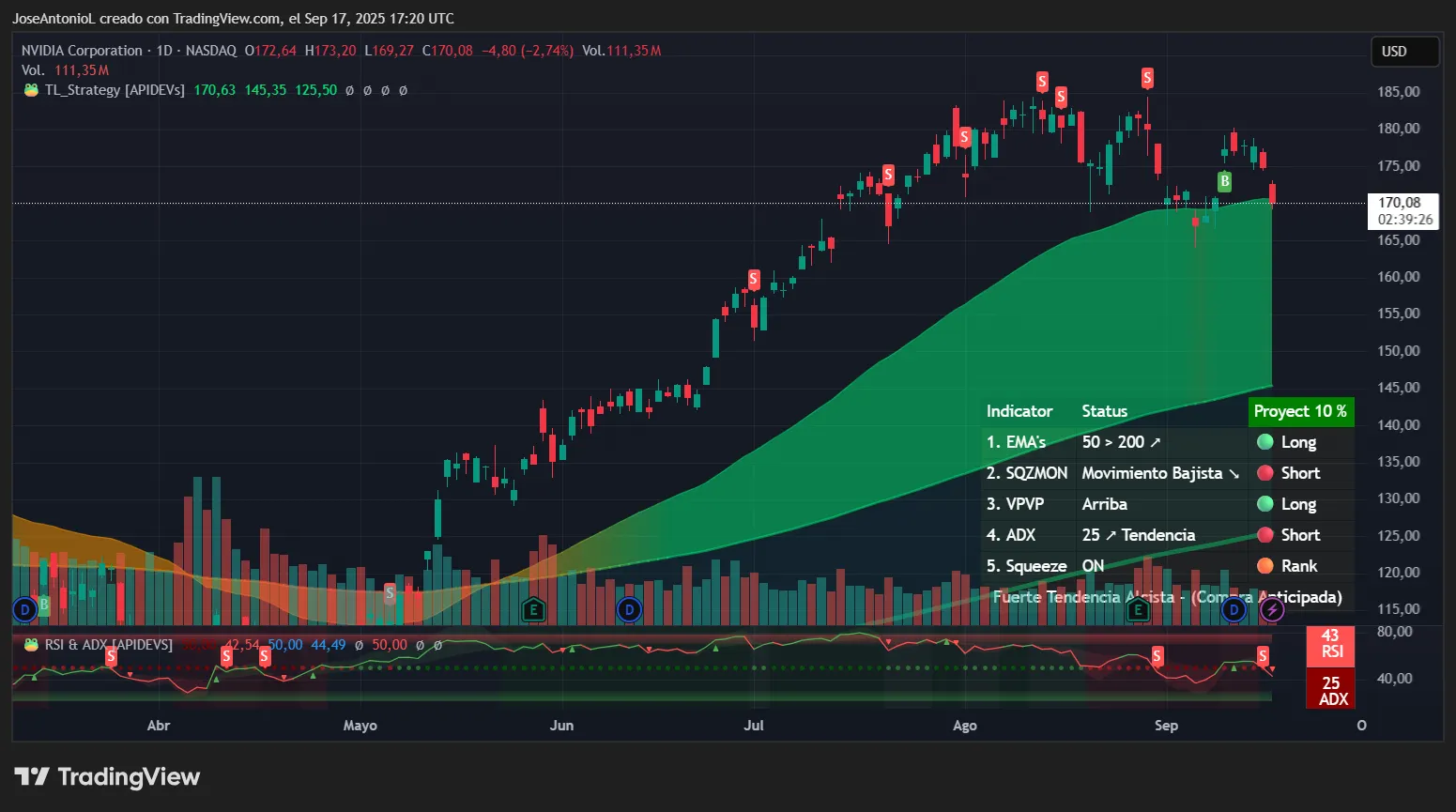
Nividia stock price data. Image: Tradingview

“We can only be in service of a market if the country wants us to be,” Nvidia CEO Jensen Huang said Wednesday in London. “I’m disappointed with what I see. But they have larger agendas to work out between China and the US, and I’m understanding of that.”

The timing reveals Beijing’s growing confidence in its semiconductor sector. Chinese chipmakers plan to triple AI processor output next year, with Huawei’s Ascend 910 series leading the charge. While individual Chinese chips don’t match Nvidia’s most advanced offerings, their cost efficiency allows companies to cluster multiple units for comparable performance—a different architectural approach that sidesteps the need for cutting-edge manufacturing processes China can’t yet achieve.

“The message is now loud and clear,” an executive at one affected tech company told the Financial Times. “Earlier, people had hopes of renewed Nvidia supply if the geopolitical situation improves. Now it’s all hands on deck to build the domestic system.”

China vs America: The battle for AI dominance

The ban accelerates what many viewed as inevitable: a bifurcated global AI ecosystem where Chinese and Western companies develop along separate technological tracks, carrying major costs for both sides.

Just for reference, training OpenAI’s AI model GPT-3 consumed an estimated 1,287 MWh (megawatt-hours) of electricity, roughly equivalent to the energy consumption of an average American home for 120 years. Estimates by the coding platform Baeldung show that the company’s latest model, GPT-5, may have taken 3,500 MWh, “equivalent to the annual energy consumption of around 320 average American homes,” the platform argued.

Chinese companies using less powerful domestic chips may face higher electricity costs and longer training timelines for large language models. Conversely, western companies lose access not just to China’s market but to the massive datasets and real-world AI applications being developed there.

The country’s AI research community, the world’s largest by publication volume, has increasingly focused on efficiency rather than raw computing power—developing techniques that extract more performance from available hardware rather than requiring the most advanced chips.

This is how DeepSeek R1 was born, and this is how a model created with a fraction of the investment costs thrown by western AI behemoths like OpenAI, Google, or Anthropic, was able to release and open source a model capable of beating their state-of-the-art products, offered at premium prices.

We are living in a timeline where a non-US company is keeping the original mission of OpenAI alive – truly open, frontier research that empowers all. It makes no sense. The most entertaining outcome is the most likely.

DeepSeek-R1 not only open-sources a barrage of models but… pic.twitter.com/M7eZnEmCOY

— Jim Fan (@DrJimFan) January 20, 2025

Taking the fight to the software front

The split also impacts the broader technology stack. AMD’s ROCm platform and other alternatives are challenging CUDA’s dominance by offering open-source alternatives that work across different hardware architectures.

CUDA is a parallel computing platform and programming model created by Nvidia, allowing software to use the massive processing power of its own GPUs for tasks like artificial intelligence and scientific computing, making these operations much faster and more efficient. It is currently the standard used for AI training, with developers working with this tech by default.

China’s emphasis on developing CUDA alternatives could accelerate the creation of hardware-agnostic AI frameworks, potentially benefiting the entire industry by breaking Nvidia’s software lock-in that has left technically superior hardware like AMD’s GPUs underutilized in AI applications.

Right now, if your card doesn’t run CUDA (meaning, it’s not Nvidia) you better go back to gaming and leave AI training to the grown ups—or know you’ll deal with AI at painstakingly slow speeds.
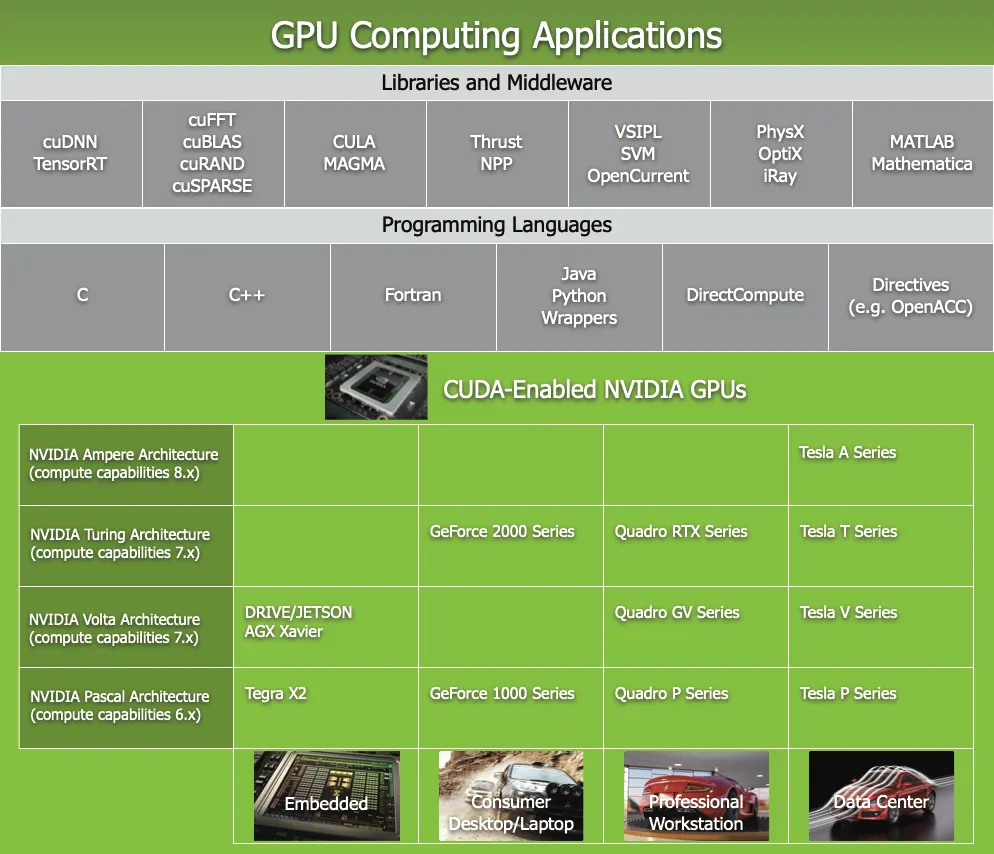
Image: Nvidia

The country’s massive AI research output has created a foundation for rapid iteration and improvement. Chinese universities like Tsinghua and Peking have emerged as global AI research powerhouses, with Tsinghua ranking eighth globally in AI research output ahead of institutions like Facebook AI Research and Princeton, according to Peking University.

“The top-level consensus now is there’s going to be enough domestic supply to meet demand without having to buy Nvidia chips,” an industry insider told the Financial Times.

Nvidia warned analysts to exclude China from financial projections going forward, essentially writing off what had been one of its fastest-growing markets. The company continues exploring options but acknowledges that political dynamics now override commercial considerations.

The ban goes beyond earlier regulatory guidance from the government, which simply encouraged companies to move away from Nvidia. Before the ban, Trump agreed to let Nvidia sell its nerfed chips in exchange for 15% of its profits from those sales.


Share. Facebook Twitter Pinterest LinkedIn Tumblr Email
NBTC

Related Posts

Northern Trust enters tokenized Treasurys fund market with new share class

06/03/2026

Wall Street Dumps Tech, Rotates Hard into War Economy Names; Defense Shares Rip

06/03/2026

Israeli Markets Hit All-Time Highs Amid Military Conflict With Iran

06/03/2026

60% of OTC Insiders Expect Fewer Liquidity Providers to Survive 2026, Survey Finds

06/03/2026
Add A Comment

Comments are closed.

Top Posts
Get Informed

Subscribe to Updates

Get the latest news from NBTC regarding crypto, blockchains and web3 related topics.

Your source for the serious news. This website is crafted specifically to for crazy and hot cryptonews. Visit our main page for more tons of news.

We're social. Connect with us:

Facebook X (Twitter) LinkedIn RSS
Top Insights

Vitalik Buterin reveals his bold new plan to fix Ethereum’s scaling problem

06/03/2026

Northern Trust enters tokenized Treasurys fund market with new share class

06/03/2026

Former Ripple CTO David Schwartz Responds to Cardano Founder Hoskinson’s Comments on XRP and ADA

06/03/2026
Get Informed

Subscribe to Updates

Get the latest news from NBTC regarding crypto, blockchains and web3 related topics.

Type above and press Enter to search. Press Esc to cancel.