
Close Menu
  • Coins
    • Bitcoin
    • Ethereum
    • Altcoins
    • NFT
  • Blockchain
  • DeFi
  • Metaverse
  • Regulation
  • Other
    • Exchanges
    • ICO
    • GameFi
    • Mining
    • Legal
  • MarketCap
What's Hot

Japan’s central bank will sell ETFs 2.6 times faster and could still take 43 years to exit

06/11/2026

Pendle Launches RWA Insights Series Featuring Institutional

06/11/2026

Coinbase to Host Q3 Earnings AMA with Key Guests Tomorrow

06/11/2026
Facebook X (Twitter) Instagram
  • Back to NBTC homepage
  • Privacy Policy
  • Contact
X (Twitter) Telegram Facebook LinkedIn RSS
NBTC News
  • Coins
    1. Bitcoin
    2. Ethereum
    3. Altcoins
    4. NFT
    5. View All

    Bitcoin’s quantum-safe protection gets 82% cheaper as researchers race to secure 6 million exposed BTC

    06/11/2026

    Bitcoin Faces $77K Test as Whales Accumulate 16,010 BTC

    06/11/2026

    Bitcoin Price Recovery Stalls as $84,000 Resistance Holds Firm

    06/11/2026

    Moonflower Coffee and 300+ Colorado Bitcoin Merchants

    06/11/2026

    Ethereum Privacy Network Aztec Rolls Out Major Security and Speed Upgrade

    06/11/2026

    Ethereum exchange reserves hit 2016 low – As Bitmine adds another $11.22M ETH

    05/11/2026

    Mougayar’s Study Scores Ethereum (ETH) 9.7/10 Against SEC Decentralization Criteria

    05/11/2026

    What ETHGas’s advance transaction bookings offer

    05/11/2026

    Pendle Launches RWA Insights Series Featuring Institutional

    06/11/2026

    Massive Solana Transfer of 1.1M Tokens Raises Eyebrows

    06/11/2026

    Polkadot Puts dotUSD at the Center of Its User Growth Strategy

    06/11/2026

    Ondo Joins Forces With Tradexyz to Offer Real-World Asset

    06/11/2026

    PixieChess Confirms New Weekly Packs for Collectors on Base

    29/10/2026

    Fuzzy Launches Dynamic NFT Collection With Four Phases

    29/10/2026

    Machi’s NFT Sales Exceed 60 as Trader Faces $2.35M Loss

    28/10/2026

    SquiggleDAO Acquires NFT Through Decentralized Community

    24/10/2026

    Japan’s central bank will sell ETFs 2.6 times faster and could still take 43 years to exit

    06/11/2026

    Pendle Launches RWA Insights Series Featuring Institutional

    06/11/2026

    Coinbase to Host Q3 Earnings AMA with Key Guests Tomorrow

    06/11/2026

    Bitcoin’s quantum-safe protection gets 82% cheaper as researchers race to secure 6 million exposed BTC

    06/11/2026
  • Blockchain

    LOBSTR Becomes First Wallet Live With WalletConnect Pay on Stellar Network

    04/11/2026

    Chainlink Forms Partnership With Hanwha Investment & Securities to Power Global RWA Tokenization Platform

    04/11/2026

    Pump.fun Adds Polygon Support as Memecoin Platform Widens Multichain Push Beyond Solana

    04/11/2026

    Tokenized Collateral on the Table!

    04/11/2026

    Solana Retweets Hacker Houses Announcement, First in Two Years

    04/11/2026
  • DeFi

    Aave borrowers faced up to 36% APR while a freeze blocked fresh collateral

    05/11/2026

    41% of Tokenized-Stock Deposits in DeFi

    05/11/2026

    dCOMP/USDC Market Update: Api3DAO Reports Healthy Conditions

    05/11/2026

    Kabu Accepts Ethena’s ENA as Collateral for USDC Borrowing

    05/11/2026

    Firelight Protocol Extends XRP-Backed Cover to $38 Million Across Three DEFI Vaults

    05/11/2026
  • Metaverse

    Exploring the Future of the Metaverse

    19/10/2026

    Is Solana Gaming Back? Kintara Activity Fuels Renewed Optimism in Onchain MMOs

    24/06/2026

    The Sandbox launches AI game engine ‘The Sandbox Studio’ for next-generation creators

    10/06/2026

    Meta commits $13M in funding for Oversight Board through 2028

    29/05/2026

    Why Animoca’s Yat Siu says the future is 100 billion AI agents

    07/05/2026
  • Regulation

    Japan’s central bank will sell ETFs 2.6 times faster and could still take 43 years to exit

    06/11/2026

    Ethereum-Tokenized Equities Hit $827 Million After 170% Growth

    06/11/2026

    Yale and Cornell Researchers Find 9 of 10 AI Agents Raised USDC Wallet Limits

    06/11/2026

    Nvidia, Nike and 48 Other Companies Oppose OKX Stock Tokenization Plan

    06/11/2026

    Blackrock, JPMorgan and Visa Bolster Grayscale’s Crypto Growth Case

    06/11/2026
  • Other
    1. Exchanges
    2. ICO
    3. GameFi
    4. Mining
    5. Legal
    6. View All

    Coinbase to Host Q3 Earnings AMA with Key Guests Tomorrow

    06/11/2026

    Coinbase Reveals Insight on Bitcoin and Stablecoin Market

    06/11/2026

    OKX Declares ‘New Money Lives Onchain’ in Eye-Catching Tweet

    06/11/2026

    Alipay Denies Crypto Trading Support

    06/11/2026

    ICO market slows sharply with only six completions in 2026

    30/04/2026

    South Korea Poised to Lift Ban on Domestic ICOs After 7 Years

    19/12/2025

    Why 2025’s Token Boom Looks Both Familiar and Dangerous

    31/10/2025

    ICO for bitcoin yield farming chain Corn screams we’re so back

    22/01/2025

    FLOKI Ships Valhalla 1.13.2 ‘Special Delivery’ to Players on Mainnet

    27/10/2026

    Top 12 NFT games every player should know about in August 2026

    19/08/2026

    GameShame Studios founder details Raijin Protocol’s roadmap in NeoPod’s sixth AMA

    13/08/2026

    How BC.GAME is turning players into stakeholders

    04/08/2026

    Core Scientific plans to exit Bitcoin mining by the end of 2026

    06/11/2026

    Keel Infrastructure Dumps Entire Bitcoin Treasury for $192M as Mining Exit Accelerates

    06/11/2026

    IREN pushes more than $4 billion in annualized revenue target to January

    06/11/2026

    Bitcoin miner Riot could pay Anthropic 12% interest under $28 billion AI deal

    05/11/2026

    Hong Kong passes law requiring crypto exchanges to report customer transactions to tax authorities

    06/11/2026

    Digital Chamber Says SEC Should Modernize Transfer Agent Rules

    06/11/2026

    Blockchain Association Says SEC Must Clarify Developer Roles

    06/11/2026

    Is a New Chapter Opening for Cryptocurrencies in the US? Will a New Bill Replace the Clarity Act? Famous Journalist Shares Democrats’ New Plan!

    06/11/2026

    Japan’s central bank will sell ETFs 2.6 times faster and could still take 43 years to exit

    06/11/2026

    Pendle Launches RWA Insights Series Featuring Institutional

    06/11/2026

    Coinbase to Host Q3 Earnings AMA with Key Guests Tomorrow

    06/11/2026

    Bitcoin’s quantum-safe protection gets 82% cheaper as researchers race to secure 6 million exposed BTC

    06/11/2026
  • MarketCap
NBTC News
Home»DeFi»Uniswap, Lido, Aave?! How Token Buybacks Are Quietly Centralizing DeFi
DeFi

Uniswap, Lido, Aave?! How Token Buybacks Are Quietly Centralizing DeFi

NBTCBy NBTC13/11/2025No Comments6 Mins Read
Share
Facebook Twitter LinkedIn Pinterest Email


When Uniswap’s administrators filed their “UNIfication” proposal on Nov. 10, it read less like a protocol update and more like a corporate overhaul.

The plan would activate dormant protocol fees, channel them through a new on-chain treasury engine, and utilize the proceeds to purchase and burn UNI tokens. This is a model that mirrors share-repurchase programs in traditional finance.

A day later, Lido introduced a comparable mechanism. Its DAO proposed an automated buyback system that redirects excess staking revenue toward repurchasing its governance token, LDO, when Ethereum’s price exceeds $3,000 and the annualized revenue exceeds $40 million.

The approach is deliberately anti-cyclical as it is more aggressive in bullish markets and conservative when conditions tighten.

Together, these initiatives mark a significant transition for decentralized finance.

After years dominated by meme tokens and incentive-driven liquidity campaigns, major DeFi protocols are repositioning around the significant market fundamentals of revenue, fee capture, and capital efficiency.

Yet this shift is forcing the sector to confront uncomfortable questions about control, sustainability, and whether decentralization is giving way to corporate logic.

DeFi’s new financial logic

For most of 2024, DeFi growth leaned on cultural momentum, incentive programs, and liquidity mining. The recent reactivation of fees and the embrace of buyback frameworks indicate an effort to tie token value more directly to business performance.

In Uniswap’s case, the plan to retire up to 100 million UNI reframes the token from a pure governance asset into something closer to a claim on protocol economics. This is even if it lacks the legal protections or cash-flow rights associated with equity.

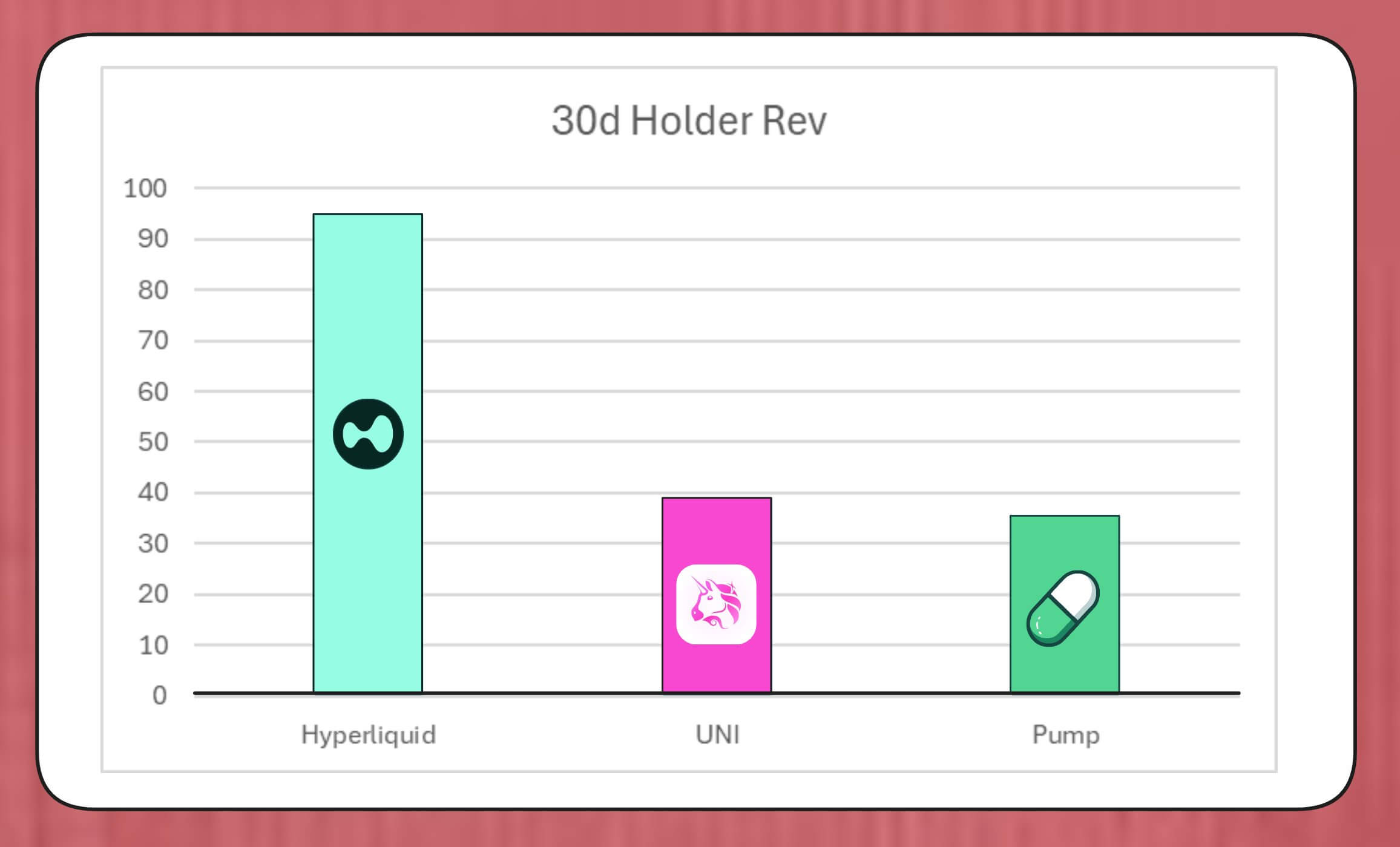
The scale of these programs is material. MegaETH Labs researcher BREAD estimates Uniswap could generate roughly $38 million in monthly buyback capacity under current fee assumptions.

That amount would exceed the repurchase velocity of Pump.fun and trail Hyperliquid’s estimated $95 million.
Lido’s modeled structure could support about $10 million in annual repurchases, with acquired LDO paired with wstETH and deployed into liquidity pools to improve trading depth.

Elsewhere, similar initiatives are accelerating. Jupiter is channeling 50% of operational revenue into JUP repurchases. dYdX allocates a quarter of network fees to buybacks and validator incentives. Aave is also making concrete plans to commit up to $50 million annually to treasury-driven repurchases.

Keyrock data suggests revenue-linked tokenholder payouts have climbed more than fivefold since 2024. In July alone, protocols distributed or spent about $800 million on buybacks and incentives.
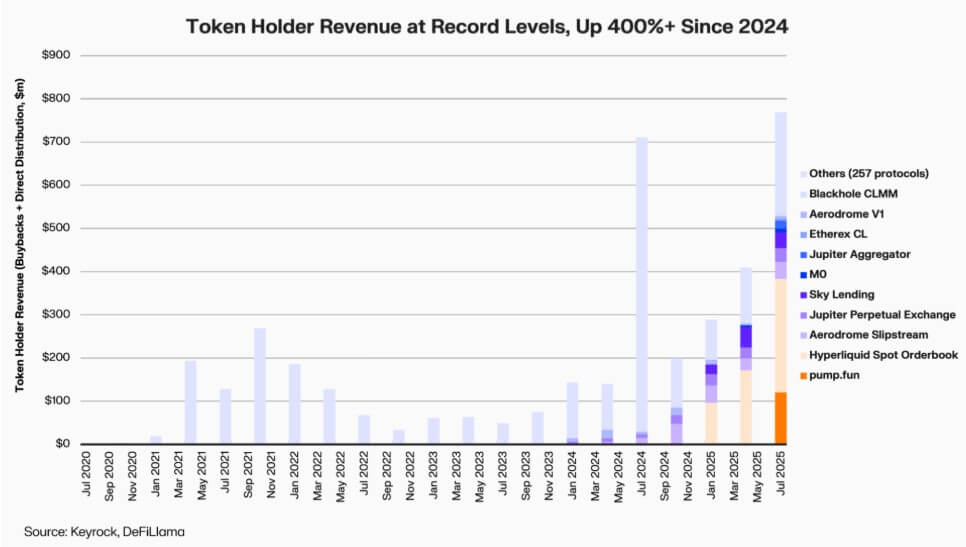
As a result, roughly 64% of revenue across major protocols now flows back to tokenholders, which is a stark reversal from earlier cycles that prioritized reinvestment over distribution.

The momentum reflects an emerging belief that scarcity and recurring revenue are becoming central to DeFi’s value narrative.

The institutionalization of token economics

The buyback wave reflects DeFi’s increasing alignment with institutional finance.

DeFi Protocols are adopting familiar metrics, such as price-to-sales ratios, yield thresholds, and net distribution rates, to communicate value to investors who assess them in a similar manner to growth-stage companies.

This convergence provides fund managers with a common analytical language, but it also imposes expectations for discipline and disclosure that DeFi was not designed to meet.

Notably, Keyrock’s analysis already pointed out that many programs heavily rely on existing treasury reserves rather than durable, recurring cash flows.

This approach may generate short-term price support but raises questions about long-term sustainability, particularly in markets where fee revenue is cyclical and often correlated with rising token prices.

Moreover, analysts such as Marc Ajoon of Blockworks argue that discretionary repurchases often have muted market effects and can expose protocols to unrealized losses when token prices decline.

Considering this, Ajoon advocates for>stated:

“In their current form, buybacks aren’t a silver bullet…Because of the “buyback narrative”, they are blindly prioritized over other routes that may offer higher ROI.”

Arca CIO Jeff Dorman takes a more comprehensive view.

According to him, while corporate buybacks reduce outstanding shares, tokens exist within networks where supply cannot be offset by traditional restructuring or M&A activity.

So, burning tokens can drive a protocol toward a fully distributed system, but holding them provides optionality for future issuance if demand or growth strategies require it. That duality makes capital allocation decisions more consequential than in equity markets, not less.

New risks emerge

While the financial logic of buybacks is straightforward, their governance impact is not.

For context, Uniswap’s UNIfication proposal would shift operational control from its community foundation to Uniswap Labs, a private entity. That centralization has raised alarms among analysts who argue it risks replicating the very hierarchies decentralized governance was designed to avoid.

Considering this, DeFi researcher Ignas pointed out that:

“The OG vision of crypto decentralization is struggling.”

Ignas highlighted how these dynamics have emerged over the past years and are evidenced in how DeFi protocols respond to security issues through emergency shutdowns or accelerated decisions by core teams.

According to him, the concern is that concentrated authority, even when economically justified, undermines transparency and user participation.

However, supporters counter that this consolidation can be functional rather than ideological.

Eddy Lazzarin, Chief Technology Officer at A16z, describes UNIfication as a “closed-loop” model in which revenue from decentralized infrastructure flows directly to token holders.

He adds that the DAO would still retain authority to issue new tokens for future development, balancing flexibility with fiscal discipline.

This tension between distributed governance and executive execution is hardly new, but its financial consequences have grown.

Leading protocols now manage treasuries worth hundreds of millions of dollars, and their strategic decisions influence entire liquidity ecosystems. So, as the economics of DeFi mature, governance debates are shifting from philosophy to balance-sheet impact.

DeFi’s maturity test

The accelerating wave of token buybacks shows that decentralized finance is evolving into a more structured, metrics-driven industry. Cash-flow visibility, performance accountability, and investor alignment are replacing the free-form experimentation that once defined the space.

Yet, with that maturity comes a new set of risks: governance may tilt toward central control, regulators could treat buybacks as de facto dividends, and teams might divert attention from innovation to financial engineering.

The durability of this transition will hinge on execution. Programmatic models can hard-code transparency and preserve decentralization through on-chain automation. Discretionary buyback frameworks, while faster to implement, risk eroding credibility and legal clarity.
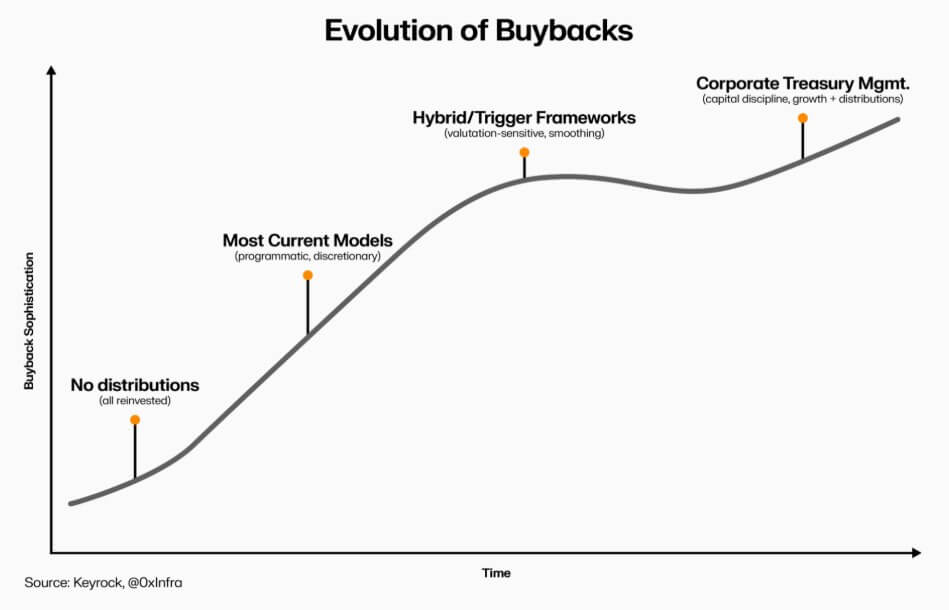
Meanwhile, Hybrid systems that link repurchases to measurable, verifiable network metrics may offer a middle ground, though few have proven resilient in live markets.

However, what is clear is that DeFi’s engagement with traditional finance has moved beyond mimicry. The sector is incorporating corporate disciplines such as treasury management, capital allocation, and balance-sheet prudence without abandoning its open-source foundation.

Token buybacks crystallize this convergence as they merge market behavior with economic logic, transforming protocols into self-funded, revenue-driven organizations accountable to their communities and measured by execution, not ideology.

Share. Facebook Twitter Pinterest LinkedIn Tumblr Email
NBTC

NBTC is the editorial account for NBTC News, covering Bitcoin, Ethereum, DeFi, blockchain infrastructure, exchanges, mining, regulation and digital asset markets. The editorial team focuses on clear sourcing, timely updates and practical context for crypto readers.

Related Posts

Aave borrowers faced up to 36% APR while a freeze blocked fresh collateral

05/11/2026

41% of Tokenized-Stock Deposits in DeFi

05/11/2026

dCOMP/USDC Market Update: Api3DAO Reports Healthy Conditions

05/11/2026

Kabu Accepts Ethena’s ENA as Collateral for USDC Borrowing

05/11/2026
Add A Comment

Comments are closed.

Top Posts
Get Informed

Subscribe to Updates

Get the latest news from NBTC regarding crypto, blockchains and web3 related topics.

Your source for the serious news. This website is crafted specifically to for crazy and hot cryptonews. Visit our main page for more tons of news.

We're social. Connect with us:

Facebook X (Twitter) LinkedIn RSS
Top Insights

Japan’s central bank will sell ETFs 2.6 times faster and could still take 43 years to exit

06/11/2026

Pendle Launches RWA Insights Series Featuring Institutional

06/11/2026

Coinbase to Host Q3 Earnings AMA with Key Guests Tomorrow

06/11/2026
Get Informed

Subscribe to Updates

Get the latest news from NBTC regarding crypto, blockchains and web3 related topics.

Type above and press Enter to search. Press Esc to cancel.