
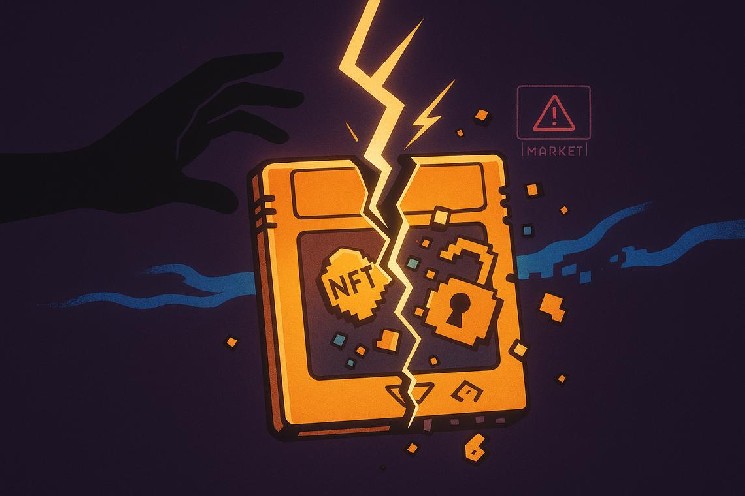

After the boom-and-bust cycle of digital collectibles, the top $NFT projects in 2026 are increasingly defined by gameplay quality, ownership design, and infrastructure resilience.
The new profile of a top $NFT game in 2026
In May 2026, there are eight leading play-to-earn titles, highlighting how the sector has shifted. Instead of pure token speculation, these games now prioritize engaging gameplay and smoother user experience. Consequently, NFTs function more as a backbone for digital ownership and progression rather than as quick-flip assets.
The list includes Big Time, The Sandbox, Axie Infinity, Wreck League, Undeads Games, Splinterlands, Illuvium, and Alien Worlds. Each sits among the top $NFT gaming projects because it attempts to blend fun, economic incentives, and accessible on-chain ownership. However, they take different approaches to the balance between earning and playing.
From play-to-earn to play-and-earn
According to this overview, several of these games emphasize free-to-play access or low entry costs. This design marks a departure from earlier cycles where buying expensive NFTs was often mandatory. Now, players can typically start for free or with modest commitments, then scale their involvement as they learn the game and ecosystem.
Moreover, reduced blockchain friction is a common theme. Many top $NFT titles strive to hide complex wallet interactions or high transaction fees. As a result, newcomers can participate without navigating the full technical stack on day one. Over time, this makes the economic layer feel like a feature of the game, not an obstacle.
Inside the roster of top $NFT games
These eight games cover a wide range of genres. Big Time and Illuvium lean into immersive, visually rich experiences. The Sandbox focuses on user-generated content and virtual land, while Axie Infinity remains a gateway brand for play-to-earn, despite market cycles. Splinterlands and Alien Worlds emphasize card and strategy mechanics, and Wreck League and Undeads Games bring combat-driven gameplay.
Because these projects target different player profiles, they collectively show how the definition of a top $NFT game has broadened. It no longer refers only to trading volume or floor price. Instead, longevity, player retention, and sustainable in-game economies are increasingly important benchmarks, even if they are harder to measure in the short term.
Market reality check: $NFT trading volume halves
While leading games attempt to stabilize their ecosystems, the broader $NFT market has cooled sharply. $NFT Plazas reported that global $NFT trading volume in 2026 is down more than 50% compared with the same period in 2025. This contraction affects both art collections and gaming assets, and it forces projects to rethink incentives.
Because speculative flipping has diminished, projects that relied mainly on hype or short-term profit expectations are struggling. Conversely, top $NFT games that offer repeatable gameplay loops and clear progression paths can still attract users. They do so by providing value beyond price appreciation, which is crucial in a low-volume environment.
Top $NFT marketplaces under pressure
The shift in trading volume coincides with structural stress on marketplaces. According to $NFT Plazas, multiple platforms are shutting down in 2026. One notable example is Foundation, which announced its closure in April 2026 after an acquisition deal with Blackdove collapsed. This episode illustrates how quickly liquidity venues can disappear, even for previously prominent brands.
For creators and collectors, marketplace instability raises hard questions about where to mint and trade top $NFT collections. It also shows that being listed on a well-known venue does not guarantee long-term service availability. Consequently, marketplace selection is becoming a strategic decision rather than a simple matter of brand recognition.
When top $NFT platforms shut down
$NFT Plazas warns that marketplace closures carry technical as well as economic risks. If a platform relied on centralized servers to host images or metadata, users may later discover that their NFTs reference broken links. In that case, the token still exists on-chain, but the associated media or traits may no longer be accessible.
Therefore, holders in 2026 are increasingly urged to examine how their assets are stored. The underlying smart contract, storage method, and marketplace architecture together determine whether a top $NFT collection can survive a platform’s shutdown without losing its core attributes.
IPFS and the resilience of $NFT ownership
As marketplace risk becomes more visible, decentralized storage is gaining renewed attention. $NFT Plazas notes that InterPlanetary File System (IPFS) usage provides stronger guarantees than centralized hosting. When images or metadata are pinned on IPFS, they are not dependent on a single company’s servers or business continuity.
This distinction is particularly important for gaming ecosystems. Top $NFT games often issue large numbers of unique items, lands, or characters. If their metadata lives on centralized systems tied to a single marketplace, a shutdown could undermine the integrity of entire game economies. By contrast, IPFS-based approaches help align long-term player trust with the promises of digital ownership.
How collectors can navigate the 2026 landscape
In 2026, participants assessing any top $NFT opportunity need to think beyond short-term trading. Evaluating whether a game emphasizes fun gameplay, moderate entry costs, and clear token utility is essential. At the same time, checking how assets are stored and which marketplaces they rely on has become a core part of due diligence.
Because trading volumes have fallen and platform risk is real, sustainable projects must earn loyalty through design rather than hype. The evolution of play-to-earn into more balanced play-and-earn models, combined with better storage practices such as IPFS, suggests that the next phase of NFTs will be defined less by speculation and more by durable digital ownership.
