
Close Menu
  • Coins
    • Bitcoin
    • Ethereum
    • Altcoins
    • NFT
  • Blockchain
  • DeFi
  • Metaverse
  • Regulation
  • Other
    • Exchanges
    • ICO
    • GameFi
    • Mining
    • Legal
  • MarketCap
What's Hot

$300M WLFI Investor Breaks Silence on Justin Sun Lawsuit

22/06/2026

CLARITY Act moves to a fight between cops and coders

22/06/2026

BitGo offers Europe’s crypto firms a MiCA-compliance lifeline as license deadline looms

22/06/2026
Facebook X (Twitter) Instagram
  • Back to NBTC homepage
  • Privacy Policy
  • Contact
X (Twitter) Telegram Facebook LinkedIn RSS
NBTC News
  • Coins
    1. Bitcoin
    2. Ethereum
    3. Altcoins
    4. NFT
    5. View All

    Silver Rallies Past $85 as Bitcoin Struggles Near $81K Ahead of CPI Release

    22/06/2026

    “We’re in an Institutional Bull Market for Bitcoin”

    22/06/2026

    Ray Dalio explains why central banks won’t touch BTC

    22/06/2026

    A sports betting ETF bitcoin traders may want to watch

    22/06/2026

    Ethereum derivatives activity weakens as traders await a fresh catalyst

    22/06/2026

    Sellers Remain in Control as ETH Recovery Hits a Wall

    22/06/2026

    Ethereum posts strong H1 2026 activity metrics to date, defying slower trading

    22/06/2026

    Ethereum stuck within a 10-month bearish trend, buyer conviction is still lacking

    22/06/2026

    $300M WLFI Investor Breaks Silence on Justin Sun Lawsuit

    22/06/2026

    Ripple’s Latest 50 Million XRP Move Isn’t Just Another Coinbase Deposit

    22/06/2026

    A $575 bet on a Shiba-themed token became $1.17 million in 5 days

    22/06/2026

    A Whale Waited Patiently, Found the Peak! Turned $575 into $1.7 Million! Here’s the Altcoin It Bought!

    22/06/2026

    Top 10 NFT Performers by Trading Volume, Courtyard Outshines

    22/06/2026

    Pudgy Penguins expands retail footprint with Target trading card rollout

    20/06/2026

    Collectible NFTs in focus during nations 250th anniversary

    12/06/2026

    NFTfi Shuts Down After $737M in Loans as NFT Market Contraction Makes Operations Unsustainable

    11/06/2026

    $300M WLFI Investor Breaks Silence on Justin Sun Lawsuit

    22/06/2026

    CLARITY Act moves to a fight between cops and coders

    22/06/2026

    BitGo offers Europe’s crypto firms a MiCA-compliance lifeline as license deadline looms

    22/06/2026

    Silver Rallies Past $85 as Bitcoin Struggles Near $81K Ahead of CPI Release

    22/06/2026
  • Blockchain

    Kawasaki Heavy Industries partners with Nvidia to open US robotics center in San Jose

    22/06/2026

    Moody’s rolls out credit ratings on Solana in tokenized asset push

    21/06/2026

    Thiel-backed Plasma debuts stablecoin neobank with Visa card and XPL rewards

    21/06/2026

    FIFA wanted Avalanche’s blockchain to help curb World Cup ticket scalping. Here’s how it’s going

    21/06/2026

    Private-market documents get on-chain verification as Inveniam and Docugami target AI’s data trust gap

    21/06/2026
  • DeFi

    Okratech Token Partners with Predict Protocol to Expand Web3 Utility

    22/06/2026

    Aave V4 targets Wall Street’s $12 trillion repo market

    21/06/2026

    Liquify DAO Joins AstroX to Explore New Opportunities

    21/06/2026

    DeFi’s next institutional wave may come from users who never see “behind the scenes” – CEO of Katana

    20/06/2026

    Ledn adds Tether Gold as loan collateral, expanding Bitcoin-backed lending model

    20/06/2026
  • Metaverse

    The Sandbox launches AI game engine ‘The Sandbox Studio’ for next-generation creators

    10/06/2026

    Meta commits $13M in funding for Oversight Board through 2028

    29/05/2026

    Why Animoca’s Yat Siu says the future is 100 billion AI agents

    07/05/2026

    ‘8,000 Jobs’—Polymarket Sees Tech Layoff Surge As Meta AI Push Bites

    18/04/2026

    Planet Hares Partners With Magne.AI To Bridge Web3 Metaverse With Smartphone Mobile-Ready Applications For Mass Adoption

    08/04/2026
  • Regulation

    The questions that Kevin Warsh will answer when he leads his first Fed rate meeting

    22/06/2026

    Can a Crypto Miner Deliver?

    22/06/2026

    Japan Banks, Hong Kong Rules, and South Korea’s Tokenized Asset Tax

    22/06/2026

    Middle East ceasfire, Fed interest-rate decision: Crypto Week Ahead

    22/06/2026

    Markets cheer U.S.-Iran Breakthrough though Middle East risks, Fed remain in focus

    22/06/2026
  • Other
    1. Exchanges
    2. ICO
    3. GameFi
    4. Mining
    5. Legal
    6. View All

    BitGo offers Europe’s crypto firms a MiCA-compliance lifeline as license deadline looms

    22/06/2026

    Hyperliquid’s $10B open interest coincides with growth in equity-linked markets: Talos

    22/06/2026

    OKX’s Star Xu Accuses CZ of Mixed Messages on Hyperliquid

    22/06/2026

    Binance APAC chief says regulation, liquidity and real-world utility will shape crypto’s next chapter

    22/06/2026

    ICO market slows sharply with only six completions in 2026

    30/04/2026

    South Korea Poised to Lift Ban on Domestic ICOs After 7 Years

    19/12/2025

    Why 2025’s Token Boom Looks Both Familiar and Dangerous

    31/10/2025

    ICO for bitcoin yield farming chain Corn screams we’re so back

    22/01/2025

    Nexus Acquires Homegrown App Marketplace One Store, Expanding into Global Web3 Game Hub

    21/06/2026

    GMATRIXS and Plum Protocol Partner to Blend GameFi with Meme Assets, Driving Multi-Chain Web3 User Experience

    16/06/2026

    Crypto game studio Uncharted to shutdown along with Fishing Frenzy

    15/06/2026

    Pudgy Penguins Halts Web3 Mobile Game Pudgy Party to Focus on Pudgy World

    14/06/2026

    SpaceX pledges to cover power grid upgrade costs for data centers

    22/06/2026

    Ford capitalizes on AI boom with new energy storage division

    21/06/2026

    Bitdeer Sells All 218 BTC Mined This Week, Returns to Zero Bitcoin Balance

    20/06/2026

    rare event or miner strategy?

    20/06/2026

    CLARITY Act moves to a fight between cops and coders

    22/06/2026

    Brazil Proposes Rigid Guardrails to Stop Government Abuse of Central Bank Digital Currency

    22/06/2026

    SEC targets 20-year-old rule standing between Wall Street and blockchain trading

    22/06/2026

    South Korea’s Finance Ministry Classifies Tokenized Stocks as Securities, Taxation Could Begin in H2

    22/06/2026

    $300M WLFI Investor Breaks Silence on Justin Sun Lawsuit

    22/06/2026

    CLARITY Act moves to a fight between cops and coders

    22/06/2026

    BitGo offers Europe’s crypto firms a MiCA-compliance lifeline as license deadline looms

    22/06/2026

    Silver Rallies Past $85 as Bitcoin Struggles Near $81K Ahead of CPI Release

    22/06/2026
  • MarketCap
NBTC News
Home»Legal»The government should promote innovation, not punish it
Legal

The government should promote innovation, not punish it

NBTCBy NBTC08/05/2026No Comments6 Mins Read
Share
Facebook Twitter LinkedIn Pinterest Email


From 1974-1986, the Golden State Killer committed 13 known murders, upwards of 67 sexual assaults and 120 burglaries in 11 different jurisdictions in California, but then he suddenly stopped. He simply disappeared, and his identity remained a secret for over 30 years, until we finally caught him using a new innovative technology. Utilizing Investigative Genetic Genealogy (IGG), which combines forensic DNA analysis and genealogical research, we cracked the case, and I led the prosecution team that brought the Golden State Killer to justice. Since we first used IGG to solve this case, law enforcement around the world has solved over a thousand cold cases using this innovative technology. But what would have happened if lawmakers suddenly overregulated, or worse yet, banned the use of IGG? We would see countless children, women and grieving families denied their due measure of justice.

We should promote innovation, not punish it. In areas such as cryptocurrency, ambiguous rules and enforcement lead to confusion and stifle growth, which drives industries underground and offshore. This creates an environment where real “bad actors” exploit the law and target the vulnerable – and get away with it.

As the District Attorney of Sacramento, I have spent more than 25 years holding people accountable. I prosecuted gang members, charged hate crime offenders and went after drug traffickers. I have also prosecuted fraud, financial crimes, corruption and high-tech crimes at the highest levels. As someone who has authored and helped pass legislation, I am mindful that both prosecutors and the public need clarity about the laws that govern them. I know what real crime looks like, and I know the difference between a genuine criminal and an industry caught in the crosshairs of a law that was never meant for them.

That distinction matters now more than ever, as federal prosecutors have been weaponizing a statute against software developers who have never touched a customer’s funds, never operated a business in the traditional sense, and never harbored criminal intent. As someone who has devoted his career to justice, I am here to say that is not justice, that is overreach.

Congress enacted 18 U.S.C. Section 1960 to target money-transmitting businesses, such as storefronts, wire services, and exchange houses that handle other people’s money and skirt the licensing requirements designed to prevent money laundering. It was designed as the enforcement mechanism for licensing requirements under the Bank Secrecy Act, aimed squarely at traditional money services businesses. It was a sensible tool for a sensible purpose. What it was never meant to do is criminalize the writing of software.

Yet that is precisely what has happened. Federal prosecutors have stretched Section 1960 to reach developers of noncustodial, peer-to-peer blockchain technology. These are people who built open-source tools that automate transactions between willing parties, but who never held a single dollar of user funds, never had “customers” in any real sense of the word, and never had any ability to intercept or redirect assets. Neither the developers nor the software itself controls other people’s funds or transfers funds on their behalf. Charging them under a statute built for traditional financial intermediaries is a mistake, because it is misinformed and misdirected. As prosecutors, justice requires that we charge people with what they actually did, under laws designed to cover it.

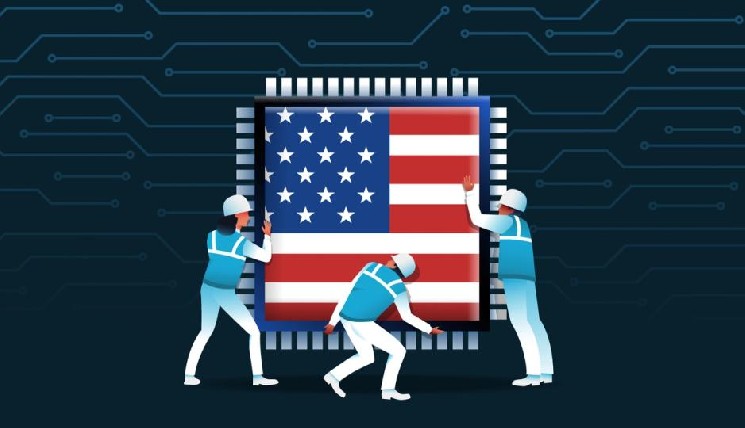
The “regulation-by-prosecution” approach to crypto development fails that test badly. This approach chills open-source innovation, pushing many U.S. developers offshore. This unfairly saddles some with a criminal conviction and erodes American technological leadership in an area of consequential financial innovation. The U.S. share of open-source developers fell from 25% in 2021 to 18% in 2025, driven by a lack of clear rules for software development. Every developer we chase overseas is a developer who now builds infrastructure beyond the reach of U.S. oversight and beyond the reach of U.S. law enforcement when something does go wrong.

That is not a win for public safety; that is a self-inflicted wound.

The good news is that some of this is beginning to change. In April of 2025, the United States Department of Justice (DOJ) issued a memorandum entitled “Ending

Regulation-by-Prosecution,” making clear that the DOJ will not enforce pure regulatory violations under Section 1960. Following the memo, the DOJ announced it would not approve new Section 1960 charges “where the evidence shows that software is truly decentralized and solely automates peer-to-peer transactions, and where a third party does not have custody and control over user assets.” That is what the law has always required.

But neither a memo nor a speech is a statute. Prosecutorial guidance can change with administrations and with U.S. Attorneys. The American innovation community and the public deserve clarity written into law. That is why the Promoting Innovation in Blockchain Development Act now before Congress deserves serious support. It restores the original intent of Section 1960: protecting the public from unlicensed financial intermediaries.

I am not naive about bad actors – there are genuine criminals who use digital assets to launder money and defraud victims. I have prosecuted them. I support robust enforcement against these criminals with the full weight of applicable law. The answer here is simply not to abandon the distinction between the tool and the criminal who wields it. We don’t charge email providers for wire fraud. We identify the actual bad actor, build the case and prosecute with evidence.

Section 1960 remains a powerful instrument against genuine money-transmitting criminals in the digital asset space. Custodial exchanges that knowingly process criminal proceeds, centralized mixers operated specifically to obscure illicit funds, platforms that flout FinCEN registration while holding customer assets – these are legitimate targets, and the law reaches them. It does not need to be stretched to reach a software developer in a Sacramento apartment who wrote a peer-to-peer protocol and never held a dime of someone else’s money.

I came to this country as a child refugee from Vietnam, with nothing but my family and the belief that America rewards hard work and respects the rule of law. The rule of law cuts both ways. It protects communities from violent crime, but it also protects innovators from overreach.

I run an office of nearly 500 employees that prosecutes nearly 30,000 cases a year. As the head of the second-largest District Attorney’s Office in Northern California, I have stood in courtrooms for 25 years and sworn to represent victims, the vulnerable and the voiceless. I believe that getting this distinction right should be a basic obligation of our Federal Government. Section 1960 is a good law that has been misused in relation to those involved in developing truly decentralized finance technology. Fix the application, target the actual criminals and let American innovation breathe. That is what justice demands, and that is what I will keep fighting for.

Share. Facebook Twitter Pinterest LinkedIn Tumblr Email
NBTC

NBTC is the editorial account for NBTC News, covering Bitcoin, Ethereum, DeFi, blockchain infrastructure, exchanges, mining, regulation and digital asset markets. The editorial team focuses on clear sourcing, timely updates and practical context for crypto readers.

Related Posts

CLARITY Act moves to a fight between cops and coders

22/06/2026

Brazil Proposes Rigid Guardrails to Stop Government Abuse of Central Bank Digital Currency

22/06/2026

SEC targets 20-year-old rule standing between Wall Street and blockchain trading

22/06/2026

South Korea’s Finance Ministry Classifies Tokenized Stocks as Securities, Taxation Could Begin in H2

22/06/2026
Add A Comment

Comments are closed.

Top Posts
Get Informed

Subscribe to Updates

Get the latest news from NBTC regarding crypto, blockchains and web3 related topics.

Your source for the serious news. This website is crafted specifically to for crazy and hot cryptonews. Visit our main page for more tons of news.

We're social. Connect with us:

Facebook X (Twitter) LinkedIn RSS
Top Insights

$300M WLFI Investor Breaks Silence on Justin Sun Lawsuit

22/06/2026

CLARITY Act moves to a fight between cops and coders

22/06/2026

BitGo offers Europe’s crypto firms a MiCA-compliance lifeline as license deadline looms

22/06/2026
Get Informed

Subscribe to Updates

Get the latest news from NBTC regarding crypto, blockchains and web3 related topics.

Type above and press Enter to search. Press Esc to cancel.