
Close Menu
  • Coins
    • Bitcoin
    • Ethereum
    • Altcoins
    • NFT
  • Blockchain
  • DeFi
  • Metaverse
  • Regulation
  • Other
    • Exchanges
    • ICO
    • GameFi
    • Mining
    • Legal
  • MarketCap
What's Hot

Crypto index funds ‘a big deal’ as market complexity grows: Bitwise CIO

19/01/2026

US Senate Banking cancels Thursday crypto bill markup amid negotiations

19/01/2026

Bitcoin hashrate at 4-month low as AI competes for the grid: Analyst

19/01/2026
Facebook X (Twitter) Instagram
  • Back to NBTC homepage
  • Privacy Policy
  • Contact
X (Twitter) Telegram Facebook LinkedIn RSS
NBTC News
  • Coins
    1. Bitcoin
    2. Ethereum
    3. Altcoins
    4. NFT
    5. View All

    Price Breaks All-Time High Record Again – Here’s What We Know

    04/08/2025

    Bitcoin Switzerland? El Salvador to Host First Fully Native Bitcoin Capital Markets

    04/08/2025

    Bitcoin Breaks $119K, but XLM and HBAR Aren’t Impressed by Its Meager Percentage Gain

    04/08/2025

    High-Stakes Consolidation Could Define Q3 Trend

    04/08/2025

    Hsiao-Wei Wang and Tomasz K. Stańczak

    19/01/2026

    BitMine expects $400 million income on ether holdings, bet on MrBeast could ’10x’

    18/01/2026

    Ethereum activity doubles with influx of new users: Glassnode

    18/01/2026

    ETH Builds Bullish Structure as Outflows Ease Into Mid-January

    18/01/2026

    The Sui Ecosystem’s Top 3 Altcoin Performers

    29/07/2025

    Floki Launches $69000 Guerrilla Marketing Challenge With FlokiUltras3

    28/07/2025

    Crypto Beast denies role in Altcoin (ALT) crash rug pull, blames snipers

    28/07/2025

    $1.6 Billion XRP Surge: Here’s What’s Unfolding

    28/07/2025

    NFT Sector Records Noteworthy Weekly Sales as CryptoPunks Dominates Top Ten

    19/01/2026

    NFT buyers rise 120% despite sales staying flat at $61.5 million

    17/01/2026

    Over 100 Million Ordinals — While Inscription Hype Fades, Bitcoin Quietly Becomes a Top NFT Chain

    16/01/2026

    Pudgy Penguins Forges Groundbreaking Partnership with Manchester City for Exclusive Merchandise Line

    16/01/2026

    Crypto index funds ‘a big deal’ as market complexity grows: Bitwise CIO

    19/01/2026

    US Senate Banking cancels Thursday crypto bill markup amid negotiations

    19/01/2026

    Bitcoin hashrate at 4-month low as AI competes for the grid: Analyst

    19/01/2026

    Hsiao-Wei Wang and Tomasz K. Stańczak

    19/01/2026
  • Blockchain

    Web3 revenue shifts from blockchains to wallets and DeFi apps

    19/01/2026

    Hedera Partners With America250 to Power Digital Experiences for U.S. 250th Anniversary

    19/01/2026

    Velo Protocol Expands Web3 Payments and RWA Infrastructure Across Asia

    19/01/2026

    TheoriqAI Partners with OpenLedger to Build Accountable, Production-Ready DeFi AI Agents

    19/01/2026

    THORSwap Strengthens Liquidity with $BCH Cross-Chain Support

    19/01/2026
  • DeFi

    Most Influential: Jeff Yan

    18/01/2026

    Crypto whale uses leveraged DeFi strategy to build $38M position in tokenized gold

    17/01/2026

    Vault curators hit peak activity as Morpho drives DeFi lending growth

    17/01/2026

    Stakely Taps FastLane to Advance Liquid Staking with $shMON on Monad

    17/01/2026

    Blueprint founder wants people to have room for mistakes in DeFi

    17/01/2026
  • Metaverse

    Meta to cut 10% of metaverse arm this week amid AI push: Report

    13/01/2026

    Yuga Labs Acquires Otherside Creator Platform From Improbable

    27/12/2025

    Meta CEO Mark Zuckerberg Made a Decision That Will Deeply Affect Metaverse Projects! Here Are the Details

    05/12/2025

    Meta Plans 30% Cut to Metaverse Budget as Reality Becomes Less Virtual: Bloomberg

    04/12/2025

    Cambridge Institute Joins InfblueNFT to Transform Digital Communication

    21/11/2025
  • Regulation

    Crypto index funds ‘a big deal’ as market complexity grows: Bitwise CIO

    19/01/2026

    Saylor Says Strategy Will Not Issue Preferred Equity in Japan, Giving Metaplanet a 12 Month Head Start

    19/01/2026

    FOMC Decision in Focus as Investors Brace for Policy Shift

    19/01/2026

    No Direction: Crypto Daybook Americas

    19/01/2026

    Malaysian Royalty Enters Crypto Arena

    19/01/2026
  • Other
    1. Exchanges
    2. ICO
    3. GameFi
    4. Mining
    5. Legal
    6. View All

    Revolut increased its monthly volumes for stablecoin transfers, reaching a record of $1.2B in December 2025

    18/01/2026

    Pump.fun-linked address deposits $148M in USDC and USDT to Kraken

    18/01/2026

    Bitcoin Exchange Binance Hits with Delisting Wave! Numerous Altcoin Trading Pairs Delisted! Here Are the Details

    18/01/2026

    21Shares’ bitcoin and gold exchange-traded product debuts on London Stock Exchange

    18/01/2026

    South Korea Poised to Lift Ban on Domestic ICOs After 7 Years

    19/12/2025

    Why 2025’s Token Boom Looks Both Familiar and Dangerous

    31/10/2025

    ICO for bitcoin yield farming chain Corn screams we’re so back

    22/01/2025

    Why 2025 Will See the Comeback of the ICO

    26/12/2024

    GRAM Ecosystem Joins EtherForge to Boost Web3 Gaming Across Chains

    19/01/2026

    Axie Infinity is leading the GameFi rally as the sector witnesses a resurgence

    18/01/2026

    Salvo Games Partners with GANA Insight to Bridge Gaming and Real-World Payments in Web3

    16/01/2026

    REVOX Joins TOYUSD1 to Advance Decentralized Gaming via Smart Contracts

    14/01/2026

    Bitcoin hashrate at 4-month low as AI competes for the grid: Analyst

    19/01/2026

    Bitcoin difficulty just retreated, but a more critical “survival metric” signals the mining sector is bleeding out

    18/01/2026

    Bitcoin’s hashrate continues to fall as the price spike doesn’t convince miners to turn machines back on

    17/01/2026

    Bitmain Eyes a New Bitcoin Mining Proxy? – Miner Weekly

    17/01/2026

    US Senate Banking cancels Thursday crypto bill markup amid negotiations

    19/01/2026

    Crypto industry split over CLARITY Act after Coinbase breaks ranks

    19/01/2026

    Manhattan DA Urges Lawmakers to Strengthen Crypto Enforcement Tools

    19/01/2026

    NCAA urges CFTC to pause college sports prediction markets

    19/01/2026

    Crypto index funds ‘a big deal’ as market complexity grows: Bitwise CIO

    19/01/2026

    US Senate Banking cancels Thursday crypto bill markup amid negotiations

    19/01/2026

    Bitcoin hashrate at 4-month low as AI competes for the grid: Analyst

    19/01/2026

    Hsiao-Wei Wang and Tomasz K. Stańczak

    19/01/2026
  • MarketCap
NBTC News
Home»Mining»How $800 hardware can sniff Bitcoin miner traffic via satellite
Mining

How $800 hardware can sniff Bitcoin miner traffic via satellite

NBTCBy NBTC14/10/2025No Comments6 Mins Read
Share
Facebook Twitter LinkedIn Pinterest Email


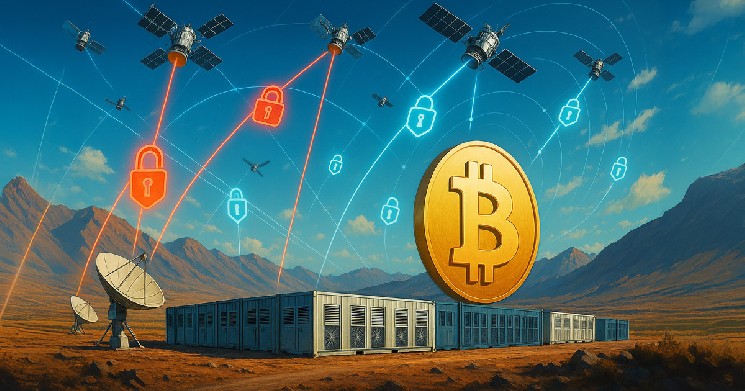
UC San Diego and the University of Maryland researchers have reported findings showing that roughly half of GEO satellite downlinks carry data without encryption.

Further, data interception can be reproduced with just $800 of consumer hardware.

Per WIRED, the team captured telco backhaul, industrial control traffic, and law-enforcement communications, and reported fixes to affected providers where possible.

UCSD’s Systems and Networking group lists the paper “Don’t Look Up” for CCS 2025 in Taipei, reinforcing that this is not a lab curiosity but a documented, peer-reviewed disclosure pipeline. The method targets legacy satellite backhaul rather than any single application layer.

Moreover, the study covered only a slice of visible satellites from San Diego, which implies a wider global surface.

Bitcoin in space – new risks from cheap hardware

For Bitcoin miners and pools operating from remote sites, the exposure maps cleanly to one operational choice: transport security on the path that carries Stratum.

Stratum is the protocol that connects miners to pools, distributes work templates, collects shares and block candidates, directs hashpower, and determines how rewards are accounted for.

Historical deployments of Stratum V1 often run over plaintext TCP unless operators explicitly enable TLS, which means pool endpoints, miner identifiers, and job templates can traverse radio links in the clear when satcom backhaul is in play.

The Stratum V2 specification ships with authenticated encryption by default, using a Noise handshake and AEAD ciphers, which closes the passive interception angle and hardens integrity against share hijack attempts that depend on manipulation of upstream traffic.

According to the Stratum V2 security spec, operators can bridge older rigs through a translation proxy, so firmware swaps on ASICs are not required to start encrypting sessions.

This satellite finding does not implicate every “Bitcoin over space” system.

Blockstream Satellite broadcasts public Bitcoin block data as a one-way downlink, and its Satellite API supports encrypted messages from senders, which places it in a different category than GEO backhaul, which transports private control traffic.

Per Blockstream, the service exists to improve network resilience for receiving blocks in regions with poor internet access and not to carry pool credentials or miner control sessions. Blockstream’s May network update confirms ongoing operations and frequency changes, and does not change the threat model for Stratum links that miners control.

Budget pressure matters for security rollouts. Hashrate is hovering near 1.22 ZH/s, and recent miner economics put hashprice around $51 per PH per day in late September, with the forward curve in the high-forties to low-fifties into the first half of 2026.

According to Hashrate Index, the updated Q4 2025 heatmap details country shares, which helps infer where satellite backhaul is more common due to terrestrial constraints. Present revenue conditions mean operators watch operating costs closely, yet the primary expense for transport encryption is engineering time, not new hardware, which lowers friction for near-term hardening.

A simple sensitivity model frames the downside if network portions still send Stratum V1 over unencrypted satellite links.

Security modeling

Let H denote total hashrate near 1,223 EH/s, and define p_sat as the share using satellite backhaul, p_geo as the share of those on GEO rather than encrypted LEO or terrestrial, and p_v1 as the share still running Stratum V1 without TLS.

At-risk hashrate equals H × p_sat × p_geo × p_v1. The ranges below illustrate order-of-magnitude exposure and the value of migration to TLS or Stratum V2.

The operational guidance follows directly from the protocol stack.

First, enforce TLS across all Stratum V1 endpoints and on the routers in front of them. Then, prefer Stratum V2 for new links and add an SV1→SV2 translation proxy where hardware constraints exist.

TLS 1.3 handshakes are complete in one round trip, and production measurements show low CPU and network overhead on modern systems.

The performance cost is limited in most deployments, which clears a common objection for remote sites that watch latency and utilization. According to the Stratum V2 spec, authenticated encryption protects both confidentiality and integrity of channel messages, which removes the easy win for passive eavesdroppers documented by the satellite study.

Backhaul choices matter beyond header encryption.

Where operators can avoid legacy GEO, an encrypted LEO service or terrestrial path reduces interception risk, although no transport choice replaces endpoint hygiene.

When GEO remains necessary, enforce encryption at every hop, disable insecure management interfaces on satellite modems, and monitor for anomalies in share patterns and endpoint drift that could reveal interference.

The UCSD and UMD work shows that downlink interception is cheap and scalable with commodity hardware, which weakens any assumption that radio links escape attention due to physical distance from the adversary.

Providers, including T-Mobile, addressed specific findings after disclosure, which shows that remediation is practical once visibility exists.

Can this be patched?

The next year will determine how quickly pools and miners normalize encrypted transport. One path is secure by default, where pools accept V1 only over TLS and promote V2 broadly. Translation proxies smooth the transition for older fleets, compressing the window for interception.

A slower path leaves a long tail of unencrypted or partially encrypted sites, creating opportunistic exposure for actors with uplink interference capabilities.

A third path resists change and banks on obscurity, which becomes harder to justify as tools from the study percolate and proof-of-concepts move from academia to hobbyist communities.

None of these trajectories requires protocol invention, only deployment choices that align with well-understood primitives.

Confusion around Blockstream Satellite can distract from the actionable fix. Pool credentials do not live in the broadcast of public block data, and its API supports encrypted payloads for user messages, which separates resilience from control-plane privacy.

The service strengthens receive-side redundancy for the Bitcoin network in regions with weak connectivity, and does not replace transport security on miner-to-pool links.

The study makes one point clear for operators who run from the edge on radio backhaul: plaintext control traffic is now trivial to observe, and encrypting Stratum is a straightforward, low-overhead fix.

The operational path is TLS for V1 today, then Stratum V2.

Noderunner risk

Node operators, or “noderunners,” face a different risk profile than miners because Bitcoin nodes typically receive and relay public blockchain data rather than private credentials or payment instructions.

Running a full node does not require transmitting sensitive authentication material over a satellite link; the data exchanged, blocks, and transactions are already public by design.

However, if a node relies on GEO satellite backhaul for bidirectional internet access, the same exposure that affects any unencrypted TCP traffic applies: peers, IPs, and message metadata could be observed or spoofed if transport encryption is absent.

Using Tor, VPNs, or encrypted overlay networks like I2P minimizes this footprint.

In contrast to miners using Stratum V1, node operators are not leaking value-bearing control traffic but should still encrypt management interfaces and network tunnels to prevent deanonymization or routing interference.

Share. Facebook Twitter Pinterest LinkedIn Tumblr Email
NBTC

Related Posts

Bitcoin hashrate at 4-month low as AI competes for the grid: Analyst

19/01/2026

Bitcoin difficulty just retreated, but a more critical “survival metric” signals the mining sector is bleeding out

18/01/2026

Bitcoin’s hashrate continues to fall as the price spike doesn’t convince miners to turn machines back on

17/01/2026

Bitmain Eyes a New Bitcoin Mining Proxy? – Miner Weekly

17/01/2026
Add A Comment

Comments are closed.

Top Posts
Get Informed

Subscribe to Updates

Get the latest news from NBTC regarding crypto, blockchains and web3 related topics.

Your source for the serious news. This website is crafted specifically to for crazy and hot cryptonews. Visit our main page for more tons of news.

We're social. Connect with us:

Facebook X (Twitter) LinkedIn RSS
Top Insights

Crypto index funds ‘a big deal’ as market complexity grows: Bitwise CIO

19/01/2026

US Senate Banking cancels Thursday crypto bill markup amid negotiations

19/01/2026

Bitcoin hashrate at 4-month low as AI competes for the grid: Analyst

19/01/2026
Get Informed

Subscribe to Updates

Get the latest news from NBTC regarding crypto, blockchains and web3 related topics.

Type above and press Enter to search. Press Esc to cancel.