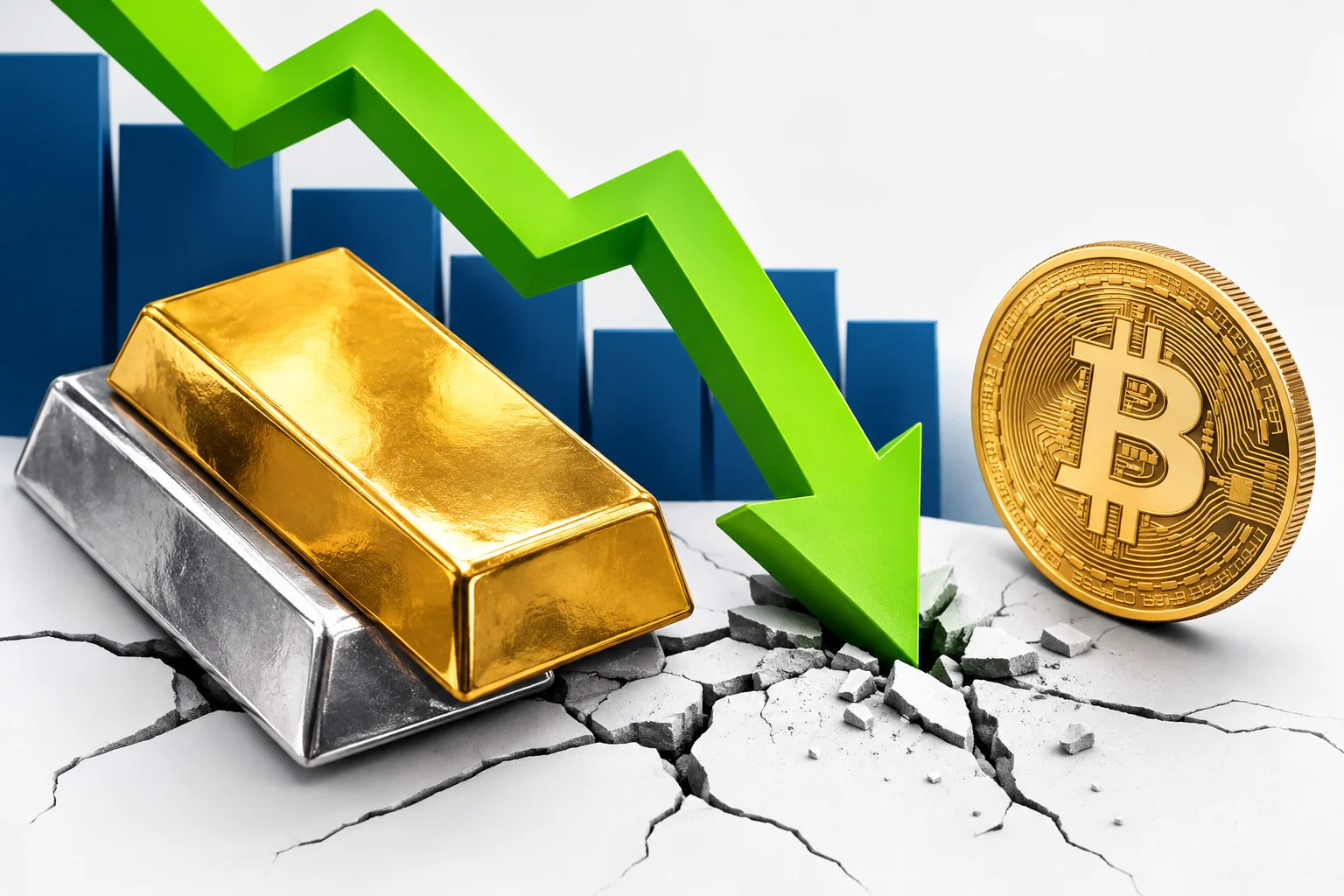
Gold and silver have suffered another sharp crash, with about $1.4 trillion erased from their combined market cap in just 24 hours. That exceeds Bitcoin’s entire market cap.
As of Wednesday, Nov. 18, Bitcoin’s market cap was roughly $1.26 trillion.
Gold and silver suffer yet another brutal crash
Gold fell roughly 3% on Wednesday, Nov. 18, to $3,736 per ounce, its lowest price since September 2025, Reuters reported.
The precious metal has now lost about one-third of its value from the record high of nearly $5,595 per ounce reached in January.
Silver fell even further, dropping 5.3% to $44.88 per ounce on Wednesday.
Silver is now down roughly 63% from its all-time high of more than $121 in January. The crash is therefore devastating for investors who joined the precious metals bandwagon earlier this year.
Those concerns were further heightened on Wednesday, Nov. 18, when Federal Reserve Governor Christopher Waller suggested the central bank may choose a 50-basis-point rate hike in December or signal a more aggressive tightening program for 2027.
Bitcoin, crypto market crash continues
The precious metals crash has coincided with another major downturn in the crypto market.
Bitcoin fell to near $62,000 over the weekend and was also under pressure on Nov. 18, dropping to around $62,450 during Wednesday’s trading session.
The same macroeconomic factors affecting gold and silver prices are also weighing on crypto.
Meanwhile, crypto market maker Wintermute warned that Bitcoin could potentially fall into the $50,000 range after dropping below the 200-week moving average, a key long-term technical indicator.
Peter Schiff warns of financial crisis worse than 2008
Economist and longtime Bitcoin critic Peter Schiff has warned of troubling potential fallout from the Federal Reserve’s more aggressive approach to fighting inflation.
On Nov. 18, Schiff shared his view on X, suggesting gold is falling because people believe the Federal Reserve is serious about fighting inflation.
Schiff warned that if the Fed follows through on its promise, the financial system could face potentially disastrous consequences.
As a result, market participants could see a severe recession that could lead to a financial crisis even worse than the one in 2008.