
Close Menu
  • Coins
    • Bitcoin
    • Ethereum
    • Altcoins
    • NFT
  • Blockchain
  • DeFi
  • Metaverse
  • Regulation
  • Other
    • Exchanges
    • ICO
    • GameFi
    • Mining
    • Legal
  • MarketCap
What's Hot

The question isn’t whether privacy. It’s what sort of privacy

23/04/2026

Fluid shines as DeFi alternatives gain prominence in KelpDAO collateral damage

23/04/2026

Pyth Network to determine outcomes in Kalshi’s commodities expansion

23/04/2026
Facebook X (Twitter) Instagram
  • Back to NBTC homepage
  • Privacy Policy
  • Contact
X (Twitter) Telegram Facebook LinkedIn RSS
NBTC News
  • Coins
    1. Bitcoin
    2. Ethereum
    3. Altcoins
    4. NFT
    5. View All

    Price Breaks All-Time High Record Again – Here’s What We Know

    04/08/2025

    Bitcoin Switzerland? El Salvador to Host First Fully Native Bitcoin Capital Markets

    04/08/2025

    Bitcoin Breaks $119K, but XLM and HBAR Aren’t Impressed by Its Meager Percentage Gain

    04/08/2025

    High-Stakes Consolidation Could Define Q3 Trend

    04/08/2025

    Trap Setup Signals Fakeout Risk

    22/04/2026

    ‘All Banks Will Use Ethereum,’ Pro-Crypto Lawyer Sparks Debate

    22/04/2026

    Key Levels Holding, Will ETH Crash or Bounce Toward $2,500?

    22/04/2026

    Has ETH’s Rally Run Out of Steam After Another Rejection?

    22/04/2026

    The Sui Ecosystem’s Top 3 Altcoin Performers

    29/07/2025

    Floki Launches $69000 Guerrilla Marketing Challenge With FlokiUltras3

    28/07/2025

    Crypto Beast denies role in Altcoin (ALT) crash rug pull, blames snipers

    28/07/2025

    $1.6 Billion XRP Surge: Here’s What’s Unfolding

    28/07/2025

    WWE Partners with Blockchain Creative Labs for Official NFT Marketplace – Epic Digital Collectibles Ahead

    20/04/2026

    Top 10 NFT Performers by Weekly Sales Volume, Courtyard Outshines

    19/04/2026

    Ethereum-Based NFT Platform Halts Operations

    16/04/2026

    NFT bull Steve Aoki sells his SHIB, ETH, and PEPE. His Bored Apes are down 88%.

    14/04/2026

    The question isn’t whether privacy. It’s what sort of privacy

    23/04/2026

    Fluid shines as DeFi alternatives gain prominence in KelpDAO collateral damage

    23/04/2026

    Pyth Network to determine outcomes in Kalshi’s commodities expansion

    23/04/2026

    Niza Ecosystem Joins Forces With AIW3 To Advance DeFi Cross-Chain Applications With AI Agents

    23/04/2026
  • Blockchain

    The question isn’t whether privacy. It’s what sort of privacy

    23/04/2026

    Pyth Network to determine outcomes in Kalshi’s commodities expansion

    23/04/2026

    Base Tests Azul Upgrade With Multiproofs Ahead of Planned Mainnet Launch

    23/04/2026

    WalletConnect Integrates with TradFi-Focused Chain Canton Network

    23/04/2026

    Japan to test government bonds as digital collateral on Canton

    21/04/2026
  • DeFi

    Fluid shines as DeFi alternatives gain prominence in KelpDAO collateral damage

    23/04/2026

    Niza Ecosystem Joins Forces With AIW3 To Advance DeFi Cross-Chain Applications With AI Agents

    23/04/2026

    A $300 million borrowing spike on Aave signals liquidity crunch after exploit

    22/04/2026

    Bitcoin drops from recent highs as traders watch CME gap, DeFi hack fallout

    22/04/2026

    Nearly $1 billion in bitcoin ETF inflows power bull case as Kelp hack fuels DeFi jitters

    22/04/2026
  • Metaverse

    ‘8,000 Jobs’—Polymarket Sees Tech Layoff Surge As Meta AI Push Bites

    18/04/2026

    Planet Hares Partners With Magne.AI To Bridge Web3 Metaverse With Smartphone Mobile-Ready Applications For Mass Adoption

    08/04/2026

    Mark Zuckerberg’s Meta launches new AI initiative after metaverse retreat

    25/03/2026

    Meta partners with Arm to develop new CPUs for AI deployments

    24/03/2026

    Land values capitulate as $24M metaverse plot collapses to just $9,000

    20/03/2026
  • Regulation

    Powell’s comments on oil, inflation are likely to guide bitcoin traders

    12/04/2026

    Bitcoin quickly pulls back to $72,300 as Iran fears team up with poor U.S. inflation data

    11/04/2026

    US National Debt Surpasses $39 Trillion Amid Fiscal Concerns

    11/04/2026

    Bank of Korea adds two banks to digital won trials as real-world testing begins

    11/04/2026

    “PPI and the Fed!” When Will the Interest Rate Decision Be Announced? Here Are the Expectations

    11/04/2026
  • Other
    1. Exchanges
    2. ICO
    3. GameFi
    4. Mining
    5. Legal
    6. View All

    DoorDash is bringing stablecoin payments to masses with Stripe-backed blockchain

    22/04/2026

    Coinbase Announces New Regarding Bitcoin (BTC) and Ethereum (ETH)!

    22/04/2026

    Bitcoin Exchanges Upbit, Bithumb, and Coinone Add This Altcoin to Their Delisting Watchlist! Here’s Why

    22/04/2026

    Coinbase, Bybit said to be working together on tokenization, custody and distribution of U.S. stocks

    22/04/2026

    South Korea Poised to Lift Ban on Domestic ICOs After 7 Years

    19/12/2025

    Why 2025’s Token Boom Looks Both Familiar and Dangerous

    31/10/2025

    ICO for bitcoin yield farming chain Corn screams we’re so back

    22/01/2025

    Why 2025 Will See the Comeback of the ICO

    26/12/2024

    ‘Axie Infinity’ Gaming Network Ronin Sets Date for Ethereum Layer-2 Migration

    22/04/2026

    Audiera Integrates BEAT Token On Alchemy Pay To Advance Global Utility Of Web3 Entertainment And Gaming Applications

    17/04/2026

    Web3 collapse accelerates as eight games fail this year

    16/04/2026

    NEO FANTASY Partners With DDEX To Connect Metaverse Games With Decentralized Multi-Chain Liquidity

    14/04/2026

    Uzbekistan creates state-backed crypto mining zone with tax breaks

    22/04/2026

    Uzbekistan launches tax-free crypto mining hub to attract foreign investment

    22/04/2026

    HIVE, Keel push deeper into AI data centers with capital raise, asset sale

    22/04/2026

    Core Scientific seeks $3.3 billion bond sale to further AI data center pivot

    22/04/2026

    Is the CLARITY Act a surveillance bill in disguise?

    22/04/2026

    Stablecoins not a threat to banks in the near-term: Moody’s analyst

    22/04/2026

    Global stablecoin rulemaking slows, prompting BIS to urge cooperation to avoid fragmentation risks

    22/04/2026

    SEC Chair Paul Atkins Swaps Lawsuits for ‘ACT’ Strategy

    22/04/2026

    The question isn’t whether privacy. It’s what sort of privacy

    23/04/2026

    Fluid shines as DeFi alternatives gain prominence in KelpDAO collateral damage

    23/04/2026

    Pyth Network to determine outcomes in Kalshi’s commodities expansion

    23/04/2026

    Niza Ecosystem Joins Forces With AIW3 To Advance DeFi Cross-Chain Applications With AI Agents

    23/04/2026
  • MarketCap
NBTC News
Home»Legal»GENIUS Act and CLARITY Market Structure Bill
Legal

GENIUS Act and CLARITY Market Structure Bill

NBTCBy NBTC05/07/2025No Comments6 Mins Read
Share
Facebook Twitter LinkedIn Pinterest Email


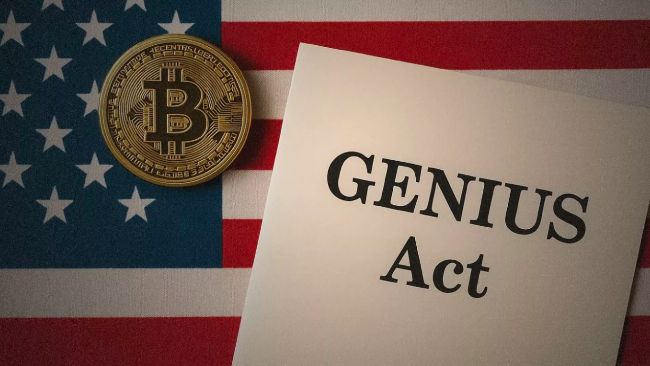
As the United States Congress continues to push forward in its regulatory efforts surrounding the cryptocurrency market, two significant pieces of legislation are making their way through the legislative process: the GENIUS Act and the CLARITY Market Structure Bill. These bills are part of the ongoing attempt to establish a clear regulatory framework for digital assets, aiming to address critical concerns such as stablecoin regulation and market transparency. With Senate scrutiny over cryptocurrencies intensifying, these pieces of legislation reflect the growing pressure to introduce clearer rules for the sector.

The bill is designed to regulate stablecoins, which are digital currencies pegged to real-world assets, such as the U.S. dollar. Stablecoins are used widely for transactions and as a store of value. While they have seen rapid growth in the financial market, the lack of regulatory clarity has raised concerns about their potential impact on financial stability. As a result, the GENIUS Act seeks to establish clear regulations for stablecoin issuers and users.

The primary goal of the GENIUS Act is to ensure that stablecoins are safe, reliable, and operate within a secure regulatory framework. A major provision of the bill calls for a Federal Reserve-backed regulatory framework for stablecoin issuers. This framework would require stablecoin issuers to hold sufficient reserves to back their digital currencies. These reserves would be subject to regular audits to verify that they remain adequate to cover the total value of stablecoins in circulation.

Additionally, the GENIUS Act emphasizes the importance of oversight for stablecoin custodians, which are the entities responsible for holding the reserves behind the stablecoins. These custodians would be required to meet regulatory standards and undergo ongoing supervision by federal agencies to ensure the stability of the digital currency system.

In a move to protect consumers, the GENIUS Act also includes a consumer protection framework. This framework is designed to ensure that stablecoin users are protected from fraud and other risks. It establishes rules for issuers to be held accountable and ensures that users have access to transparent information about the assets backing their stablecoins.

The GENIUS Act reflects the growing need for clear regulatory guidelines in the stablecoin sector. The bill is still moving through the legislative process, with efforts underway to finalize its provisions. As it advances, it could serve as a model for how stablecoins will be regulated in the U.S. financial system.

CLARITY Market Structure Bill: Bringing Transparency to Crypto Markets

In addition to the GENIUS Act, Congress is also moving forward with the CLARITY Market Structure Bill. This bill is aimed at regulating cryptocurrency exchanges and trading platforms, seeking to create a clear and transparent framework for how digital assets should be traded. The CLARITY Bill places a strong emphasis on transparency, fairness, and investor protection in the crypto markets.

A primary focus of the CLARITY Bill is to address issues such as market manipulation, insider trading, and price manipulation, which have been persistent concerns within the cryptocurrency space. The bill aims to ensure that cryptocurrency exchanges operate in a fair and transparent manner, thus protecting investors from unfair practices that could distort market prices.

A key feature of the CLARITY Bill is the digital asset exchange registration process. Under this process, cryptocurrency exchanges would be required to register with both the Securities and Exchange Commission (SEC) and the Commodity Futures Trading Commission (CFTC). This dual registration system is intended to ensure that exchanges comply with both securities and commodities regulations, creating a more robust regulatory framework for the digital asset market.

Furthermore, the CLARITY Bill includes provisions for market surveillance and reporting. Cryptocurrency exchanges would be required to implement systems to monitor trading activities and detect any signs of market manipulation. This would contribute to greater market transparency and help ensure that any illicit activities are swiftly identified and addressed.

The bill also calls for clear rules regarding the classification of digital assets, addressing the uncertainty surrounding whether cryptocurrencies should be classified as securities, commodities, or another category. By providing a clear definition of what constitutes a digital asset, the CLARITY Bill aims to provide regulatory clarity for both market participants and regulators.

Senate Scrutiny of Cryptocurrencies: A Growing Focus on Regulation

The momentum behind the GENIUS Act and the CLARITY Bill comes amid increasing Senate scrutiny of cryptocurrencies. Over the past several years, lawmakers have become more concerned about the potential risks associated with digital assets, particularly in terms of financial stability, consumer protection, and anti-money laundering concerns. These growing concerns have prompted the Senate to take a closer look at the cryptocurrency sector and its regulatory needs.

Concerns about the lack of transparency in the cryptocurrency market and the potential for market manipulation have been raised by several senators. Furthermore, there is increasing apprehension about the growing use of cryptocurrencies for illicit activities, such as money laundering and ransomware. These concerns have led to calls for stronger oversight and clearer regulatory guidelines for the industry.

As a response to these concerns, Congress has introduced several pieces of legislation to regulate the cryptocurrency market. In addition to the GENIUS Act and the CLARITY Bill, there are other bills that address issues such as tax reporting for cryptocurrency transactions, consumer protection, and the classification of digital assets. These measures aim to create a more comprehensive regulatory environment for cryptocurrencies, ensuring that the market remains fair and transparent.

As Senate scrutiny of cryptocurrencies intensifies, there has been increased pressure on industry participants to adopt clearer compliance measures. Many exchanges and digital asset firms are taking steps to improve their transparency and regulatory compliance in anticipation of stricter regulations.

Emerging Regulatory Frameworks for Cryptocurrencies

The push for stablecoin regulation and a clear market structure is part of a broader trend toward the development of new regulatory frameworks for cryptocurrencies. As the adoption of digital assets continues to increase, regulators are under pressure to establish consistent and comprehensive rules for the industry.

This trend is being shaped by factors such as the increasing use of cryptocurrencies in mainstream finance, the rise of decentralized finance (DeFi) platforms, and the growing use of stablecoins for cross-border payments and as a store of value. These developments are placing additional pressure on lawmakers to create regulatory frameworks that address the evolving landscape of digital assets.

The GENIUS Act and the CLARITY Bill are two significant pieces of legislation that could lay the foundation for a more comprehensive regulatory environment. These bills are part of a broader effort to ensure that the cryptocurrency market operates in a way that is safe, transparent, and fair for all participants.

As Congress moves forward with the GENIUS Act and the CLARITY Market Structure Bill, the landscape of cryptocurrency regulation is undergoing a significant shift. These bills represent a growing recognition of the need for clear and consistent rules that will allow digital assets to operate safely and fairly within the U.S. financial system.

Share. Facebook Twitter Pinterest LinkedIn Tumblr Email
NBTC

Related Posts

Is the CLARITY Act a surveillance bill in disguise?

22/04/2026

Stablecoins not a threat to banks in the near-term: Moody’s analyst

22/04/2026

Global stablecoin rulemaking slows, prompting BIS to urge cooperation to avoid fragmentation risks

22/04/2026

SEC Chair Paul Atkins Swaps Lawsuits for ‘ACT’ Strategy

22/04/2026
Add A Comment

Comments are closed.

Top Posts
Get Informed

Subscribe to Updates

Get the latest news from NBTC regarding crypto, blockchains and web3 related topics.

Your source for the serious news. This website is crafted specifically to for crazy and hot cryptonews. Visit our main page for more tons of news.

We're social. Connect with us:

Facebook X (Twitter) LinkedIn RSS
Top Insights

The question isn’t whether privacy. It’s what sort of privacy

23/04/2026

Fluid shines as DeFi alternatives gain prominence in KelpDAO collateral damage

23/04/2026

Pyth Network to determine outcomes in Kalshi’s commodities expansion

23/04/2026
Get Informed

Subscribe to Updates

Get the latest news from NBTC regarding crypto, blockchains and web3 related topics.

Type above and press Enter to search. Press Esc to cancel.