Coinbase is introducing Agent Controls for Agents, a service that links users’ AI tools to their trading accounts.
The Nov. 11 announcement introduces limits enforced on Coinbase’s servers, while users remain responsible for trades made by their agents.
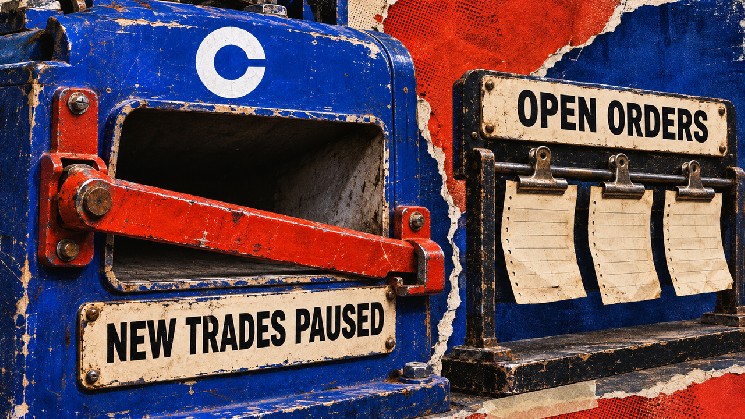
On Nov. 13, CEO Brian Armstrong promoted the controls as a way to make using AI with financial accounts safe. Pausing new trades does not mean existing orders have been canceled, positions closed, or losses stopped.
In its Agent Controls announcement, Coinbase describes a maximum dollar amount per trade and a cap on total trading over 24 hours. Trades that exceed the volume limit will not go through.
Auto-stop adds a trigger based on the percentage loss in a portfolio. The agent then stops placing trades until the user re-enables trading in the Coinbase app.
Coinbase says the limits are enforced on its servers, where the agent cannot bypass or change them. Users manage the settings through their authenticated Coinbase accounts. This separates rules for trade execution from instructions given to an AI model.
Permissions by product category are still forthcoming. Coinbase says the option to choose whether an agent can trade crypto, equities, or derivatives is coming soon.
The announcement does not say whether auto-stop cancels outstanding orders or closes existing positions. It also does not specify the baseline for calculating losses or how often valuations are made, or explain how the 24-hour volume window is counted.
Coinbase’s agent guide treats order management as a series of separate operations. Its guidance on equities warns that receiving an order ID does not prove a trade was filled and says users must check the result of each cancellation.
The command reference lists order cancellation and position closure as separate actions, with availability varying by product.
In practice, users cannot assume that an agent’s stopped status means their exposure has ended. A pause, a successful cancellation, and a closed position address different questions. Coinbase’s published description of auto-stop supports only the first, without promising the other two.
Portfolio isolation has an exception for futures
Coinbase’s setup documentation recommends using a dedicated portfolio funded only with what the user is willing to risk and limiting agent access to that portfolio. The user’s initial allocation and permission choices are therefore part of the protection.
US derivatives, including futures, require the default portfolio. Users considering futures cannot assume the same dedicated spot-portfolio boundary applies to every supported asset class.
Supported AI apps connect through remote MCP using Coinbase OAuth, through which users approve portfolios. The local command-line interface instead uses a CDP API key limited to selected accounts, with Trade and Transfer permissions.
The documented Transfer permission allows moves between portfolios, and Coinbase also maintains a client allowlist. Compatibility alone does not grant access.
The product page says availability of crypto, stocks, and futures depends on region and account eligibility. Approval before each trade and unattended scheduling also depend on the agent app.
Coinbase’s guide directs users to Account Security Connections to revoke access. Deleting a local skill or clearing a chat does not revoke access.
Coinbase also warns that AI agents can fail, trading can result in the loss of an entire investment, and users are responsible for agent transactions and third-party data use. Users still need to decide what exposure they accept, check which trades have executed, and manage the resulting positions.