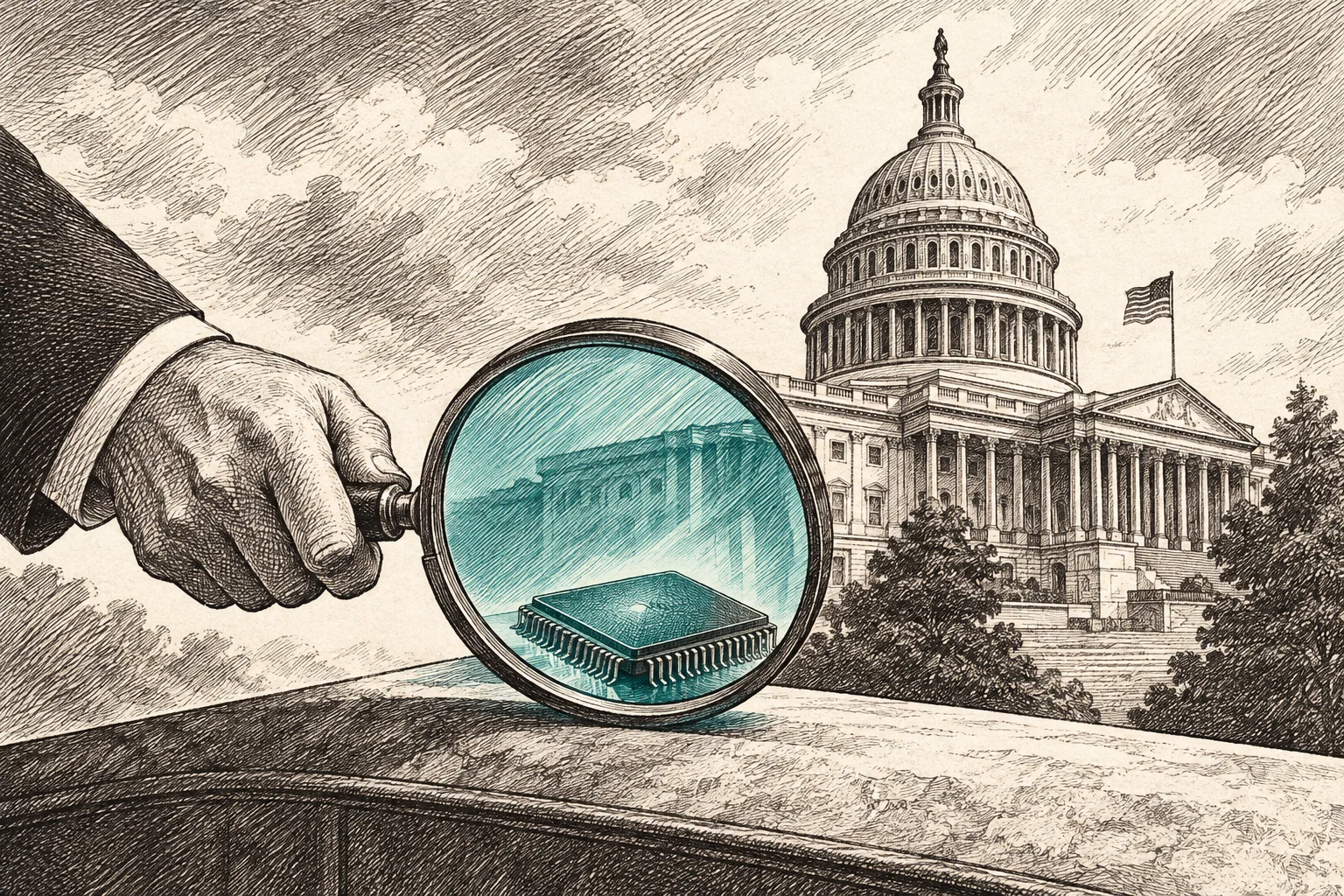
Bradley Tusk wants Congress to closely examine the relationships between Nvidia’s former leadership and the Trump administration. The Tusk Ventures co-founder says questions involving China, chip exports and national security are too serious to leave unexamined.
What Tusk is arguing
During a CNBC appearance on November 9, 2026, Tusk presented a multi-part argument centered on the need for oversight.
Tusk says Congress should examine how Nvidia’s former leadership dealt with the Trump administration and whether those relationships may have influenced policy on selling advanced chips to China.
Tusk also made his position on Nvidia’s leadership clear: he believes Jensen Huang should not return as the company’s CEO.
Tusk also discussed the possible effects of tighter US export controls on Nvidia and the broader startup ecosystem.
His third theme was cultural. Tusk says Silicon Valley’s reliance on high-profile founders and CEOs deserves greater scrutiny.
He linked that argument to Anthropic, which is preparing to go public.
A longstanding dispute over chips and China
Tusk has criticized Nvidia’s chip exports to China before, speaking out publicly as early as December 2025.
His current efforts include urging Congress to tighten controls on chip exports to China. He has cited proposed measures such as the bipartisan AI Overwatch Act as one possible path.
Tusk has suggested the White House is unlikely to launch an investigation on its own, prompting him to direct his appeal to Congress.
Possible implications for Nvidia, startups and the Anthropic IPO
Jensen Huang resigned as Nvidia’s CEO and president and left the company’s board on November 12, 2026, just days after allegations emerged of an affair with a suspected Chinese intelligence asset. Nvidia’s stock fell approximately 4–12% on the day of his resignation and had declined around 19% overall since the initial allegations emerged.
Nvidia directed more than $26 million to projects associated with Trump and spent a record $2.15 million on lobbying in Q3 2026. Senators Elizabeth Warren and Chuck Schumer are among the bipartisan leaders calling for investigations.
The implications for startups are less obvious but arguably more interesting. Young AI companies depend on access to computing power, and Nvidia is the dominant supplier. As a venture investor, Tusk has a direct view of how that dependence affects early-stage companies.
Anthropic’s planned public offering brings the debate over founder power to a new audience. Tusk’s comments effectively give investors a checklist of questions to consider before trading begins: who has control, how they engage with the government, and what happens if they leave.
The next question is whether Congress takes up the issue. A formal inquiry, progress on export legislation such as the AI Overwatch Act, or both would indicate that Tusk’s warnings are gaining traction beyond the interview circuit.