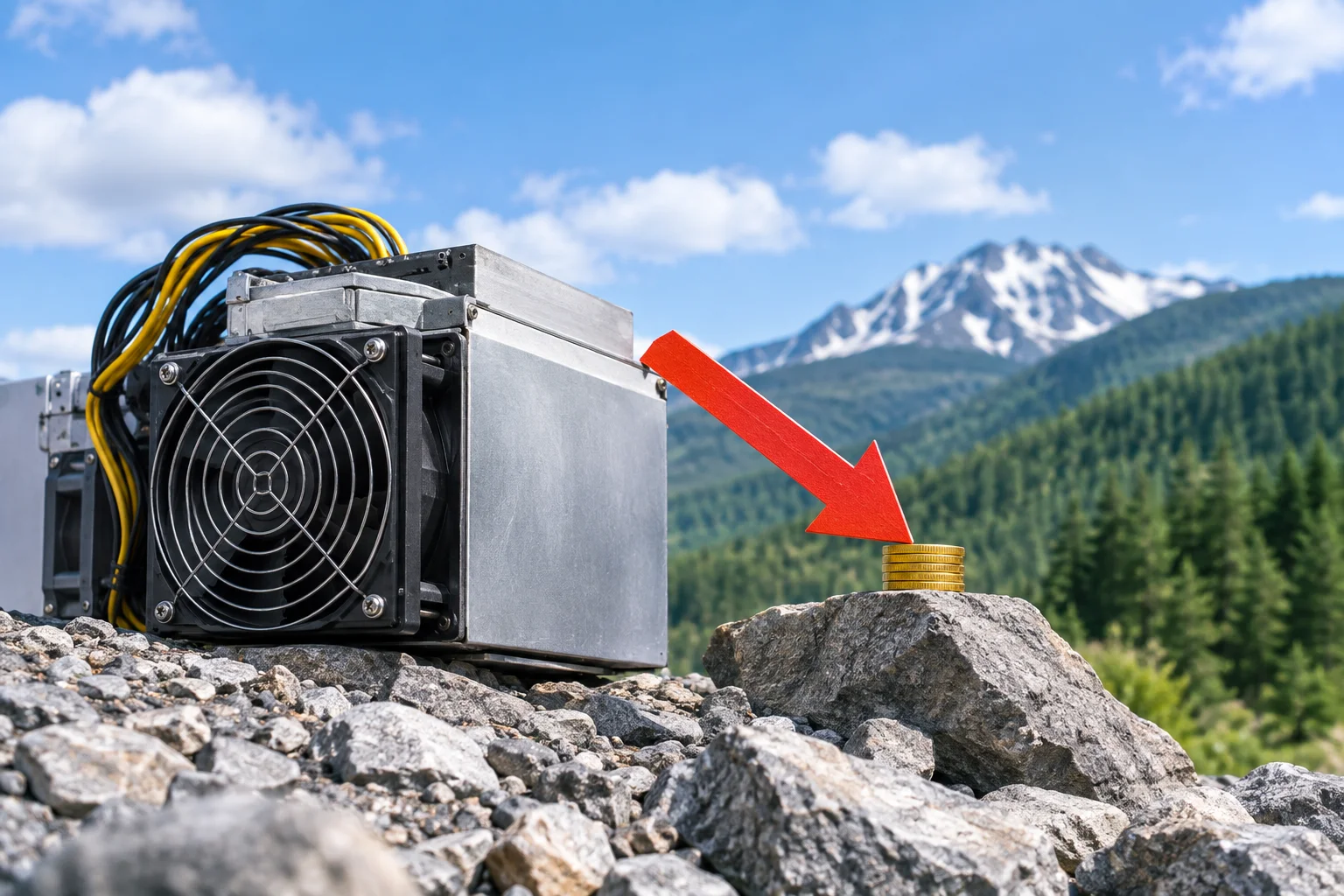
So far in 2026, Bitcoin miners have collected just 912 $BTC in transaction fees, the smallest annual total since at least 2011, when Bitcoin was still a curiosity discussed mostly on message boards.
The total of 912 $BTC covers fees collected through November 18, 2026. By comparison, miners earned 1,720 $BTC in fees during all of 2025.
The difference is even greater when looking back another year. In 2024, fee revenue ranged from 15,178 to 15,200 $BTC, making this year's total less than a tenth of that amount.
Fees account for just 0.63% of miners' total revenue, the lowest share since 2015.
The block subsidy is miners' base wage. It currently stands at 3.125 $BTC per block and now accounts for almost every coin they earn.
Record volume, bargain prices
Surprisingly, demand for the network has not dried up. Through late September 2026, Bitcoin processed an average of 578,012 transactions a day, a record pace.
But those transactions are cheap. The average fee has hovered around 492 satoshis, or about $0.41 at current prices.
A satoshi is Bitcoin's smallest unit, equal to one hundred-millionth of a coin. Users are therefore paying pocket change to move value across a global settlement network.
More efficient use of block space and weaker demand for fast confirmations are the likely reasons.
Why the subsidy matters so much
Bitcoin's design pays miners through newly created coins in the block subsidy and fees paid by users. The subsidy is cut in half at each halving, which takes place roughly every four years.
The next halving is scheduled for 2028. It will reduce the block subsidy from 3.125 $BTC to 1.5625 $BTC per block.
If fees remain near their current 0.63% share, miners would have almost nothing to cushion that reduction. Their main income stream would be cut in half overnight, while fees would barely make a difference.
What this means for miners and the network
Mining businesses would feel the most immediate pressure. With fees contributing so little, miner revenue is now almost entirely dependent on the fixed subsidy and Bitcoin's market price.
Not everything is gloomy. Low fees make Bitcoin cheaper to use, and record daily transaction counts point to real network activity, not a ghost town.