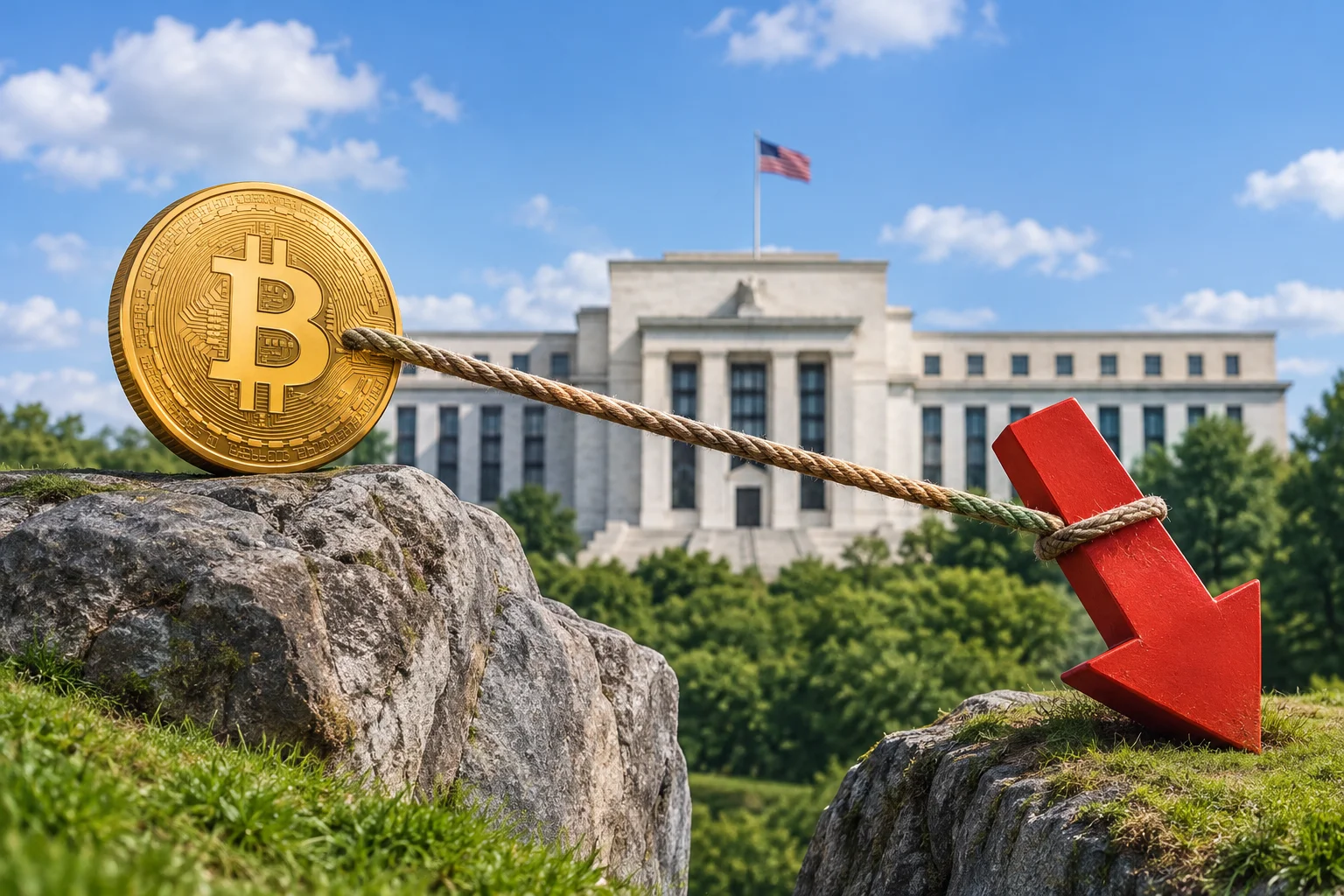
Bitcoin is experiencing a November that feels uncomfortably familiar. The world’s largest crypto asset fell to roughly $62,000 in mid-November 2026, its lowest level since July or August this year.
That amounts to a month-to-date decline of about 16-23%, depending on where the starting point is set. Investors are now comparing the downturn with November 2022, during the crypto winter that followed FTX’s collapse.
How November came apart
Bitcoin has recorded losses for six straight weeks, a gradual decline that grew steeper in mid-November.
Leverage added to the pressure. More than $2 billion in crypto positions were liquidated over a 24-hour period during a weekend in mid-November.
Liquidations can set off a domino effect. When prices drop far enough, exchanges forcibly close leveraged bets. Those forced sales push prices lower, triggering further closures.
Institutional investors were also pulling back. US spot Bitcoin ETFs recorded net outflows of around $1.9 billion during the sell-off.
A longer-term view makes the picture more concerning. Bitcoin peaked near $126,000 in October 2025, putting its current price close to 50% below that high.
Three pressures hitting at once
Several distinct pressures have converged, and none is minor.
Politics. Politics. The aftermath of the US midterm elections has fueled concerns about the direction of regulation. Democratic gains prompted worries that the crypto-friendly policy stance markets had grown accustomed to could change.
Competition for capital. Competition for capital. Anticipation of Anthropic’s IPO has drawn investors’ attention. The AI company is reportedly targeting a valuation of $1.4 trillion, with pricing expected on November 18.
Security. Security. The Binance hack in late October continues to weigh on the market. The breach reportedly involved $6.3 billion in stolen funds and has been attributed to a group linked to North Korea.
The 2022 echo
The comparison with 2022 is not far-fetched. That year began with the collapse of the Terra ecosystem and ended with FTX’s bankruptcy, two shocks that severely undermined confidence across the sector.
During that cycle, Bitcoin fell between 65% and 77% from its previous peak, reaching its low in the period after FTX failed.
What this means for investors
Traders are watching specific price levels. The $60,000 to $62,000 range is currently serving as the key support zone.
Market makers have warned that a decisive break below that zone could open the way to a decline into the $50,000 to $60,000 range. Conversely, a recovery to roughly $68,000 to $70,000 could relieve some immediate pressure.
ETF flows merit close attention. Spot Bitcoin ETFs were presented as a structural source of demand, but the roughly $1.9 billion in outflows during the sell-off suggests that holders of those products may be just as quick as other investors to reduce their exposure.
The $2 billion liquidation event wiped out a large share of overextended positions. How quickly open positions return will offer clues about whether the market has learned anything.
The Binance fallout is the slowest-developing risk, but could have the most lasting effects. A $6.3 billion theft attributed to a North Korea-linked group could prompt closer scrutiny of exchange security and custody practices.
Anthropic’s listing is another factor to watch. If the IPO is priced as scheduled and attracts strong demand, the capital-rotation trend may continue.