
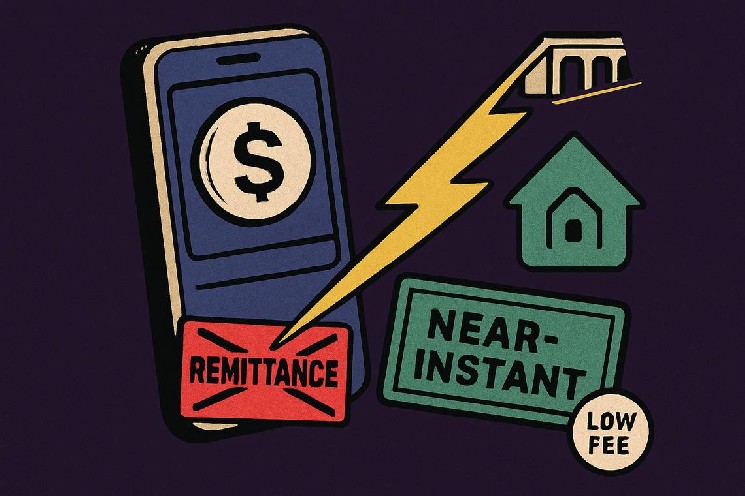

Sending money home from abroad still comes with a hidden tax on the world’s poorest workers: an average fee of 6.49% on every $200 transfer and a wait of three to five business days before the cash actually lands. A new report from the Solana Foundation argues that stablecoins are already dismantling that old model, and the evidence isn’t theoretical anymore — banks, fintechs and legacy money transfer giants are shipping products built on this idea right now. The shift toward stablecoin remittances is no longer a pitch deck concept; it’s showing up in wallets, cards and lending facilities across emerging markets.
Key takeaways
- Traditional remittances cost an average of 6.49% on a $200 transfer and take three to five business days to settle, according to the Solana Foundation report.
- Stablecoins on Solana can settle transfers nearly instantly at a fraction of that cost, the report finds.
- 1.3 billion unbanked adults remain largely excluded from remittance services even though nearly half own a smartphone.
- Western Union, Zepz and Tala have already launched stablecoin-linked products, from digital wallets to a $50 million tokenized lending facility.
- MoneyGram has separately launched a Visa-linked stablecoin card in Colombia, built with Rain, Crossmint and the Stellar network.
The High Cost and Delay in Traditional Remittances
Remittance rails have barely changed in fifty years, and that stagnation shows up directly in the numbers. The Solana Foundation report, titled An Evolution of Money Movement: How Stablecoins on Solana Are Reshaping Remittances, puts the average cost of sending $200 at 6.49%, with settlement taking three to five business days. Layered on top of that delay are hundreds of billions of dollars parked in pre-funded accounts, money that exists purely to guarantee a transfer arrives on schedule.
That structure has real costs for the people who rely on remittances most. A worker sending $200 home can lose more than $12 to fees alone before factoring in exchange-rate spreads or delays that leave families waiting days for funds they may need immediately.
Stablecoins on Solana Enable Instant, Cost-Effective Remittances
Stablecoin-based transfers settle in near real time and cut most of the fee structure baked into legacy rails, according to the Solana Foundation report. That’s the central claim driving the report’s release: the first generation of stablecoin money transfer products built on this logic is already live and operating at commercial scale.
Instead of routing money through correspondent banks and pre-funded liquidity pools, stablecoin rails move value directly on-chain, then hand off to local partners only at the final step of converting into cash or local currency. That collapses the multi-day settlement window into something closer to minutes, and it removes much of the capital that traditionally sat idle just to guarantee timing.
Bridging the Financial Inclusion Gap for the Unbanked
Remittances today mostly function as dead-end transactions, with no savings account, credit history or financial identity attached to the money once it lands. The report highlights that 1.3 billion unbanked adults are still largely ignored by the market, even though nearly half of them already carry a smartphone capable of running a digital wallet.
This is where the case for unbanked financial inclusion gets concrete rather than aspirational. A stablecoin balance held in a mobile wallet doesn’t require a bank account to exist, which means recipients in markets with thin banking infrastructure can receive, hold and spend dollar-linked value without ever opening a traditional account. For remittance corridors serving migrant workers and their families, that gap between smartphone penetration and financial access is exactly the market opportunity the report frames as unresolved.
Key Industry Players and Innovations in Stablecoin Remittances
Several major remittance brands have already moved from pilot to product, and their choices reveal where the competitive pressure is building fastest.
Western Union and Anchorage Digital Bank’s USDPT and Digital Asset Network
Western Union launched USDPT, a stablecoin issued through Anchorage Digital Bank, alongside its own Digital Asset Network and a Stablecard product built with Rain. That combination gives Western Union both an issuance layer and a spending layer under one roof, positioning it to compete directly with newer entrants rather than simply reacting to them.
Zepz’s Sendwave Wallet serving over 100 countries
Zepz, the company behind WorldRemit and Sendwave, rolled out the Sendwave Wallet for recipients across more than 100 countries. The move extends Zepz’s existing remittance footprint into a persistent wallet experience rather than a one-time transfer.
Tala and Huma Finance’s $50 million tokenized lending facility
With Huma Finance, Tala—a company serving 13 million customers across emerging markets—rolled out a tokenized lending facility worth $50 million. That structure suggests stablecoin infrastructure is being used not just to move remittances but to fund credit products for populations that legacy lenders have historically overlooked.
Local currency conversion partners supporting remittance corridors
Behind these consumer-facing products, local currency conversion in the corridors where funds ultimately arrive is managed by Yellow Card, Flutterwave, Bitso, Trace Finance and Sphere Pay. These partners are the connective tissue that turns a stablecoin balance into usable local cash, and their reach effectively determines how far any given stablecoin remittance product can scale.
A parallel move outside the Solana report reinforces the same trend. MoneyGram launched a virtual Visa-linked stablecoin card in Colombia, its first market for the product, built with Rain supplying card infrastructure, Crossmint providing wallet technology and the Stellar network handling underlying blockchain transactions. Eligible customers can hold a stable-dollar balance, spend it through Visa’s merchant network from inside the MoneyGram app, or collect local cash at a MoneyGram location. Chairman and CEO Anthony Soohoo described the product as combining “a stable-dollar balance, everyday spending and cash access” within the company’s existing service. MoneyGram plans a physical version of the card by late 2026 with ATM withdrawals, though it has not disclosed pricing, additional launch markets or which stablecoin backs the balances. Notably, Rain also built Western Union’s Stablecard, meaning two of the industry’s largest legacy remittance operators are now running card products on the same underlying infrastructure.
Separate World Bank data from the third quarter of 2025 adds useful context to the cost comparison: the global average cost of sending $200 stood at 6.36%, with digital remittances averaging 4.59% against 7.30% for nondigital services. Debit cards were the cheapest payout method measured, at 3.61%, while mobile wallets averaged 3.18% in the World Bank’s separate index. Those figures underline the same gap the Solana report describes — digital and card-based rails consistently undercut cash-based transfers on cost.
Report Insights on Business Models, Market Corridors, and Regulation
Beyond the headline product launches, the Solana Foundation report maps out how operators can actually build revenue around stablecoin remittances rather than treating transfers as a one-off transaction.
Different business models from wallets to stablecoin issuance
The report lays out five business models that go beyond simple money movement, ranging from wallets functioning as broader financial platforms to companies issuing their own stablecoins as a revenue line. It also outlines four entry paths for operators, from low-risk treasury optimization to launching a full stablecoin platform, each carrying its own barrier to entry, time to value and revenue model.
Detailed remittance corridor analysis
Corridor-level detail covers flows between the United States and Mexico, Brazil, Nigeria, the Philippines and India, breaking down the partners operating in each market alongside the specific flows involved.
Regulatory risks and market-specific details
Regulation remains the variable most likely to shape how fast this shift plays out. The report includes market-by-market regulatory detail and risk factors for each of the corridors it examines, reflecting how compliance requirements, licensing regimes and local rules differ sharply from one country to the next. This matters because the pace of adoption for stablecoin remittances won’t be set by technology alone — it will depend on how quickly regulators in each corridor clarify the rules governing digital dollar balances, reserve backing and consumer protection.
FAQ
What are the typical fees and settlement times for traditional remittances?
Traditional remittances usually incur an average fee of 6.49% on a $200 transfer and take three to five business days to settle, according to the Solana Foundation report.
How do stablecoins on Solana improve remittance services?
Stablecoins on Solana enable remittances that settle nearly instantly with high cost efficiency, and they extend services to populations that have historically been left out of the banking system.
Which companies have launched stablecoin-based remittance products?
Western Union launched USDPT with Anchorage Digital Bank, Zepz launched the Sendwave Wallet covering more than 100 countries, and Tala created a $50 million tokenized lending facility with Huma Finance. MoneyGram has also launched a separate Visa-linked stablecoin card in Colombia.
Who manages local currency conversion in these new stablecoin remittance corridors?
Local currency conversions are handled by partners including Yellow Card, Flutterwave, Bitso, Trace Finance and Sphere Pay, who convert stablecoin balances into usable cash in each market.
Article produced with the assistance of artificial intelligence and reviewed by the editorial team.
