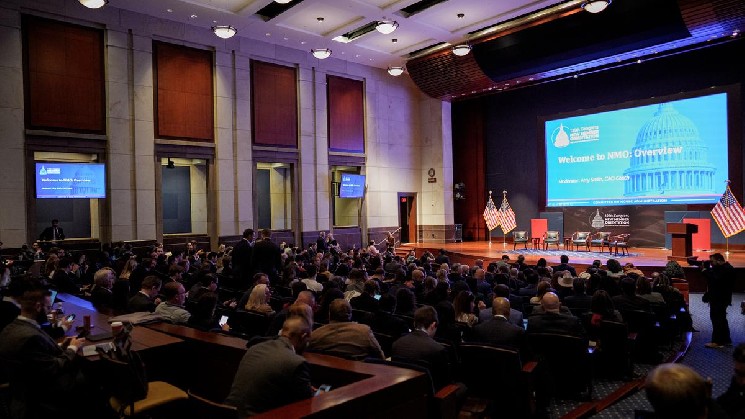
This election has made clear that emerging technologies such as artificial intelligence and superintelligence (AI/SI) are likely to face regulation soon. Concerns about data centers, AI and new technologies came up in campaigns across the country, and in January 2027, the 120th Congress will decide how to approach regulating these complex, fast-evolving technologies.
New research by Ipsos found that 63% of Americans said the financial system needs an upgrade to handle new threats like AI, and 74% said financial privacy is important to them. Ipsos data also showed that nearly three in four Americans said it matters to them whether a candidate supports building the next generation of financial technology in the United States. Pew reported that half of Americans now use AI chatbots, up from one in three in 2024. The findings suggest Americans are concerned about the impacts of emerging technologies, yet they are also increasingly using new technology, such as AI or crypto, and want the next generation of technology built in the United States.
Whether that happens is a policy outcome, one that depends on policymakers who understand what they are regulating. The gap between how fast the technology moves and how well Washington understands it could determine whether the country leads internationally or falls behind competitors such as China. Closing that gap starts with a simple principle: the people writing the rules should have hands-on experience with the technologies they regulate.
Some technologies are easier to experience directly than others. Congressional leaders can experiment with some tools on their own devices, such as sending a stablecoin from a centralized crypto exchange, asking an AI chatbot a question about their district, or viewing the results of a prediction market. Other technologies are more complex, and it is often helpful to get a demonstration or hear directly from the developers or builders about how the technology functions and why it was developed, such as the difference between centralized and decentralized finance, open versus closed source AI, or how national security innovation works. It is clearly useful for a member to speak directly with someone who uses the technology every day, so they can ask questions in real time and share their concerns. In each case, a member leaves with a better understanding and the ability to ask sharper, more thoughtful questions, grounded in their own experience rather than second-hand explanations.