
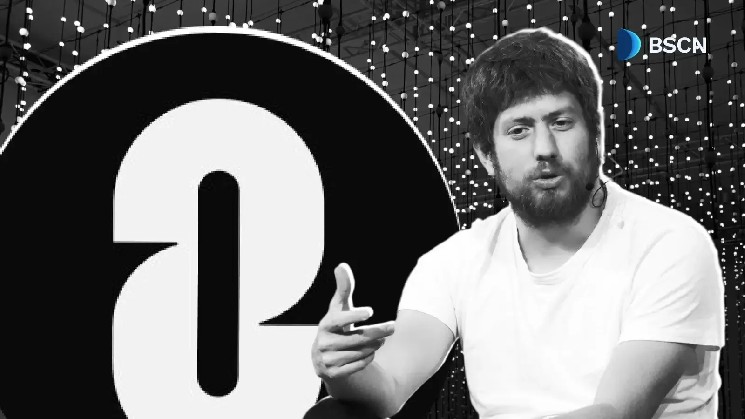

He is based in Vancouver, Canada, where LayerZero has its headquarters. He told The Logic he moved there so his children could attend school there and to be near family.
How Did Poker Shape His Career?
Poker came first and lasted almost a decade.
From Teen Player To World Series Results
Pellegrino started playing online poker at 15, on an account his father opened for him, according to Sequoia Capital. At his peak, he played about 70 hours a week. Highlights of his poker career include:
- More than $500,000 in World Series of Poker prize money
- A second-place finish in a 2012 World Series event
- Travel to about 80 countries while playing
His most profitable year was 2014, but he said the game felt unfulfilling. “I was just trying to be the best,” he told Sequoia.
From Poker To AI
His poker work led to research. In 2020, Pellegrino, Zarick, Banister, and Noam Brown of Facebook AI published a paper on Supremus, a poker AI that beat the previous top poker AI. Earlier, in 2016, he sold a machine learning tool that predicts pitch-by-pitch outcomes to several Major League Baseball teams.
How Did He Get Into Crypto?
Pellegrino first bought and mined Bitcoin with friends in 2013, a time when many poker players used it. He returned in late 2016 to build on Ethereum and later co-founded OpenToken, a platform for launching tokens.
The idea for LayerZero came from a game. In fall 2020, his team built a gladiator $NFT game on Binance Smart Chain. Moving an $NFT from that chain to Ethereum showed how risky existing bridges were.
What Is LayerZero?
LayerZero is an interoperability protocol. It lets separate blockchains send messages and assets to each other. Its whitepaper, “LayerZero: Trustless Omnichain Interoperability Protocol,” was released in May 2021.
Funding And Growth
Investors backed the company early:
- 2022: A $135 million Series A+ round co-led by Sequoia partners
- 2023: A $120 million round at a $3 billion valuation, with investors including Andreessen Horowitz (a16z) and Sequoia
- After FTX: When FTX collapsed in November 2022, LayerZero bought back the exchange’s stake
Stargate, an app built on LayerZero, launched in March 2022 and moved more than $250 million in its first 10 days.
Zero: A Blockchain For Wall Street
On February 10, 2026, LayerZero announced Zero, a Layer 1 blockchain built for institutional markets. It uses zero-knowledge proofs, which let parties verify information without revealing it, to keep sensitive client data off the public ledger. Partners include Intercontinental Exchange, the parent of the NYSE, and the DTCC. Citadel Securities bought $ZRO as a strategic investment, and $ARK Invest and Tether also backed the project.
Pellegrino framed Zero around a shift to 24/7 global trading. “How do you actually build those markets for the future?” he asked, Fortune reported. Fortune said the launch was planned for September 2026, and LayerZero’s roadmap lists the mainnet for “Fall 2026.”
What Has LayerZero Done Recently?
Recent updates include:
- September 8: LayerZero completed SOC 2 Type 1 and Type 2 audits of its cross-chain infrastructure.
- October 8: Blockaid launched Bridge Sentinel, a screening service for cross-chain messages built for LayerZero.
- October 16: LayerZero unveiled Aerie, a research system developed with a16z crypto that combines 32,768 Falcon signatures in 0.65 seconds on consumer hardware.
Where Does The $ZRO Price Stand?
$ZRO traded at $1.87 on October 20, down 10.6% over seven days, per CoinGecko. It has a market cap of about $747 million, ranking 90th, with about 400 million tokens in circulation out of a 1 billion maximum. It sits about 75% below its $7.47 all-time high.
Monthly token unlocks of about 32.6 million $ZRO are adding supply. CoinMarketCap tied a 10.69% drop on October 17 to an unlock hitting thin liquidity.
Conclusion
Bryan Pellegrino moved from professional poker to AI research and then to blockchain infrastructure. LayerZero, which he co-founded in 2021, lets blockchains exchange messages and assets, and it now powers apps such as Stargate. The company has raised more than $255 million in venture funding. It is building Zero, a Layer 1 for institutional markets backed by Citadel Securities, $ARK, and Tether.
