
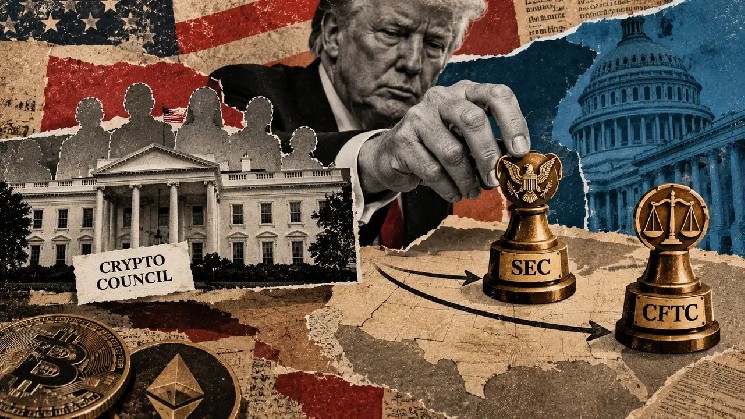

The reversal is unusual to say the least, because both decisions came from administrations led by the same president.
However, the more interesting part is what happened between them, as Washington spent years trying to decide how much information financial institutions should collect about people who use cryptocurrency without relying on a bank or exchange to hold their money.
What started as an effort to extend banking rules into crypto eventually became a much larger argument about financial privacy, forcing regulators to confront a basic difference between the two systems: banks generally know who owns an account, while public blockchains can record transactions without identifying the people controlling the wallets involved.
The wallet Washington couldn’t identify
The original proposal concerned what FinCEN, the Treasury bureau responsible for enforcing financial-crime reporting requirements, called unhosted wallets, meaning wallets whose owners controlled their own private keys and could send or receive cryptocurrency without a financial institution authorizing the transaction.
For users, nothing about these wallets was particularly new or unusual, because holding your own keys had been one of crypto’s defining features from the beginning.
But for regulators accustomed to collecting information from banks, they posed a problem that became much more complicated as crypto moved into the mainstream.
Banks know their customers’ identities, keep records of their transactions, and must provide information to authorities by law. Crypto exchanges do the same for their users, but once those assets move to a privately controlled wallet, the institution loses control over the person holding them.
The blockchain can show that a transaction took place, when it happened, how much was transferred, and which addresses were involved, but those addresses don’t reveal the names or physical locations of their owners.
Treasury wanted to close part of that gap by extending reporting and recordkeeping requirements through the financial institutions that handled transactions involving those wallets.
Under the December 2020 proposal, banks and money-services businesses, including covered crypto exchanges, would have been required to report certain transactions exceeding $10,000, including multiple transactions exceeding that amount in aggregate over 24 hours.
Transactions above $3,000 would have triggered additional recordkeeping requirements, including collecting the name and physical address of the customer’s counterparty.
The institution would have been required to verify its own customer’s identity, although the proposal did not impose the same mandatory verification requirement on the counterparty whose information it collected.
While this might sound like a minor distinction, it created many practical problems.
Consider someone using a crypto exchange to send $5,000 to an independent designer who receives payments through a wallet they control themselves.
The blockchain needs the designer’s wallet address to deliver the funds, but under the proposed requirements, the exchange could also have needed the designer’s name and physical address for its records, even though that person had never opened an account with the exchange or agreed to become its customer.
Withdrawing crypto to your own wallet would have been simpler because you already knew who controlled the receiving address, but paying another person could have required collecting information unnecessary to make the transaction work.
That information might not otherwise have been available to the exchange.
The proposal would not have prohibited self-custody or required people to register their privately controlled wallets with the government, and it wouldn’t have imposed these new reporting requirements directly on every transaction between two people using their own wallets.
Instead, it would have made regulated businesses responsible for collecting more information whenever certain transactions passed between their services and wallets outside their control.
That was the central issue for privacy advocates, because the government didn’t need to control someone’s wallet if it could require the financial institution on the other end of a transaction to collect identifying information about the person using it.
In its December 18 announcement, Mnuchin argued the proposal would help close gaps criminals use to avoid financial reporting requirements, citing money laundering, terrorism financing, sanctions evasion, and other national security threats.
The proposed rule itself cited transactions involving wallets associated with North Korea’s Lazarus Group, including at least 17 transfers exceeding $10,000 between US financial institutions and wallets linked to the group during 2017 and 2018.
Regulators saw this as the reason the ability to move funds beyond a financial institution’s direct oversight complicated investigations, especially when the same technology used for ordinary payments could also move stolen funds or proceeds from ransomware attacks.
But privacy advocates, on the other hand, didn’t think those risks justified requiring institutions to collect personal information about everyone involved in transactions above a particular threshold.
The disagreement was about how far obligations built for financial intermediaries should extend when transactions involved people who had chosen not to use an intermediary.
Fifteen days to comment, years without a final rule
The speed of the original proposal became a controversy almost as soon as Treasury announced it.
FinCEN published the proposed requirements in the Federal Register on Dec. 23, 2020, with comments initially due on Jan. 4, 2021, leaving the market to examine a complicated set of new obligations during a period when many businesses were operating with reduced staff.
The agency argued that the short consultation was justified by urgent national security concerns, including the possibility that delaying the requirements would give illicit actors more time to move assets beyond regulated institutions.
Coin Center, a cryptocurrency policy advocacy organization, objected to the timetable but also drew a distinction that the broader debate over the proposal largely obscured.
In its initial response, the group acknowledged that applying reporting concepts already used for large cash transactions to crypto would favor it, because withdrawing $10,000 in digital assets from an exchange could be compared with withdrawing a similar amount of cash from a bank.
Its main objections concerned the additional counterparty information and the limited time to examine how those requirements would work, especially when the recipient wasn’t another person with a conventional account but software or a transaction structure with no obvious name or physical address.
These questions couldn’t necessarily be resolved by adding another field to a withdrawal form, because the information exchanges would have been expected to collect wasn’t always information their customers had.
By Jan. 14, 2021, FinCEN said it had reviewed more than 7,500 comments and reopened the consultation, providing another 15 days for comments on the reporting provisions and 45 days on other requirements.
Less than two weeks later, after Biden took office, the agency extended the process again, setting a single deadline 60 days after the extension.
The administration that had introduced the proposal was gone, and the rule that Treasury wanted considered so quickly was now entering a much longer regulatory process.
But it never became a law.
During Biden’s presidency, the proposal remained part of the government’s regulatory history without producing the new reporting system Mnuchin’s Treasury originally envisioned, and by the Spring 2024 regulatory agenda, its status had changed.
The government’s Unified Agenda listed the wallet proposal under ‘completed actions’ and recorded it as ‘withdrawn’ on Apr. 12, 2024, more than two years before FinCEN published the formal withdrawal notice in October 2026.
That changes how the eventual decision should be understood.
The October 2026 Federal Register notice was a separate, formal action that explicitly withdrew the original proposal and confirmed that FinCEN would take no further action on it.
The public documents establish those two administrative milestones, although they don’t explain why the formal notice followed the earlier agenda designation by more than two years.
As a result, the additional requirements proposed in 2020 never took effect, while the policy debate that produced them continued elsewhere in Washington.
A different proposal brings the same privacy question back
In October 2023, as the original wallet proposal neared its final appearance on the regulatory agenda, FinCEN opened another proceeding that brought many of the same concerns back into view.
This time, the government was looking at crypto mixing, a set of techniques used to make it harder to link transactions and track the movement of funds across a blockchain.
Mixing can conceal criminal proceeds, making it a longstanding concern for law enforcement, but it can also serve ordinary privacy purposes on networks where transaction histories are publicly visible.
For example, someone receiving payment through Bitcoin may not want the payer to examine other transactions connected to their wallet, estimate how much money they hold, or identify unrelated financial activity.
Businesses may have similar reasons to keep payments to suppliers or employees from becoming visible to competitors.
Regulators struggled to distinguish those legitimate uses from the same techniques used to hide stolen funds or evade sanctions.
FinCEN wanted to use powers under Section 311 of the USA PATRIOT Act to impose additional reporting and recordkeeping requirements on covered financial institutions handling certain transactions involving international cryptocurrency mixing.
The proposal differed from the 2020 wallet rule in both its legal authority and the transactions it covered, but its broad definition of mixing raised new questions about how much ordinary activity could become subject to financial surveillance.
The definition went beyond dedicated mixing services and included techniques such as splitting transfers, moving funds through multiple addresses, and exchanging between different digital assets when those activities were used to obscure transaction details.
Critics argued that a definition covering so many activities could lead exchanges and other institutions to treat legitimate transactions as suspicious simply because they were hard to interpret, especially when institutions faced potential compliance consequences for failing to identify covered activity.
The two proposals were never parts of a single regulation, but they showed the same underlying problem.
The 2020 proposal tried to collect more identifying information when money moved beyond regulated institutions, while the 2023 proposal sought more reporting when transactions used methods that made the movement of funds harder to follow.
In both cases, the government tried to address real financial crime risks through intermediaries that already had reporting obligations, while opponents argued that collecting more information could also undermine legitimate financial privacy.
Washington begins to change its position
By the time Trump returned to the White House in January 2025, his administration’s approach to crypto differed sharply from the one it took in the closing weeks of his first term.
Crypto had become a much larger political and financial force, and the new administration made digital assets an economic priority, emphasizing keeping businesses and developers in the US and reducing regulatory uncertainty.
In January 2025, Trump signed an executive order establishing the President’s Working Group on Digital Asset Markets, directing it to review federal policy and recommend changes.
The working group’s report, released in July 2025, addressed a wide range of questions involving market regulation, stablecoins, custody, taxation, and financial privacy.
Its stance on self-custody and privacy marked a significant shift from the language Mnuchin’s Treasury used in December 2020.
The report supported lawful digital asset users’ ability to transact privately on public blockchains, while still recognizing the government’s responsibility to investigate money laundering and other crimes.
The report also acknowledged that mixers could support legitimate privacy, even though criminals could use the same tools to conceal and launder funds.
This offered a different way to approach the trade-off between financial transparency and ordinary people’s ability to keep their transactions private.
The change became clearer in March 2026, when a Treasury report to Congress explicitly recognized that lawful crypto users might use mixers to protect information about personal wealth, business payments, charitable donations, and consumer spending.
Treasury began drawing a more deliberate distinction between the privacy tools themselves and the unlawful activities that could be carried out with them.
The government had not stopped treating money laundering as a serious risk, but it was acknowledging that a person might have legitimate reasons to make a transaction more private, particularly on a public blockchain where transaction data can remain visible indefinitely.
That distinction provided the policy background for the decisions FinCEN announced on Oct. 5.
In notices published in the Federal Register the following day, the agency formally withdrew both the 2020 unhosted-wallet proposal and the 2023 cryptocurrency-mixing proposal.
The wallet notice tied the withdrawal to the Trump administration’s digital asset policy and said FinCEN would take no further action on the proposal introduced during Trump’s first term.
The mixing notice went further in addressing the substance of the objections, acknowledging that the proposed definition could discourage legitimate activity and create a significant reporting burden for financial institutions.
FinCEN also made clear that it continued to recognize illicit uses of mixing and would monitor the activity for signs of money laundering, terrorist financing, and other financial crime, leaving open the possibility of future action.
Coin Center, which had opposed both proposals, welcomed the withdrawals as a major privacy victory, arguing that the government had abandoned requirements that would have expanded the collection of sensitive financial information, including information about people who were not customers of regulated institutions.
The outcome was the clearest formal expression of the administration’s changing position, even if the wallet proposal’s history showed the shift took place over several years rather than through a single decision.
Privacy wins a battle, but the rules around it remain
The withdrawal of the two proposals does not mean exchanges can stop collecting customer information or that cryptocurrency transactions are exempt from existing financial crime requirements.
Banks and covered crypto businesses remain subject to applicable anti-money-laundering programs, customer identification and verification requirements, transaction recordkeeping, suspicious activity reporting, and other obligations under the Bank Secrecy Act.
The October decisions also do not change the legal status of separate criminal cases involving cryptocurrency privacy tools, where questions about money transmission, sanctions, and money laundering can involve laws that are independent of the proposals FinCEN withdrew.
That distinction was evident in the ongoing prosecution of Tornado Cash developer Roman Storm, where federal prosecutors pursued the case even as Treasury abandoned its proposed reporting regime for mixing.
The government’s willingness to recognize legitimate uses of privacy technology therefore does not establish that every service offering such technology is lawful, or that the people operating those services are protected from existing criminal statutes.
For ordinary wallet users, the immediate effect of the withdrawals is also narrower than the political significance might suggest. Neither proposal had become an implemented rule, so there was no new reporting system to dismantle and no existing requirement under either proposal that exchanges suddenly stopped following in October 2026.
What changed was the government’s formal position toward two specific attempts to expand reporting into areas of cryptocurrency activity that were difficult for financial institutions to observe.
It’s an important difference because financial privacy isn’t determined by one proposal, and the absence of additional reporting requirements doesn’t prevent exchanges from collecting information under other laws, monitoring transactions for suspicious activity, or responding to lawful requests from authorities.
At the same time, the history of these proposals shows how difficult it has been for Washington to decide where those obligations should end.
For decades, much of the American financial reporting system has depended on institutions that hold customers’ money and keep records of what those customers do with it.
Crypto introduced a system in which people could hold and transfer value directly, while leaving a permanent public record of transactions that did not necessarily identify the individuals behind them.
The first Trump administration tried to bring more of those transactions into the existing reporting framework by requiring regulated institutions to collect additional information about the people and wallets on the other side.
The Biden administration proposed another way to expand financial visibility when transactions used techniques that obscured the movement of funds, although the earlier wallet proposal had already been withdrawn by the time Biden left office.
Trump’s second administration formally closed both proceedings, reflecting a policy that weighed legitimate reasons for financial privacy more heavily without abandoning existing efforts to combat illicit activity.
The withdrawals are a win for the crypto industry, even though the administration defending financial privacy has also found an incredibly profitable way to participate in the business.
Trump’s family made an estimated $2.3 billion in pretax profits from crypto ventures between late 2024 and April 2026, including World Liberty Financial and the TRUMP meme coin, while more than a million outside investors saw roughly $2.3 billion in losses, both realized and unrealized.
The family put little of its own money at risk, collecting proceeds from token sales and business deals while buyers absorbed the downside. Crypto has been very, very, very good to the Trumps, even when it has been considerably less generous to the people buying their tokens.
None of this proves that FinCEN withdrew the proposals to enrich the president’s family, and the case for financial privacy stands regardless of who happens to support it.
But the conflict of interest is impossible to ignore when the family making billions from crypto also runs the administration deciding how to regulate the industry.
There’s a certain irony in Washington spending six years debating how much personal information it needs about people using crypto wallets, only for one of the more pressing questions to become how much money the family in the White House is making from crypto itself.
The result is a reversal that took almost six years to reach a formal conclusion, but it also reminds us that the central question hasn’t disappeared with the proposals themselves.
Public blockchains make transactions visible, financial institutions make customers identifiable, and regulators are still deciding how much information should connect those two systems when someone chooses to hold and use their own money.
That argument began long before Mnuchin’s Christmas proposal, and withdrawing the rule does not mean Washington has finished with it.
