


[ad_1]
A solo Bitcoin miner notched a rare win by validating an entire Bitcoin block, securing a huge payday using a hobby-level mining operation and on-demand hashrate.
The miner earned the 3.125 Bitcoin ($BTC) block reward, worth about $200,000 at current prices, after successfully mining block 938092, according to blockchain data and a post from Bitcoin mining firm Braiins.
Braiins said the miner relied on on-demand hashrate, spending about 119,000 satoshis, about $75 at the time, to rent 1 petahash per second of computing power and paying a small solo-mining fee in the process. The miner used CKPool, a service that lets individual miners work independently while using a pool server to broadcast work and submit solutions, the company said.
While validating an entire block as a solo Bitcoin miner is rare, even a sub-$100 investment in on-demand hashrate can lead to a lucky payday. On-demand hashrate is a cloud-based approach that allows would-be miners to rent computing power to mine cryptocurrencies without owning the hardware.
Bitcoin block 938092, validated by a solo miner with rented hash power. Source: Mempool.space
The miner successfully validated Bitcoin block “938092” around 8:04 a.m. UTC on Tuesday, according to blockchain data from Mempool.space.
Related: Lone Bitcoin miner wins block using tiny, cheap rig — ‘1 in a million chance’
Solo wins remain statistically rare
While validating a block as a solo miner is a rare occurrence, 21 Bitcoin miners have managed the feat over the past year, cashing in a total of 66 $BTC, worth $4.1 million at current prices. This marks a 17% increase in solo blocks found during the past year, according to solo miner data aggregator Bennet.
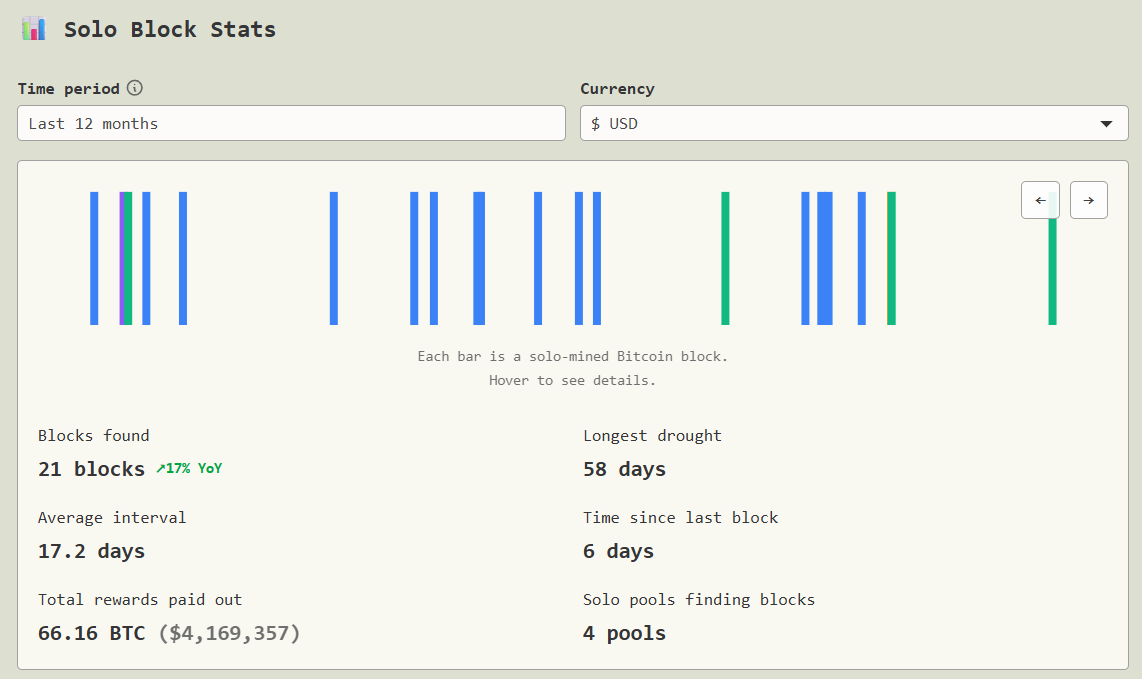
Solo Bitcoin mining block stats. Source: Bennet.org
Data shows that a solo block is mined at an average interval of 17.2 days.
Related: How 5 solo Bitcoin miners cashed in over $350K each in 2025
Bitcoin mining industry recovers from US winter storms
Bitcoin mining difficulty climbed to 144.4 trillion after the latest adjustment, marking a 15% rise.
The adjustment reversed an 11% drop that occurred due to severe US winter storms earlier this month, the sharpest decline in hashrate since China’s 2021 mining ban.
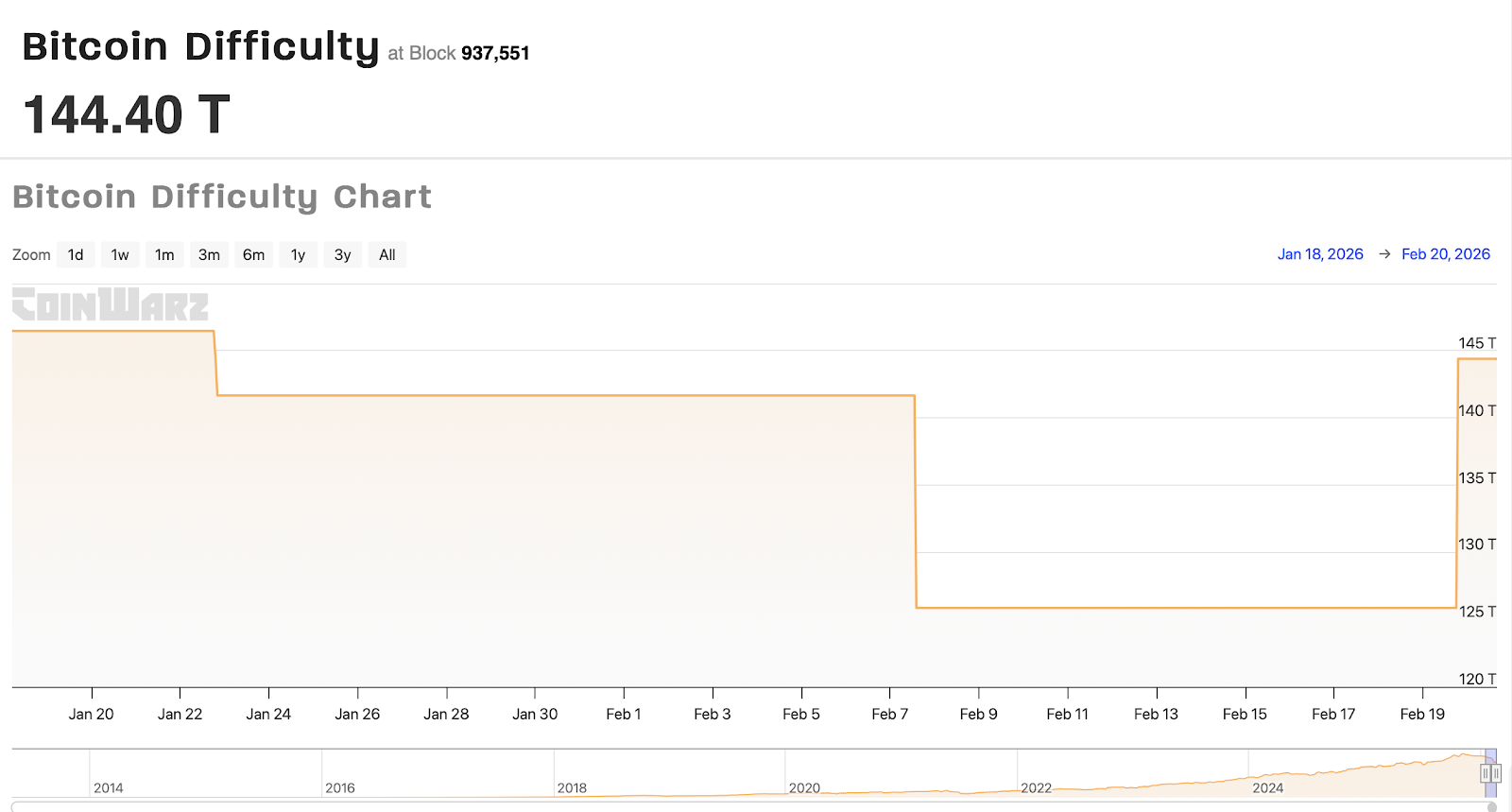
Bitcoin Difficulty Chart. Source: CoinWarz
Hashrate measures the total computing power behind the Bitcoin network. The network’s difficulty is adjusted every 2,016 blocks, about every two weeks, to keep block production near its 10-minute target.
Magazine: Bitcoin may take 7 years to upgrade to post-quantum — BIP-360 co-author
[ad_2]
