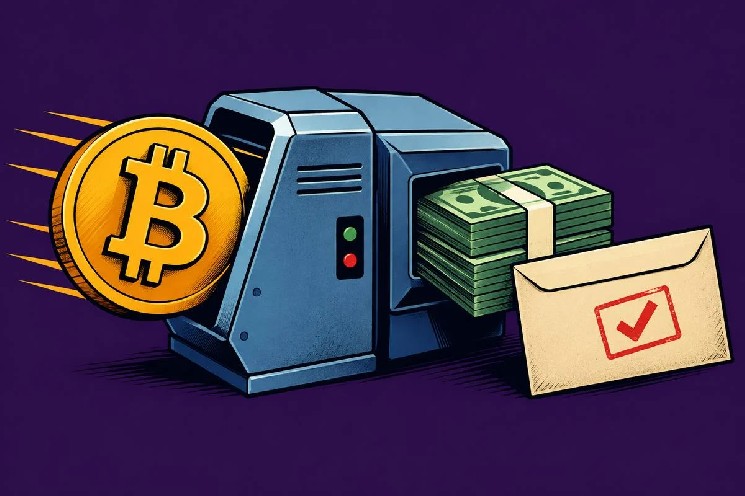
Miami-Dade property owners can now pay their property taxes with bitcoin, but the county receives dollars, not cryptocurrency. Tax Collector Dariel Fernandez said Monday that the option is available online and in person, with a third party converting each payment before it reaches the county.
Key takeaways
- Bitcoin is an optional way to pay Miami-Dade property taxes.
- The county receives dollars and does not hold cryptocurrency.
- Property owners receive a 4% discount if they pay by November 30.
How Miami-Dade accepts bitcoin for property tax payments
Miami-Dade’s bitcoin payment option offers another way to pay property taxes, while traditional methods remain available. Fernandez said the arrangement expands taxpayer choice without putting public funds into the asset.
Payments are converted into dollars before reaching the county
Taxpayers can select cryptocurrency at online checkout or request it at a payment counter. They then connect a supported exchange account or digital wallet and authorize the transaction.
A third-party system converts bitcoin into U.S. dollars when the payment is made. The Tax Collector’s office does not hold, invest in or manage cryptocurrency, and county employees do not maintain digital wallets. Transactions appear in the office’s standard payment reports.
Fernandez said that, regardless of the payment method, “our office receives the full amount owed in U.S. dollars.” He described the approach as “embracing new technology without compromising our responsibility to protect taxpayer dollars.”
Traditional payment methods and early-payment discounts remain available
Bitcoin payments are voluntary. Property owners can still pay by check, card, cash or fee-free eChecks. The office’s payment-methods page lists a nonrefundable online fee of 2.50%, with a $2.50 minimum for card and mobile-wallet transactions.
Miami-Dade opened its 2026 tax roll on October 30. Under Florida law, owners who pay by November 30 receive a 4% early-payment discount. The discount drops to 3% in December, then to 2% in January and 1% in February. The full amount is due in March, and unpaid bills generally become delinquent on April 1.
Under the office’s existing rules, the submission date determines the discount for both online and in-person payments. Fernandez’s “Save the Max” campaign illustrates the savings on an eligible $5,000 bill: paying in November cuts the amount by $200.
Taxpayers can pay at any of the office’s 13 locations, through T-Connect mobile units, or online at any time of day.
Miami-Dade follows earlier government cryptocurrency efforts
The Tax Collector’s office described Miami-Dade as one of the first government agencies in the United States to accept cryptocurrency payments. Its approach follows that of other public agencies that accept crypto but settle tax bills in dollars.
Miami’s earlier bitcoin initiatives
Miami-Dade’s decision to accept bitcoin for property taxes follows a proposal made in 2021. That year, Commissioner Danielle Cohen Higgins introduced a resolution to study bitcoin payments for county taxes and fees.
In a related effort, Miami Mayor Francis Suarez advocated allowing residents to pay city taxes and fees in bitcoin and explored compensating municipal workers with the cryptocurrency. As part of the push, the City of Miami also launched MiamiCoin, a token tied to the Stacks protocol.
Fernandez, elected in November 2024, previously served on Miami-Dade’s Cryptocurrency Task Force, according to his official biography.
Other jurisdictions use dollar-conversion systems
Colorado has accepted cryptocurrency for state taxes since 2022, using a third-party processor to convert payments into dollars. Utah later introduced a similar option for individual income tax payments.
In 2024, Detroit announced plans to start accepting cryptocurrency for city taxes and fees in mid-2025, with those payments also converted into dollars.
Florida lawmakers also pursued a separate cryptocurrency measure: a 2026 proposal to create a state Strategic Cryptocurrency Reserve, following the withdrawal of a 2025 attempt. The Senate bill, CS/SB 1038, stalled in an appropriations committee in March and did not become law.
Read also: Florida businesses will pay taxes in crypto · Miami: the new coin of the American city launched today
Article produced with the assistance of artificial intelligence and reviewed by the editorial team.
Source: en.cryptonomist.ch. Adapted by NBTC.
Add A Comment
Comments are closed.