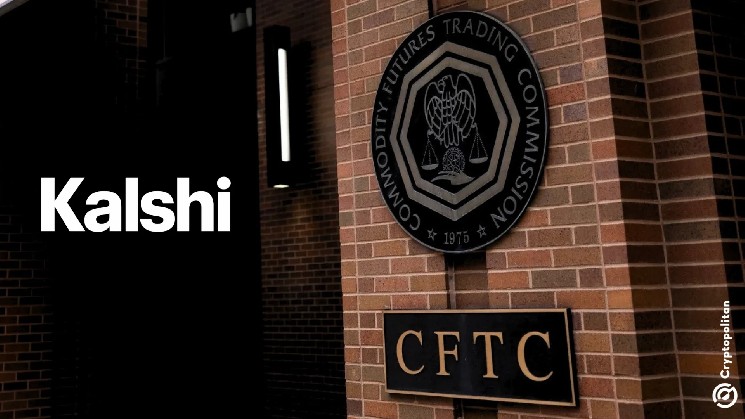
Politico reported on November 10 that the U.S. Commodity Futures Trading Commission has privately warned Kalshi, the largest prediction market platform, that it could soon face charges. The investigation has been open for months and examines whether the prediction market giant properly notified the agency before listing dozens of new contracts. For now, the specific penalties the CFTC might pursue have not been disclosed.
Kalshi, for its part, is playing down the news. Spokesperson Elisabeth Diana characterized the situation as a procedural mistake in how the company submitted a handful of contracts, many of which never went live. She also said Kalshi is already addressing the matter.
Self-Certification Is at the Center of the Probe
The investigation focuses on self-certification, a fast-track route that allows designated contract markets to list new products as soon as the next day without explicit CFTC approval. Exchanges file a certification confirming that a contract meets agency rules, including a low risk of manipulation, and the market can then go live.
Kalshi's overall growth strategy depends heavily on how quickly new contracts can be listed on its platform, and its rapid listing approach is built on the framework described above. The pace of new product launches has picked up since a 2024 court victory against the CFTC, which opened the door to more event-based contracts.
The CFTC Flagged Bundled Filings Twice This Year
The paperwork-error argument may not go very far, given that the regulator has already warned exchanges about the practice. The first warning arrived on March 12 when the CFTC's Division of Market Oversight issued Staff Letter No. 26-08, which raised concerns about broad contract specifications that may not comply with the agency's rules.
A second warning followed on July 24 in Staff Letter No. 26-22, which said exchanges were still self-certifying filings that bundled multiple contract variations and settlement sources into a single submission. The agency said this practice makes it extremely difficult to assess and verify whether the required supporting analysis has been provided.
If Kalshi used the same filing structure, any enforcement action would follow warnings the CFTC had already put on record.
Polymarket Is Under Review Again
Kalshi is not the only prediction market platform the CFTC is watching closely. Reuters reported on October 27 that its biggest rival, Polymarket, is again being examined over whether it violated its January 2022 settlement, under which it paid a $1.4 million penalty and agreed to keep U.S. users away from its main offshore platform. The CFTC and the Justice Department closed similar investigations in 2025 without filing charges. The latest news concerns geolocation controls and U.S. advertising.
Washington's Posture Has Shifted After the Midterms
Democrats won both chambers in the November 3 midterms and are preparing to oversee the industry more aggressively in the next Congress. CNBC counted nearly 30 prediction market bills introduced since 2025, most of them sponsored by Democrats.
The CFTC, now led by Chair Michael Selig as its sole commissioner, has spent much of 2026 defending prediction markets against states such as Arizona and Utah, both of which have filed criminal charges against Kalshi. Kalshi has returned the favor. On November 9, it joined Coinbase and four other firms in seeking to file a brief supporting the CFTC in a separate dispute over perpetual futures tied to U.S. stocks.
A case against its biggest exchange would let the agency show it can police the sector before a Democratic Congress decides it cannot. For Kalshi, the contracts in question matter less than the precedent. Even a modest settlement could push exchanges toward slower, contract-by-contract filings, and that speed is what much of the sector's growth was built on.
Add A Comment
Comments are closed.