

Hong Kong’s securities regulator, the Securities and Futures Commission (SFC), laid out new guidance that would allow licensed crypto exchanges and funds to offer staking services in the city.
Staking offers crypto holders a way of putting their digital assets to work and earning passive income without selling them. Staking is integral to Proof of Stake (PoS) networks as it provides security and immutability.
In a press release on Monday, the Securities and Futures Commission (SFC) acknowledged the dual role staking can play, enhancing blockchain network security and providing regulated yield-generating opportunities for investors, as it continues to implement its broader strategy of growing Hong Kong’s digital asset sector through its “ASPIRe” roadmap.
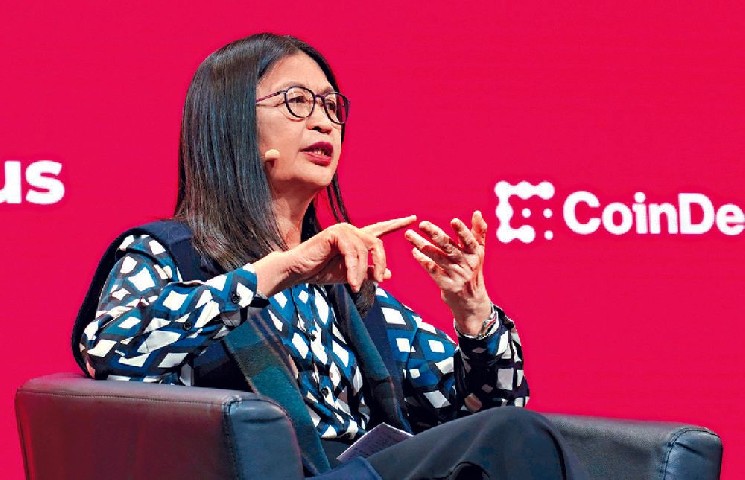
“Broadening the suite of regulated services and products is crucial to sustain the healthy advancement of Hong Kong’s virtual asset ecosystem,” said Julia Leung, SFC’s Chief Executive Officer, in a release. “But the broadening must be done in a regulated environment where the safety of client virtual assets continues to be front and center.”
In a circular explaining the rules around staking, the SFC said that Virtual Asset Trading Platforms (VATPs), which is what the regulator calls licensed exchanges, must retain complete control of clients’ assets, explicitly prohibiting the outsourcing of staking to a third-party.
Platforms will also be required to transparently disclose all associated risks, including potential vulnerabilities like blockchain errors, hacking, or validator inactivity.
VATPs, according to the rules, must clearly inform clients of the processes involved, fees, minimum lock-up durations, and arrangements for business continuity during disruptions.
Authorized virtual asset funds, meanwhile, are mandated to stake only via licensed platforms or authorized institutions, with an enforced cap to manage liquidity risks, further underscoring the regulator’s cautious yet supportive approach.
This is in contrast to Singapore, Hong Kong’s rival financial center in the region, which banned retail staking in 2023, citing the need for “investor protection.”
The U.S. Securities and Exchange Commission (SEC) continues to restrict staking through enforcement actions, though it’s facing growing calls from a bipartisan group of senators to ease its stance.
Meanwhile, several states, including most recently Illinois, have dropped staking lawsuits against Coinbase, which was first hit with multiple lawsuits in 2023.
