

Source: Stacy Muur
Ethereum layer-2 network Blast is among the most prominent casualties. As Cointelegraph reported, the project announced its shutdown earlier this month, citing no “credible path” to economic viability. The decision marked a sharp reversal for a network that once attracted more than $2 billion in deposits.
Other projects have encountered different problems. In February, Step Finance shut down following a major treasury breach, while Radiant Capital announced in June that it would wind down operations after failing to recover from a 2024 exploit. Meanwhile, Coinbase-backed Satori Finance ceased operations after concluding that its revenue could no longer support the business.
Why are so many crypto projects shutting down?
Research published by DeFiLlama in August identified 100 crypto projects that had announced shutdowns in 2026, including 40 in the preceding 90 days. The findings suggest that many projects struggled to attract enough users or generate sufficient revenue to sustain operations.
The most commonly cited reason was a lack of product-market fit, followed by depleted funding, insufficient revenue and decisions to pivot to other products.
Collectively, the projects raised approximately $1 billion and generated $250 million in cumulative fees. Nine raised more than $50 million each, suggesting that substantial financial backing offered little assurance of long-term survival.
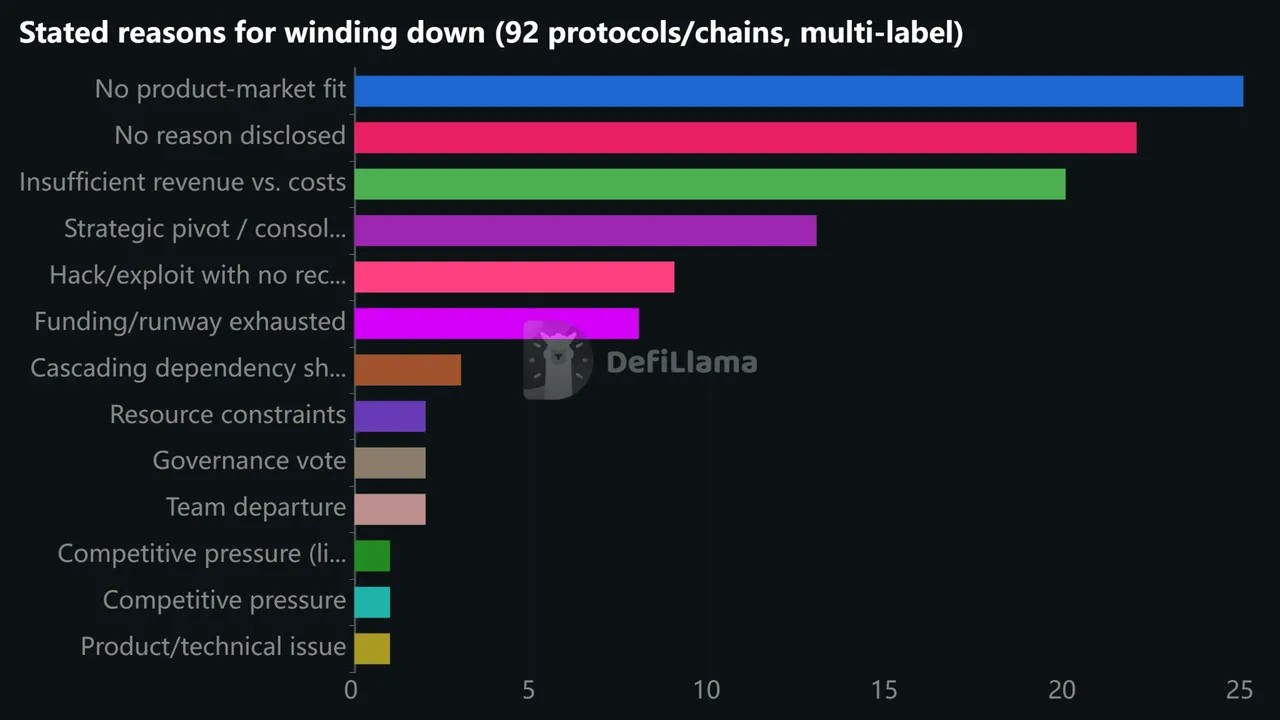
The most commonly cited reasons for crypto project shutdowns in 2026. Source: DeFiLlama
The closures come as crypto investment becomes increasingly concentrated. According to DeFiLlama, venture funding rose in the first half of 2026 compared with the previous year, even as the number of deals fell 80%. Meanwhile, mergers and acquisitions totaled 87 transactions at the time of the report, already 65% higher than the previous year.
