
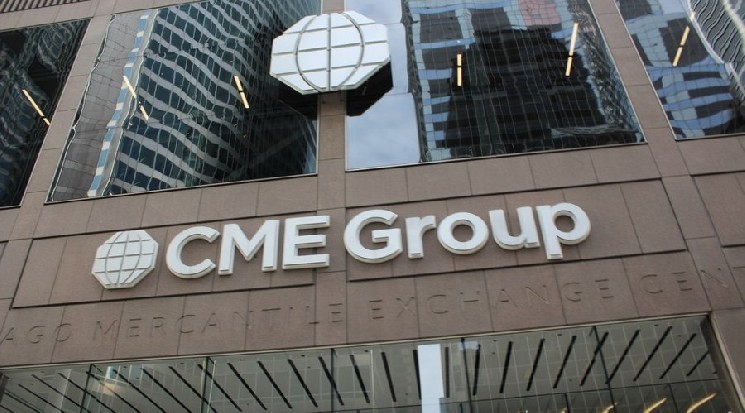

A major, hours-long outage at the world’s largest exchange operator, CME Group, left brokers “flying blind” on Friday, forcing them into a high-risk scramble where some firms had to use their own internal data to quote prices for clients after official market benchmarks froze.
The outage, triggered by a cooling-system malfunction at CyrusOne’s CHI1 data center in the Chicago area, knocked out Globex, CME’s core electronic trading infrastructure. The disruption has already lasted longer than a similar multi-hour CME outage in 2019, underscoring just how deeply the exchange’s systems sit at the center of global derivatives markets.
CyrusOne said its engineers had restarted several chillers at limited capacity and deployed temporary cooling equipment, but gave no timeline for full restoration.
[#highlighted-links#]
Global Futures Freeze as Brokers Shoulder the Risk
While the exchange eventually restored some operations, the prolonged blackout across its major global futures markets served as a stress test for the financial system. The outage exposed the hidden risks brokers are forced to shoulder when a core piece of market infrastructure fails.
BrokerTec’s fixed-income platforms remained operational, but core futures contracts across equities, bonds, and commodities stayed offline, freezing prices for everything from WTI crude to 10-year U.S. Treasuries, Nikkei futures, palm oil, and gold.
CME announced that BrokerTec EU, BrokerTec US Actives and EBS were open and trading, and that its futures and options markets would reopen at 7:30 a.m. Central Time.
BrokerTec EU, BrokerTec US Actives and EBS are open and trading. Futures and options markets will open at 7:30am Central Time.
— CME Group (@CMEGroup) November 28, 2025
Some markets showed visible signs of strain: gold spreads briefly widened by more than 20 times, and liquidity in cash Treasuries thinned as participants shifted to alternative venues with reduced transparency.
Brokers Forced Into Internal Pricing as Trades Halt
Christopher Forbes, Head of Asia at CMC. Photo: CMC Markets
“We’re now taking a lot of unnecessary risk here to continue pricing,” Christopher Forbes, head of Asia and the Middle East at CMC Markets, told Reuters, describing a situation he hadn’t seen in 20 years.
With official prices for benchmarks like West Texas Intermediate crude and S&P 500 futures frozen, CMC had to switch to its own internal data and calculations in some cases, even pricing for other brokers.
Other brokerages like Saxo Bank, XTB, and eToro were forced to halt trading entirely for a range of U.S. index, Treasury, and commodity futures. The move passed the halt down the chain to retail traders, but it also protected the firms from the immense risk of offering trades without a reliable, live price feed.
Michael Brown, Senior Research Strategist at Pepperstone.
Thin Holiday Liquidity Prevents a Wider Shock
The timing was particularly challenging for some, as options on the S&P 500 with a notional value of roughly $600 billion were set to expire on Friday, according to data compiled by Bloomberg. For desks rolling positions or managing delta exposure, the lack of futures created genuine operational headaches; some dealers resorted to ETFs or Euro Stoxx futures for hedging, though neither provides a clean match for SPX options.
The saving grace for the market was the post-Thanksgiving timing, a day known for thin volumes and a lack of major economic data releases.
“If it has to happen, then today is probably the best day for it,” Michael Brown, a senior researcher at Pepperstone, told Reuters.
Nevertheless, the event serves as a critical reminder of the market’s fragility. The hours-long blackout provided a rare, real-world glimpse into what happens when the benchmarks disappear: the risk doesn’t vanish—it gets transferred down the line to the brokers, forcing them to choose between halting markets or navigating them without a map.
