
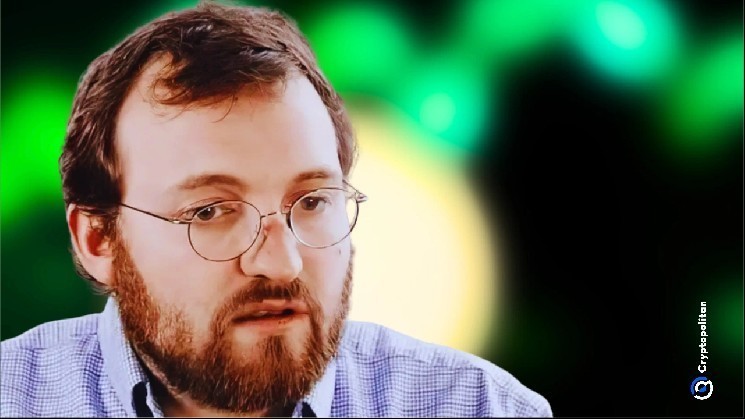

Cardano founder Charles Hoskinson has issued a clear warning to the broader blockchain industry about rushing into post-quantum cryptography upgrades, arguing that premature implementation could degrade network performance and create unintended costs for users and validators.
“Post-quantum crypto oftentimes is about 10 times slower, 10 times larger proof sizes, and 10 times more inefficient,” Hoskinson said, noting that adding such systems without adequate hardware support could dramatically reduce throughput.
Future quantum attacks pose a significant challenge to the current blockchain system. This has prompted blockchain developers to engage in discussions on how to tackle this issue. Some of these discussions included considering some updates to protocols.
However, Hoskinson advised developers that the biggest challenge is timing; hence, they needed to focus on this aspect instead of certain amendments required. He further warned that acting rashly could result in high costs for blockchain networks. According to him, the cryptographic tools essential to protect blockchain technology from future quantum attacks are already accessible.
Hoskinson guides blockchain developers in preparation for future quantum attacks
Hoskinson pointed out that the US National Institute of Standards and Technology made post-quantum standards public in 2024. Following this release, the Cardano founder highlighted that the key issue is based on the costs associated with executing new protocols before validators and miners are ready.
Meanwhile, it is worth noting that while several researchers believe that cutting-edge quantum computers could ultimately break current cryptography, reports from sources reveal that there is still less consensus on when this threat might materialize.
However, based on the recently announced predictions, practical quantum computing could occur anytime from a few years to more than ten years from now.
Still, Hoskinson advised blockchain developers to focus on concrete developments rather than hype and corporate timelines when evaluating how soon this danger might materialize.
One of the suitable ways the Cardano founder suggested was for them to shift their focus to DARPA’s Quantum Benchmarking Initiative. According to his argument, this program conducts tests on several quantum computing methods to determine whether they can produce useful outcomes.
“It’s the best independent and objective standard we can use to see if quantum computers will be real, when they will arrive, and who will build them,” Hoskinson said.
Notably, DARPA has decided that 2033 will be the year in which it will determine if large-scale quantum computing is feasible.
Hoskinson reveals a suitable solution for a major emerging problem in the crypto industry
Similar to other leading networks, such as Bitcoin, Ethereum, and Solana, reports from reliable sources have highlighted that Cardano utilizes elliptic-curve cryptography. It is worth noting that such a method is at great risk because of Shor’s algorithm, that is, in the event of the development of very powerful quantum computers.
This news raised tension in the crypto ecosystem as developers ignited heated debates. To address this controversy, Hoskinson noted that the industry knows suitable ways to curb this problem. Nonetheless, he mentioned that this approach is centered on deciding between two different cryptographic methods.
To further elaborate on this point, he stated that the two options to choose from include Hashes, which is utilized by Ethereum, and lattices, which is actually their preferred choice.
Concerning Hoskinson’s statement, analysts weighed in on the matter. They highlighted that Hash-based cryptography relies on cryptographic hash functions to produce digital signatures effectively, which are widely recognized as the most secure approach against future quantum threats.
The analysts also pointed out that these systems are straightforward, thoroughly researched, and established to be cautious. However, they are mainly used for signing data and are not preferable for general encryption purposes.
