
Close Menu
  • Coins
    • Bitcoin
    • Ethereum
    • Altcoins
    • NFT
  • Blockchain
  • DeFi
  • Metaverse
  • Regulation
  • Other
    • Exchanges
    • ICO
    • GameFi
    • Mining
    • Legal
  • MarketCap
What's Hot

Vladimir Novakovski: DeFi must match traditional finance performance, why solving real-world problems is crucial, and the evolving role of Ethereum in trading

24/02/2026

Logan Paul, Bieber, Neymar see steep NFT losses as market reprices

24/02/2026

Cryptocurrency Company Bitmine Continues Its Ethereum Investments! Here’s the Amount of Its Latest Purchase

24/02/2026
Facebook X (Twitter) Instagram
  • Back to NBTC homepage
  • Privacy Policy
  • Contact
X (Twitter) Telegram Facebook LinkedIn RSS
NBTC News
  • Coins
    1. Bitcoin
    2. Ethereum
    3. Altcoins
    4. NFT
    5. View All

    Price Breaks All-Time High Record Again – Here’s What We Know

    04/08/2025

    Bitcoin Switzerland? El Salvador to Host First Fully Native Bitcoin Capital Markets

    04/08/2025

    Bitcoin Breaks $119K, but XLM and HBAR Aren’t Impressed by Its Meager Percentage Gain

    04/08/2025

    High-Stakes Consolidation Could Define Q3 Trend

    04/08/2025

    Cryptocurrency Company Bitmine Continues Its Ethereum Investments! Here’s the Amount of Its Latest Purchase

    24/02/2026

    Ethereum claims 61% of $200 billion market value stored as tokenized assets

    24/02/2026

    Ethereum wants home validators to verify proofs but a 12 GPU reality raises a new threat

    24/02/2026

    Whale Opens $80M Ethereum Long on Hyperliquid With 20x Leverage

    24/02/2026

    The Sui Ecosystem’s Top 3 Altcoin Performers

    29/07/2025

    Floki Launches $69000 Guerrilla Marketing Challenge With FlokiUltras3

    28/07/2025

    Crypto Beast denies role in Altcoin (ALT) crash rug pull, blames snipers

    28/07/2025

    $1.6 Billion XRP Surge: Here’s What’s Unfolding

    28/07/2025

    Logan Paul, Bieber, Neymar see steep NFT losses as market reprices

    24/02/2026

    NFT Market Cap Plummets Below $1.5B, Signaling a Stark Reality Check for Digital Collectibles

    24/02/2026

    TokenPlay Partners With 4AI to Advance NFTs and Web3 Gaming Utilities and User Experiences

    24/02/2026

    Top 10 NFT Performers by 24-Hour Sales Volume

    24/02/2026

    Vladimir Novakovski: DeFi must match traditional finance performance, why solving real-world problems is crucial, and the evolving role of Ethereum in trading

    24/02/2026

    Logan Paul, Bieber, Neymar see steep NFT losses as market reprices

    24/02/2026

    Cryptocurrency Company Bitmine Continues Its Ethereum Investments! Here’s the Amount of Its Latest Purchase

    24/02/2026

    Pro-Ripple Lawyer Rejects Sam Bankman-Fried Pardon as New FTX Solvency Data Surfaces

    24/02/2026
  • Blockchain

    Why Selective Disclosure Matters for Blockchain Adoption in Japan

    11/02/2026

    TON Pay aims to turn Telegram into a crypto checkout layer for TON

    11/02/2026

    Atlasbrary Joins GMatrix to Bridge AI and Real-World Execution

    11/02/2026

    MegaETH debuts mainnet as Ethereum scaling debate heats up

    11/02/2026

    Ripple custody expands with Securosys and Figment to strengthen institutional digital asset services

    11/02/2026
  • DeFi

    Vladimir Novakovski: DeFi must match traditional finance performance, why solving real-world problems is crucial, and the evolving role of Ethereum in trading

    24/02/2026

    Lombard looks to link institutional custody to onchain finance

    24/02/2026

    Hong Kong working to allow perpetual contracts, chief regulator says

    11/02/2026

    Spark looks to build building a safe bridge between onchain capital and TradFi

    11/02/2026

    DeFi is not really decentralized, it is unavoidably centralized

    11/02/2026
  • Metaverse

    ‘The Sandbox’ Adds Web-Based Games in Season 7 Accessibility Push

    24/02/2026

    AMD jumps as Meta signs multiyear AI infrastructure partnership

    24/02/2026

    Corning shares surge over 16% after Meta signs $6B data center deal

    27/01/2026

    Mark Zuckerberg’s Meta signs $6B fiber deal with Corning to expand US data centers

    27/01/2026

    Meta to cut 10% of metaverse arm this week amid AI push: Report

    13/01/2026
  • Regulation

    Zach Pandl: Bitcoin projected to hit $126,000 by mid-2026, Ethereum to outperform due to regulatory clarity, and the rise of stablecoins in corporate finance

    24/02/2026

    Crypto funds bleed $454M in outflows as Fed rate-cut hopes fade

    12/02/2026

    A Groundbreaking Leap for Institutional Digital Asset Adoption

    12/02/2026

    Goldman Sachs Revises FED Interest Rate Forecast for 2026 Following Data Release! Explains Why!

    11/02/2026

    Bitcoin fails haven test as Justice Dept. subpoenas Powell: Crypto Daybook Americas

    11/02/2026
  • Other
    1. Exchanges
    2. ICO
    3. GameFi
    4. Mining
    5. Legal
    6. View All

    Trader publishes open letter after Binance lawsuit over ‘10/10’ crash allegations

    11/02/2026

    Bitcoin Exchange Binance Lists Stocks of Major Companies on its Futures Trading Platform! Here Are the Details

    10/02/2026

    How Modern Exchanges Are Bridging Crypto and Traditional Finance

    10/02/2026

    Perp Pioneer BitMEX Launches Hyperliquid Copy Trading

    10/02/2026

    South Korea Poised to Lift Ban on Domestic ICOs After 7 Years

    19/12/2025

    Why 2025’s Token Boom Looks Both Familiar and Dangerous

    31/10/2025

    ICO for bitcoin yield farming chain Corn screams we’re so back

    22/01/2025

    Why 2025 Will See the Comeback of the ICO

    26/12/2024

    Salvo Games Joins Manadia to Accelerate AI-Driven Web3 Gaming

    24/02/2026

    Elderglade Taps Nomis to Boost Web3 Gaming

    24/02/2026

    PlayZap Games Joins GamePadCo to Fortify GameFi Infrastructure

    24/02/2026

    Bitkraft invests $3M in Power Protocol

    24/02/2026

    Engie Eyes Bitcoin Mining to Address Solar‑Power Curtailment in Brazil

    24/02/2026

    Brazil cuts Bitcoin miner import duty to zero and companies may plug them into stranded solar next

    24/02/2026

    Cipher Digital rebrands as it pivots from bitcoin mining to HPC, shares slide

    24/02/2026

    Solo Bitcoin miner bags over $200K block reward using rented hashrate

    24/02/2026

    Pro-Ripple Lawyer Rejects Sam Bankman-Fried Pardon as New FTX Solvency Data Surfaces

    24/02/2026

    Latest digital asset law changes in the USA, China, and the UAE

    24/02/2026

    UK regulator takes High Court action against HTX over crypto promotions

    24/02/2026

    Indian MP Raghav Chadha slams domestic crypto tax regime

    24/02/2026

    Vladimir Novakovski: DeFi must match traditional finance performance, why solving real-world problems is crucial, and the evolving role of Ethereum in trading

    24/02/2026

    Logan Paul, Bieber, Neymar see steep NFT losses as market reprices

    24/02/2026

    Cryptocurrency Company Bitmine Continues Its Ethereum Investments! Here’s the Amount of Its Latest Purchase

    24/02/2026

    Pro-Ripple Lawyer Rejects Sam Bankman-Fried Pardon as New FTX Solvency Data Surfaces

    24/02/2026
  • MarketCap
NBTC News
Home»Mining»Brazil cuts Bitcoin miner import duty to zero and companies may plug them into stranded solar next
Mining

Brazil cuts Bitcoin miner import duty to zero and companies may plug them into stranded solar next

NBTCBy NBTC24/02/2026No Comments7 Mins Read
Share
Facebook Twitter LinkedIn Pinterest Email

[ad_1]

On Feb. 20, Brazil’s foreign trade council published a technical resolution reducing import duties to zero for a narrow class of hardware: SHA256 Bitcoin miners exceeding 200 terahashes per second with energy efficiency below 20 joules per terahash.

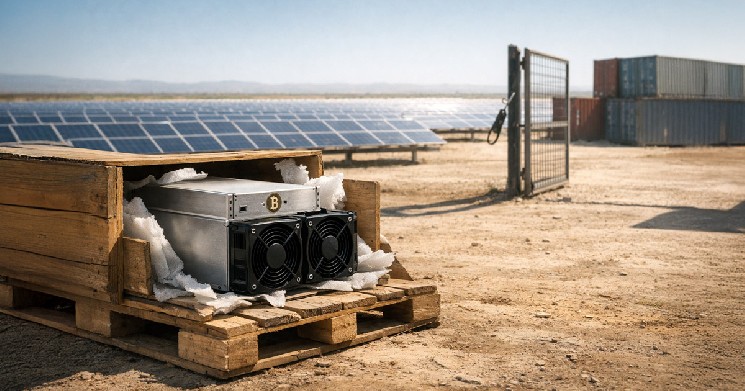
Three days later, French state-owned energy giant Engie told Reuters it was considering installing Bitcoin miners at its 895-megawatt Assu Sol plant in northeast Brazil, the company’s largest solar facility globally, to monetize curtailed electricity and improve profitability.

The two developments landed within 72 hours of each other, and together they sketch a thesis most observers missed: Brazil is building a pressure valve for stranded renewable energy, and Bitcoin mining is the release mechanism.

This isn’t a story about Brazil “legalizing” mining or launching a national strategy. It’s about the quiet convergence of three forces: chronic curtailment, falling hardware cost barriers, and generator economics breaking.

Together, they create the conditions for incremental hashrate to flow toward a market nobody was watching.

The curtailment problem that Bitcoin miners can solve

Brazil’s wind industry curtailed roughly 32 terawatt-hours between October 2021 and September 2025, amounting to about 6 billion reais (roughly $1.2 billion) in lost revenue for wind farms.

Curtailment occurs when the grid can’t absorb the electricity being produced due to the wrong place, the wrong time, or insufficient transmission capacity. For renewable generators, curtailed megawatt-hours are destroyed value.

Wind and solar generated 24% of Brazil’s electricity in 2024, and in August 2025, that share hit 34% for the first time.

Grid operator ONS describes curtailment as a structural feature of systems with high shares of variable renewables, not a temporary friction.

As the renewables mix rises and transmission buildout lags, the mismatch grows. Generators need local, dispatchable demand that can absorb otherwise-wasted electrons and turn on or off quickly. Bitcoin mining fits that profile precisely.

Engie’s Assu Sol plant is located in Brazil’s northeast, a region with strong solar irradiance but transmission constraints.

The company told Reuters that mining or storage could make the facility more profitable by monetizing energy that would otherwise be curtailed, but emphasized this would take years to implement.

The signal matters because it’s coming from a state-owned European utility with no prior crypto exposure, framing mining purely as an industrial demand response tool.

What the tax change actually does to Bitcoin miners

Resolução GECEX 861, published Feb. 20, amends Brazil’s consolidated ex-tariff list to reduce import duty to zero for specific information technology goods.

Annex I adds a new line covering servers dedicated to cryptocurrency mining using the SHA256 algorithm with energy efficiency measured at 35 degrees Celsius, below 20 joules per terahash, and processing capacity above 200 terahashes per second.

The zero-percent duty remains in effect through Jan. 31, 2028.

This is not a blanket exemption for all mining hardware. The thresholds filter for top-tier ASICs. Older or less efficient models don’t qualify. The policy targets the hardware class that can actually compete at scale in a professional mining environment.

Brazil’s import tax structure is notoriously layered. Import duty is one component of the total landed cost, along with IPI, PIS/COFINS-Import, ICMS, and various fees. Trade logistics guides commonly cite total import burdens in the 40%-100% range.

Cutting import duty to zero removes one federal lever but doesn’t eliminate the full stack.

Nevertheless, Brazil reduced a key cost barrier for high-efficiency mining hardware, lowering payback periods, even though other taxes remain.

The break-even power price that makes this work

Mining profitability depends on three variables: hash price (revenue per terahash per second per day), hardware efficiency, and electricity cost.

As of Feb. 16, Hashrate Index reported a hash price of around $34.05 per petahash per second per day. Bitcoin traded near $64,000 on Feb. 23.

For a minimum-qualifying rig under Ex 040, with 200 terahashes per second at 20 joules per terahash, daily revenue equals roughly $6.81. Power consumption is 4.0 kilowatts. Daily energy use is 96 kilowatt-hours.

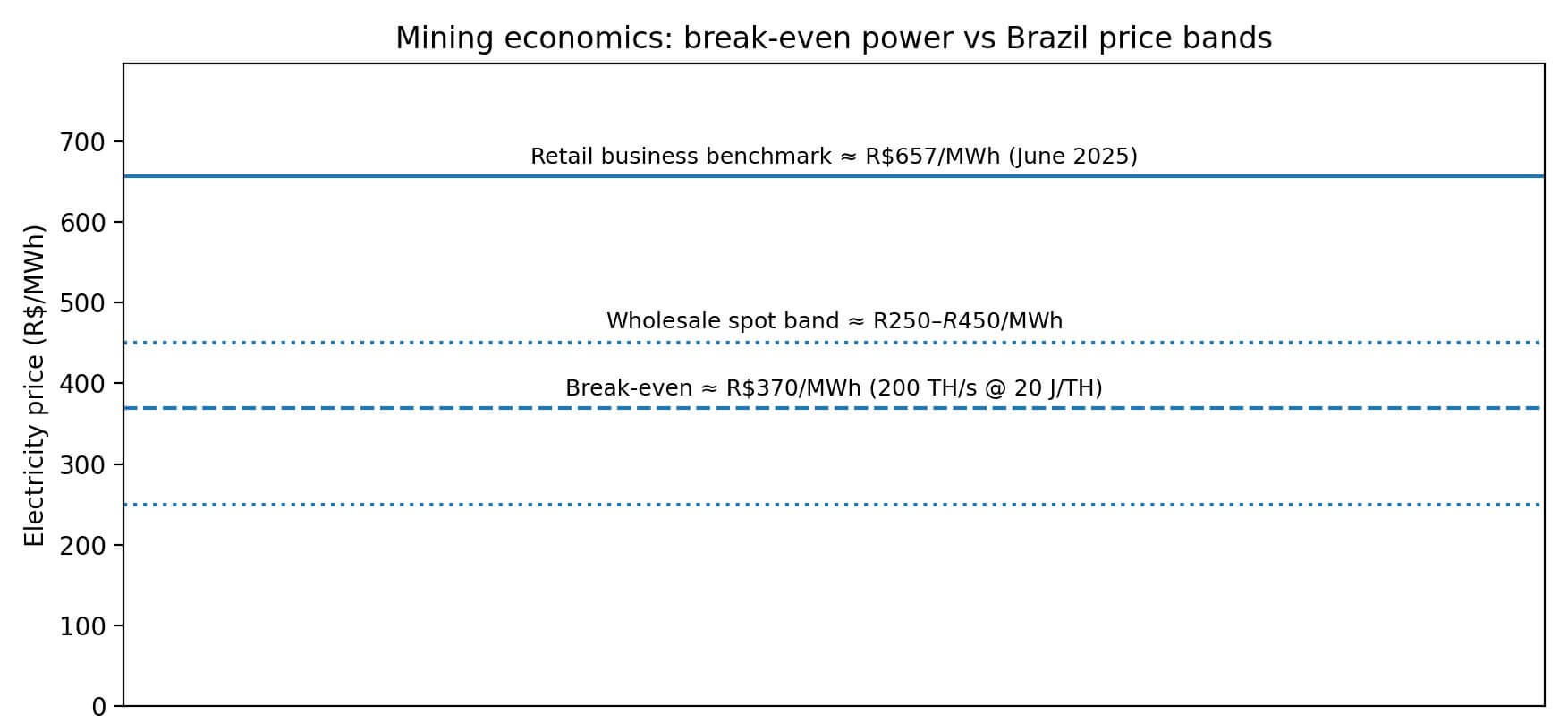
The break-even electricity price, ignoring capital expenditure and operating overhead, is about $0.071 per kilowatt-hour.

Converting to reais using the Feb. 23 exchange rate of roughly 5.17 reais per dollar, break-even sits around 370 reais per megawatt-hour. Retail business electricity prices in Brazil averaged 0.657 reais per kilowatt-hour in June 2025, which is far too high for mining.

However, wholesale spot prices often trade in the 250-450 reais per megawatt-hour range, and curtailed energy, by definition, has no better buyer.

If a generator can sell otherwise-lost megawatt-hours to a miner at or below its break-even cost, the generator recovers revenue that would otherwise be zero.

This is the mechanism: curtailment creates stranded value, mining converts stranded value into computation, and the ex-tariff drops hardware cost enough to tighten the arbitrage window.
What happens if the thesis plays out

If Brazil’s curtailment persists or grows, driven by continued renewables buildout outpacing transmission capacity, generators will face mounting revenue pressure.

Mining offers a bilateral PPA structure that requires no new transmission and can ramp within days of hardware delivery. The ex-tariff remains in effect through January 2028, creating a 24-month window for miners to lock in hardware cost certainty while testing curtailment economics.

Engie’s pilot framing suggests other utilities and independent power producers will evaluate similar options. If several large renewable projects announce colocation deals over the next 12 months, Brazil becomes a meaningful incremental hashrate destination.

This happens not because of national strategy, but because project-level economics align.

The country already has regulatory clarity around Bitcoin, established banking infrastructure for crypto firms, and no capital controls that would trap mining revenue onshore.

Yet, the thesis can also fail. If transmission upgrades accelerate and reduce curtailment, the stranded energy pool shrinks, and power prices rise.

If Bitcoin’s difficulty spikes, compressing the hash rate below the $30-per-petahash range, break-even power costs drop below what most curtailment contracts can deliver.

If local permitting or grid interconnection processes create friction for data center builds, the hardware cost advantage becomes irrelevant.

And if the ex-tariff expires in January 2028 without renewal, the import cost barrier returns.

The Bitcoin miner constraint no one talks about

Zero-percent import duty matters, but it doesn’t fix the financing gap.

Mining hardware has a useful life measured in difficulty epochs, not decades. Brazil’s cost of capital is higher than in the US or Europe, and local banks have limited appetite for crypto-native credit.

Miners scaling in Brazil will need either offshore financing denominated in dollars or equity structures that can absorb illiquidity.

The other constraint is operational. Mining at renewable plants works when curtailment is predictable or when contract structures allow interruptible load.

However, if curtailment becomes sporadic or grid dynamics shift hour to hour, uptime suffers, and effective hash price declines.

Engie’s “years to implement” comment suggests the company understands that bolt-on mining infrastructure requires engineering, not just a PPA signature.

What Brazil is actually betting on

Brazil didn’t wake up and decide to become a mining hub. It created a targeted cost reduction for hardware that can monetize a structural grid problem, and a state-owned utility publicly tested the narrative on the same day.

The bet is narrower than it looks: can miners absorb enough curtailed energy to improve generator economics without destabilizing the grid or creating new political risk?

If the answer is yes, Brazil captures incremental hashrate without subsidizing it directly: miners pay for power, generators recover lost revenue, and the ex-tariff removes friction.

If the answer is no, the resolution expires in January 2028, and the experiment ends. Either way, the policy is time-bound, the economics are transparent, and the commitment is reversible.

But options have value when the underlying conditions align, and Brazil’s conditions are aligning.

Curtailment is growing, hardware costs just dropped, and a major generator is publicly pricing the trade-off.

The window is open through January 2028. What happens next depends on whether enough miners recognize the opening before it closes.

[ad_2]

Share. Facebook Twitter Pinterest LinkedIn Tumblr Email
NBTC

Related Posts

Engie Eyes Bitcoin Mining to Address Solar‑Power Curtailment in Brazil

24/02/2026

Cipher Digital rebrands as it pivots from bitcoin mining to HPC, shares slide

24/02/2026

Solo Bitcoin miner bags over $200K block reward using rented hashrate

24/02/2026

Bitcoin Miners Exit As Difficulty Suffers Largest Drop Since 2021

11/02/2026
Add A Comment

Comments are closed.

Top Posts
Get Informed

Subscribe to Updates

Get the latest news from NBTC regarding crypto, blockchains and web3 related topics.

Your source for the serious news. This website is crafted specifically to for crazy and hot cryptonews. Visit our main page for more tons of news.

We're social. Connect with us:

Facebook X (Twitter) LinkedIn RSS
Top Insights

Vladimir Novakovski: DeFi must match traditional finance performance, why solving real-world problems is crucial, and the evolving role of Ethereum in trading

24/02/2026

Logan Paul, Bieber, Neymar see steep NFT losses as market reprices

24/02/2026

Cryptocurrency Company Bitmine Continues Its Ethereum Investments! Here’s the Amount of Its Latest Purchase

24/02/2026
Get Informed

Subscribe to Updates

Get the latest news from NBTC regarding crypto, blockchains and web3 related topics.

Type above and press Enter to search. Press Esc to cancel.