
Close Menu
  • Coins
    • Bitcoin
    • Ethereum
    • Altcoins
    • NFT
  • Blockchain
  • DeFi
  • Metaverse
  • Regulation
  • Other
    • Exchanges
    • ICO
    • GameFi
    • Mining
    • Legal
  • MarketCap
What's Hot

CME Gap Points to Pullback

18/03/2026

Tokenized pre-IPO shares topic ignites legal debate at Consensus Hong Kong 2026

18/03/2026

Russia drafts stablecoin bill to weaponize cross‑border crypto rails

18/03/2026
Facebook X (Twitter) Instagram
  • Back to NBTC homepage
  • Privacy Policy
  • Contact
X (Twitter) Telegram Facebook LinkedIn RSS
NBTC News
  • Coins
    1. Bitcoin
    2. Ethereum
    3. Altcoins
    4. NFT
    5. View All

    Price Breaks All-Time High Record Again – Here’s What We Know

    04/08/2025

    Bitcoin Switzerland? El Salvador to Host First Fully Native Bitcoin Capital Markets

    04/08/2025

    Bitcoin Breaks $119K, but XLM and HBAR Aren’t Impressed by Its Meager Percentage Gain

    04/08/2025

    High-Stakes Consolidation Could Define Q3 Trend

    04/08/2025

    CME Gap Points to Pullback

    18/03/2026

    Ethereum New Liquidity Cycle? This Binance Indicator Says Yes

    18/03/2026

    Ethereum Price Rebounds with a 8-Day Rally as Corporate Buying Accelerates

    18/03/2026

    A Strategic Move That Reshapes Institutional Crypto Confidence

    18/03/2026

    The Sui Ecosystem’s Top 3 Altcoin Performers

    29/07/2025

    Floki Launches $69000 Guerrilla Marketing Challenge With FlokiUltras3

    28/07/2025

    Crypto Beast denies role in Altcoin (ALT) crash rug pull, blames snipers

    28/07/2025

    $1.6 Billion XRP Surge: Here’s What’s Unfolding

    28/07/2025

    The Solana NFT Marketplace at a Crossroads

    15/03/2026

    Top NFT Sales of the Week, Flying Tulip Sale Tops

    15/03/2026

    Pudgy Penguins ($PENGU) Dominates the Top NFT Projects by Social Activity

    13/03/2026

    SpoonOS distributes first NFT rewards to Skill Capture Campaign participants

    11/03/2026

    CME Gap Points to Pullback

    18/03/2026

    Tokenized pre-IPO shares topic ignites legal debate at Consensus Hong Kong 2026

    18/03/2026

    Russia drafts stablecoin bill to weaponize cross‑border crypto rails

    18/03/2026

    Hoskinson Celebrates as Midnight Becomes First Cardano Native Token to List on Binance

    18/03/2026
  • Blockchain

    BlockSec Becomes Audit Partner for Morph Payment Accelerator

    18/03/2026

    Altcoins with the Highest Number of Active Users in the Past Week Have Been Revealed—Some Have Seen Incredible Growth

    18/03/2026

    Collably Network and EmoFi Forge Strategic Alliance to Tokenize Insights and Emotion in the Web3 Information Economy

    18/03/2026

    AscendEX Joins PlaysOut to Integrate Mini-Game Infrastructure and DeFi

    18/03/2026

    The 10 Blockchains Generating the Most Network Revenue Right Now

    18/03/2026
  • DeFi

    A Layer-3 Execution Stack for Autonomous DeFi Agents

    18/03/2026

    What Is PancakeSwap’s Pancake Town?

    18/03/2026

    1inch Fusion Mode Shatters Records with $82.8M Average Daily Volume in Q4 Surge

    18/03/2026

    PancakeSwap Unveils PancakeSwap Town, an Immersive DeFi World with AI Agent-Integration

    17/03/2026

    Lido’s community staking module sharpens its edge with DVT clusters

    17/03/2026
  • Metaverse

    Meta to shutter Horizon Worlds metaverse on VR in favor of mobile

    18/03/2026

    Meta expands AI agent push with Moltbook acquisition

    10/03/2026

    ‘The Sandbox’ Adds Web-Based Games in Season 7 Accessibility Push

    24/02/2026

    AMD jumps as Meta signs multiyear AI infrastructure partnership

    24/02/2026

    Corning shares surge over 16% after Meta signs $6B data center deal

    27/01/2026
  • Regulation

    Tokenized pre-IPO shares topic ignites legal debate at Consensus Hong Kong 2026

    18/03/2026

    Goldman Sachs’ David Solomon says he owns ‘very little’ bitcoin but watching it closely

    18/03/2026

    Bitwise aims to offer prediction market ETFs for U.S. elections in 2026 and 2028

    18/03/2026

    NYSE President says exchange felt ‘responsibility’ to enter tokenization space

    18/03/2026

    Financial giant with $3.5 trillion asset to pilot Trump-affiliated WLFI stablecoin for tokenized funds

    18/03/2026
  • Other
    1. Exchanges
    2. ICO
    3. GameFi
    4. Mining
    5. Legal
    6. View All

    Hoskinson Celebrates as Midnight Becomes First Cardano Native Token to List on Binance

    18/03/2026

    Mastercard Highlights Ripple in Digital Payments Push

    18/03/2026

    Stellar Expands Payment Infrastructure Through Bitget Wallet’s Consumer Distribution

    18/03/2026

    KuCoin launches perpetual futures tracking Tesla and Strategy stocks

    18/03/2026

    South Korea Poised to Lift Ban on Domestic ICOs After 7 Years

    19/12/2025

    Why 2025’s Token Boom Looks Both Familiar and Dangerous

    31/10/2025

    ICO for bitcoin yield farming chain Corn screams we’re so back

    22/01/2025

    Why 2025 Will See the Comeback of the ICO

    26/12/2024

    PlaysOut and Ads3 Ally to Enhance User Acquisition in Web3 Games

    18/03/2026

    6 Best Crypto Games For Android in 2026

    12/03/2026

    Pudgy Penguins launches its ‘Club Penguin’ moment, and the game doesn’t feel like crypto at all

    10/03/2026

    WORLD3 Partners PlaysOut to Bring AI Agents into Web3 Gaming

    10/03/2026

    MicroBT Targets Large-Scale Mining Farms With New Hydro ASIC Machines

    18/03/2026

    Maestro launches mining-backed Bitcoin credit market for institutions

    18/03/2026

    Cango is selling off its bitcoin stash to pay down debt and fund an AI makeover

    17/03/2026

    Bitcoin Hashrate Slips Below 1 Zettahash as Miner Revenue Remains Thin

    17/03/2026

    Russia drafts stablecoin bill to weaponize cross‑border crypto rails

    18/03/2026

    Missiles Hit City, but CFD and Crypto Firms Prioritize Resilience

    18/03/2026

    Crypto Legislation Stalls in Washington as Banks, White House Clash Over Stablecoin Yields

    18/03/2026

    How Bitcoin Became the Most Contested Asset in Russian Divorces

    18/03/2026

    CME Gap Points to Pullback

    18/03/2026

    Tokenized pre-IPO shares topic ignites legal debate at Consensus Hong Kong 2026

    18/03/2026

    Russia drafts stablecoin bill to weaponize cross‑border crypto rails

    18/03/2026

    Hoskinson Celebrates as Midnight Becomes First Cardano Native Token to List on Binance

    18/03/2026
  • MarketCap
NBTC News
Home»Mining»AI Inherits Bitcoin Mining’s Hard Lesson – Locals Matter
Mining

AI Inherits Bitcoin Mining’s Hard Lesson – Locals Matter

NBTCBy NBTC23/01/2026No Comments5 Mins Read
Share
Facebook Twitter LinkedIn Pinterest Email


For much of the past decade, bitcoin miners expanding across the United States learned that access to cheap power and industrial land did not guarantee social license. After China’s 2021 mining ban pushed activity stateside, projects in New York, Texas, Arkansas and Kentucky were met with complaints over noise, power prices and environmental impact—often after local residents realized how little say they had in the decision-making process.

This article first appeared in Miner Weekly, Blocksbridge Consulting’s weekly newsletter curating the latest news in bitcoin mining and data analysis from Theminermag.

Now, the U.S. AI compute boom is running into a familiar obstacle.

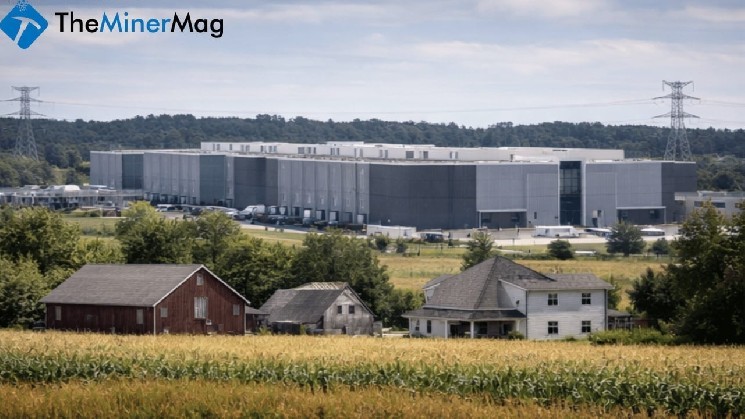
As hyperscalers and AI developers race to secure power-dense data center capacity, community resistance is emerging as a material constraint, echoing the pushback that once slowed, reshaped or outright stopped bitcoin mining projects.

Across the country, local governments and residents are no longer waiting passively for assurances that AI infrastructure will be different.

From crypto backlash to AI scrutiny

The migration of bitcoin mining to the U.S. revealed a recurring pattern: large, energy-intensive facilities promised jobs and tax revenue, but do not always deliver long-term employment while introducing new stresses on local grids and land use.

AI data centers—despite being quieter and more politically palatable—are now triggering many of the same concerns.

In Texas, Illinois, Georgia and Mississippi, local news outlets have reported packed hearings, zoning disputes and calls for moratoriums as residents question water consumption, backup generation, transmission upgrades and whether rising electricity costs will ultimately be passed on to households.

This week, commissioners in Thomas County, Georgia, voted to temporarily halt new AI data center developments while officials study the long-term impacts on infrastructure and public services. The move reflects a growing trend: communities are slowing approvals not to reject AI outright, but to avoid being locked into consequences they do not yet fully understand.

Industry trackers estimate that $64 billion in U.S. data center projects have already been delayed or blocked by local opposition—an increasingly hard figure for investors to ignore.

Big Tech responds: “paying its own way”

The industry response is starting to change.

Earlier this month, Microsoft rolled out its “Community-First AI Infrastructure” framework, pledging that its data centers would cover the full cost of new generation, transmission and grid upgrades rather than shifting those expenses onto residential ratepayers. The company also committed to water replenishment, transparency and workforce investment in host communities.

Now, OpenAI has taken a similar stance.

OpenAI has committed to “paying its own way” for energy costs tied to its AI data center expansion, signaling that the company recognizes community acceptance and power-market credibility as strategic priorities—not afterthoughts. The move aligns OpenAI more closely with utilities and regulators wary of socializing infrastructure costs driven by private AI demand.

For veterans of the bitcoin mining sector, the language is familiar. Miners that survived local pushback often did so only after renegotiating power contracts, investing in mitigation measures or agreeing to clearer community benefit structures—frequently after costly delays.

There are, however, important operational differences. Bitcoin miners, by design, can curtail power usage or shut down entirely during periods of peak demand or extreme weather, allowing utilities to rebalance load in real time. In several U.S. markets, this flexibility has been used as a grid-management tool, with miners participating in demand-response programs that reduce strain during emergencies. Proponents argue this has helped offset infrastructure costs by supporting grid expansion while lowering energy prices for residential customers during peak periods. AI data centers, by contrast, are built to serve continuous computing workloads and are generally less amenable to rapid curtailment, limiting their usefulness as flexible load in times of grid stress.

Policymakers draw firmer lines

State governments are also recalibrating.

New York Governor Kathy Hochul has proposed stricter safeguards to ensure large data centers pay higher charges tied to grid upgrades and reliability. While framed as a consumer-protection measure, the policy is inseparable from surging AI-driven electricity demand.

New York’s posture is shaped by experience. The state spent years navigating backlash against bitcoin mining facilities, particularly those tied to fossil-fuel generation. AI data centers may wear a different label, but from a grid-planning perspective, they pose many of the same challenges: large, inflexible loads seeking rapid interconnection.

For bitcoin miners pivoting toward AI or HPC colocation, the implications are significant.

Capital markets have largely rewarded AI data center narratives with higher multiples and cheaper capital, often assuming smoother permitting and stronger political support than crypto mining ever enjoyed. Community resistance complicates that thesis.

The AI compute boom is real. The power demand behind it is even more real. But local consent—long treated as a secondary consideration—is reasserting itself as a gating factor.

Bitcoin mining learned this lesson the hard way after 2021. AI infrastructure builders are now discovering that, even in the age of trillion-dollar valuations, local communities may still not buy it.

This article is from Theminermag, a trade publication for the cryptocurrency mining industry, focusing on the latest news and research on institutional bitcoin mining companies. The original article can be viewed here.

Share. Facebook Twitter Pinterest LinkedIn Tumblr Email
NBTC

Related Posts

MicroBT Targets Large-Scale Mining Farms With New Hydro ASIC Machines

18/03/2026

Maestro launches mining-backed Bitcoin credit market for institutions

18/03/2026

Cango is selling off its bitcoin stash to pay down debt and fund an AI makeover

17/03/2026

Bitcoin Hashrate Slips Below 1 Zettahash as Miner Revenue Remains Thin

17/03/2026
Add A Comment

Comments are closed.

Top Posts
Get Informed

Subscribe to Updates

Get the latest news from NBTC regarding crypto, blockchains and web3 related topics.

Your source for the serious news. This website is crafted specifically to for crazy and hot cryptonews. Visit our main page for more tons of news.

We're social. Connect with us:

Facebook X (Twitter) LinkedIn RSS
Top Insights

CME Gap Points to Pullback

18/03/2026

Tokenized pre-IPO shares topic ignites legal debate at Consensus Hong Kong 2026

18/03/2026

Russia drafts stablecoin bill to weaponize cross‑border crypto rails

18/03/2026
Get Informed

Subscribe to Updates

Get the latest news from NBTC regarding crypto, blockchains and web3 related topics.

Type above and press Enter to search. Press Esc to cancel.