

[ad_1]
This is a segment from the 0xResearch newsletter. To read full editions, subscribe.
DeFi just secured its biggest US policy win yet.
President Trump on Friday signed the GENIUS Act into law, establishing the first federal framework for stablecoin regulation. The law defines clear standards for reserve backing, consumer protection and AML compliance, while carving pathways for both state and federally chartered issuers. DeFi Education Fund (DEF) called it a “landmark” moment for onchain finance.
Importantly, GENIUS trains federal oversight on identifiable, custodial stablecoin issuers while leaving self-custodied wallets and other non-issuer onchain activity largely outside its scope. That makes way for broader market-structure rules (CLARITY) that aim to distinguish decentralized protocols from centralized intermediaries.
Meanwhile, the House passed the CLARITY Act with key amendments that reversed last-minute language changes that had sparked outcry among DeFi builders and policy experts. The manager’s amendment from HFSC Chair French Hill (R-AR) and Attorney General Chair GT Thompson (R-PA) restored and clarified the DeFi carve-outs in both the securities (§309) and commodities (§409) titles of the bill.
The final House text now explicitly excludes activities like publishing code, operating frontends, running validator nodes or providing wallets from registration requirements, so long as they don’t involve custody or control of user assets. The Commodity Exchange Act’s DeFi exclusion is once again broad enough to cover most non-custodial spot-market activity.
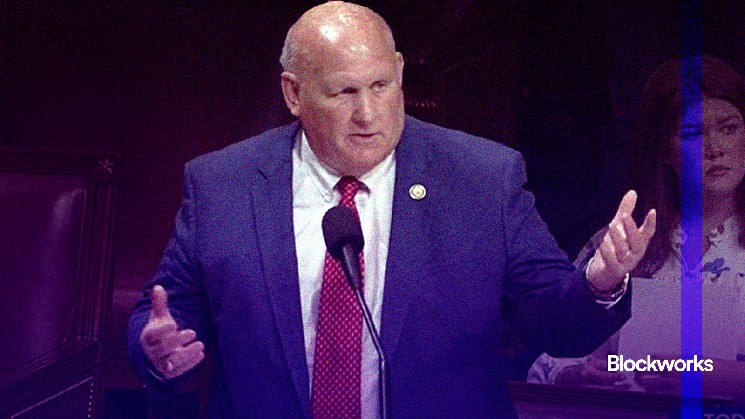
On the House floor, Rep. Hill stated: “DeFi developers do not take custody of user assets, nor do they control user assets. Therefore, we should not treat them in the same way we treat centralized actors.”
Rep. Thompson added: “Congress is making an unambiguous statement that DeFi is different.”
These are important articulations of Congress’ intent.
Still, two gaps remain. First, the carve-outs do not extend to derivatives, leaving DeFi derivatives protocols in legal limbo.
Second, the CLARITY Act lacks federal pre-emption, meaning state regulators could still impose conflicting requirements.
However, the Hill-Thompson fix moves CLARITY away from being a potential threat and into the category of a qualified win for DeFi.
[ad_2]
